
20 Playroom Inspirations for Toddlers
A thoughtfully designed playroom is so much more than a tidy space for toys. It is an environment that quietly supports your toddler's development — their creativity, independence, motor skills, and emotional regulation — every single day. The best toddler play spaces are not the most elaborate or expensive ones; they are the ones designed around how toddlers actually play.
Whether you have an entire room to dedicate or just a corner of your living room, these 20 playroom inspiration ideas will help you create a space your toddler loves — one that works for your home, your lifestyle, and your budget.
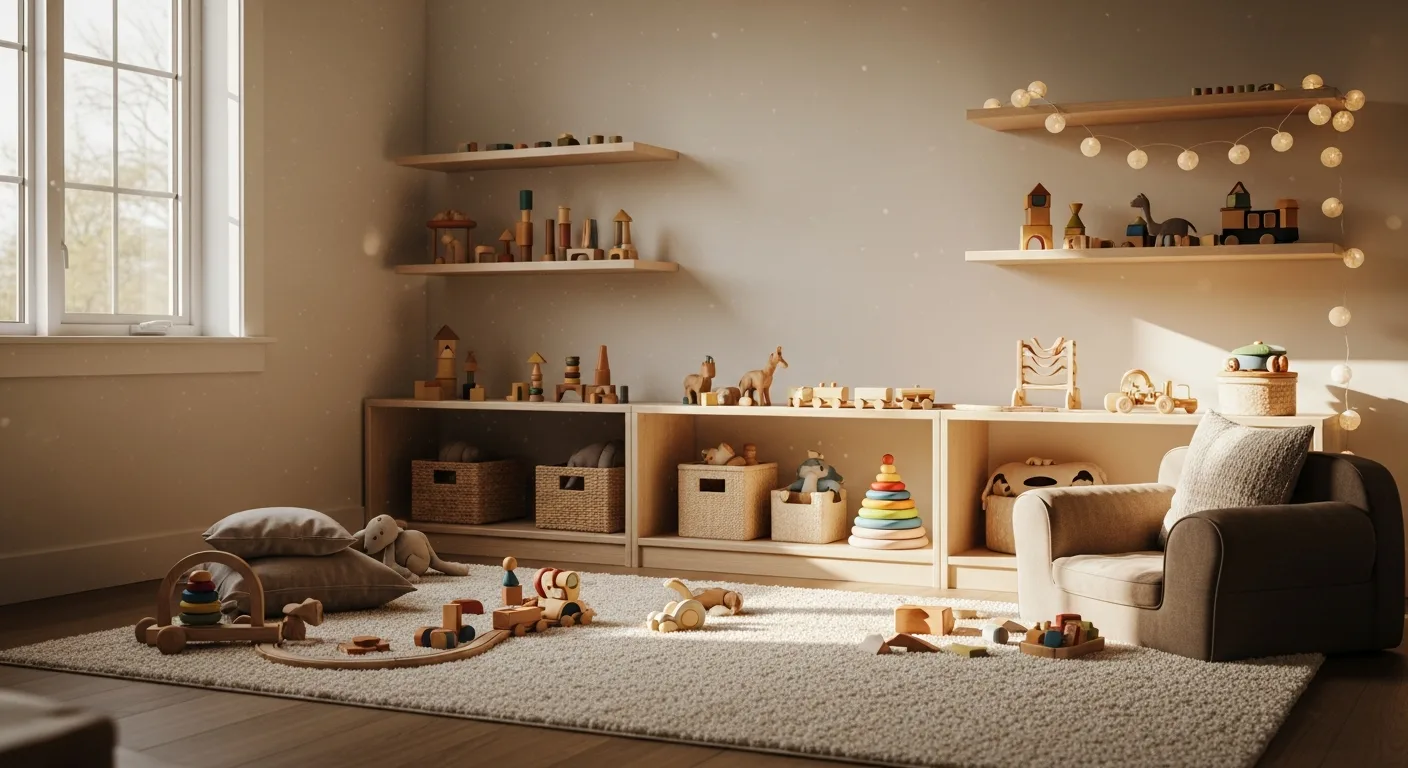
Great play spaces do not happen by accident. They are intentional environments shaped by simple principles: accessibility, simplicity, and a mix of active and quiet zones. Each of the ideas below can be adapted to your available space and budget. Pick the ones that match your child's personality and your home's layout — and remember, the best playroom is the one your toddler actually plays in. For broader activity inspiration, visit our Fun Indoor Activities for Toddlers guide.
1. Montessori-Style Open Shelf Playroom
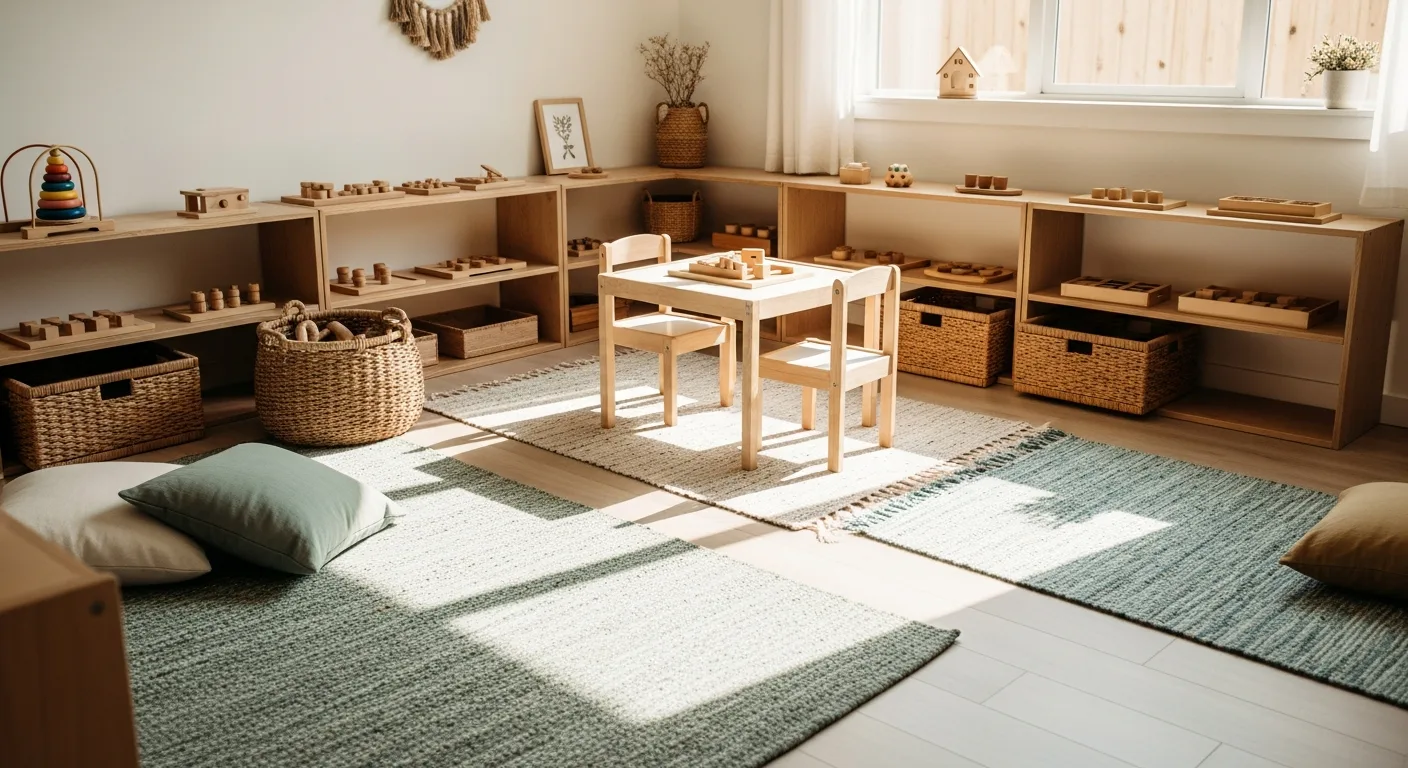
A Montessori-inspired playroom uses low, open shelving so everything is within your toddler's reach without asking for help. Each basket or tray holds one activity — puzzles, stacking toys, or art supplies — so children can choose independently and return items easily. Keep the shelves lightly filled: 6 to 8 activities at a time is plenty. Less visual clutter means more focused, deeper play.
Browse 15 Montessori activity ideas →2. Minimalist Neutral Playroom
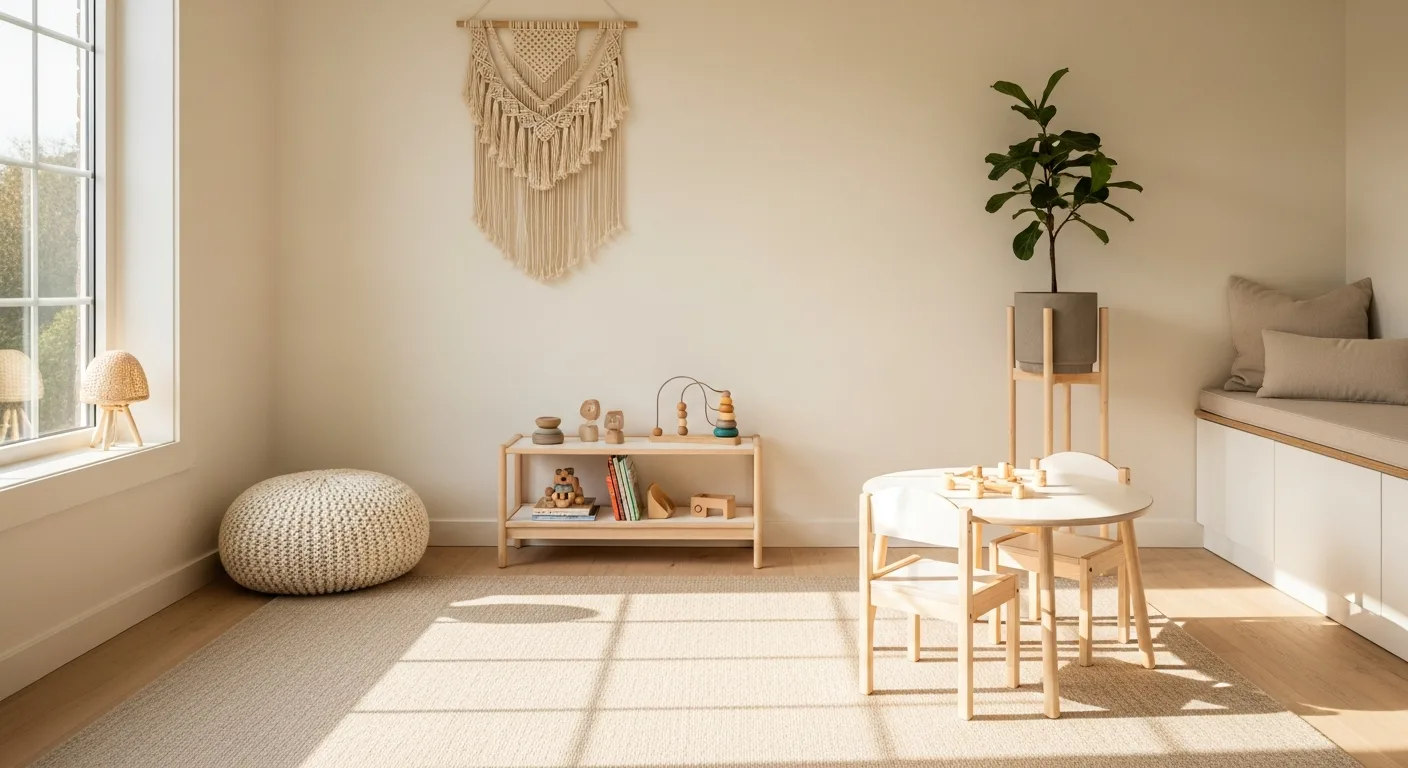
Neutral tones — cream, oat, warm white, and wood — create a calming play space that grows with your child and photographs beautifully. Choose furniture in natural materials like birch, pine, or bamboo, and keep textiles in earthy linen or cotton. A restful palette helps toddlers focus on the toys rather than the room itself. Add one warm accent colour — a mustard cushion or a sage-green rug — for personality without noise.
Read: How to Create a Calm Home for Toddlers →3. Small Space Playroom Corner
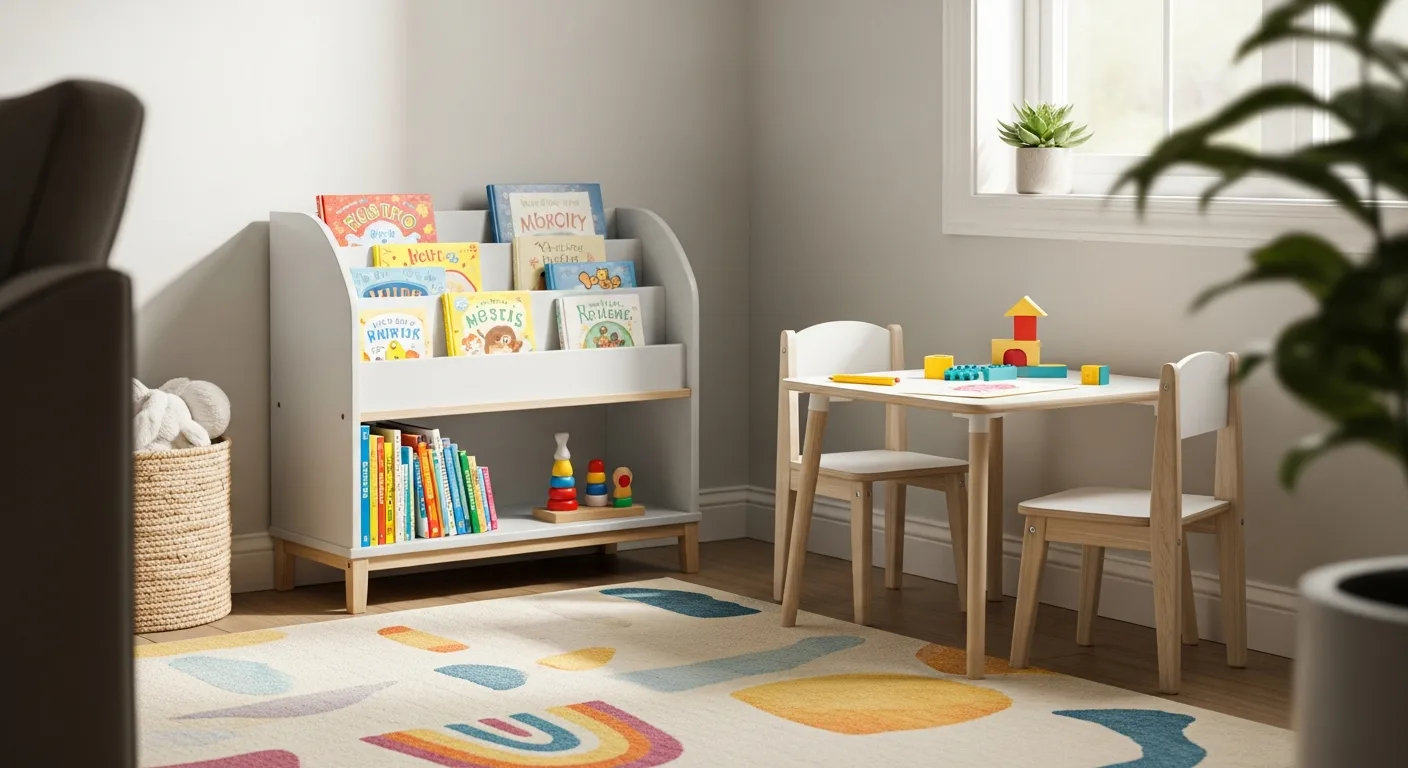
You do not need a dedicated room to create a great play space. A corner of the living room or bedroom can become a purposeful toddler zone with a small rug to define the area, a low bookshelf, and a simple activity table. Use wall-mounted shelves to maximise vertical storage and keep the floor clear for movement. The key is visual separation: a rug and shelf signal to your toddler that this is their space.
Read: How to Encourage Toddler Independence →4. Colorful Creative Playroom
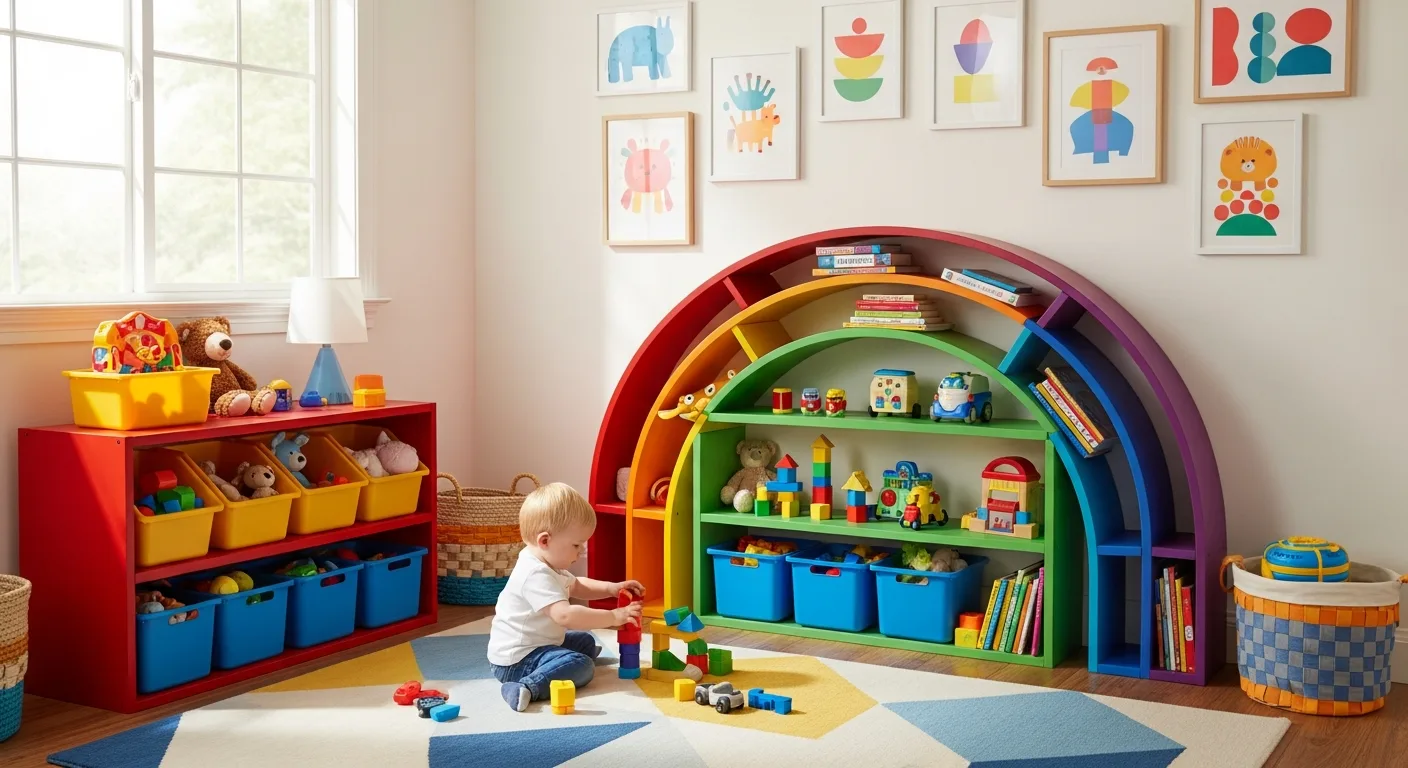
A bold, joyful playroom with rainbow shelves, colourful storage bins, and primary-coloured furniture works beautifully for children who are energetic and creative. Use colour intentionally: group like colours together for visual organisation rather than random rainbow chaos. A colourful gallery wall of your toddler's own artwork adds personality and builds pride in their creative work.
Explore creative play ideas that boost learning →5. Cosy Reading Corner
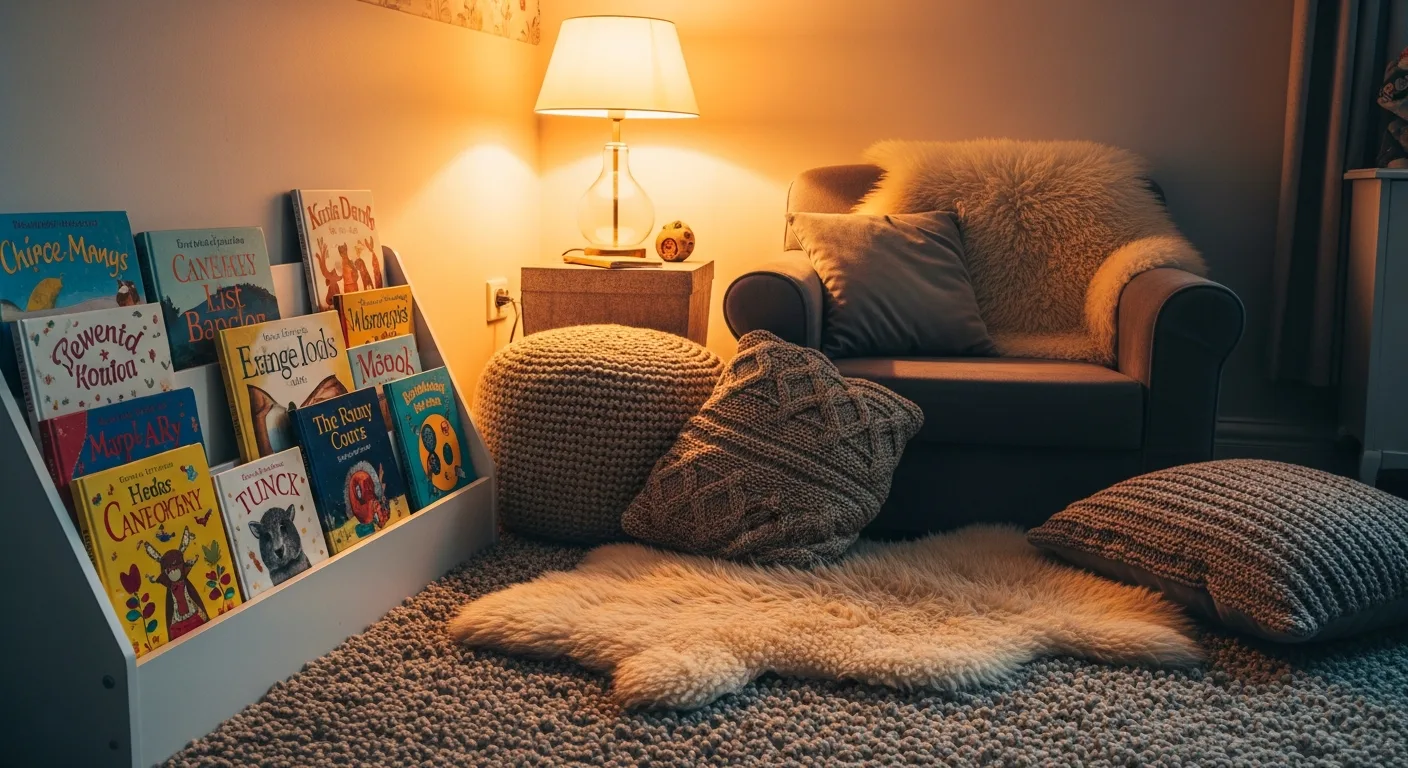
A dedicated reading nook — even a small armchair angled toward a forward-facing bookshelf — signals that books are special in your home. Use forward-facing shelves so toddlers can see the cover of each book and choose independently. Add a soft rug, a cushion or two, and a warm light source. Rotate books monthly to keep interest high, and include picture books at your toddler's current level alongside ones slightly above.
See how to encourage language development at home →6. Toy Rotation Setup
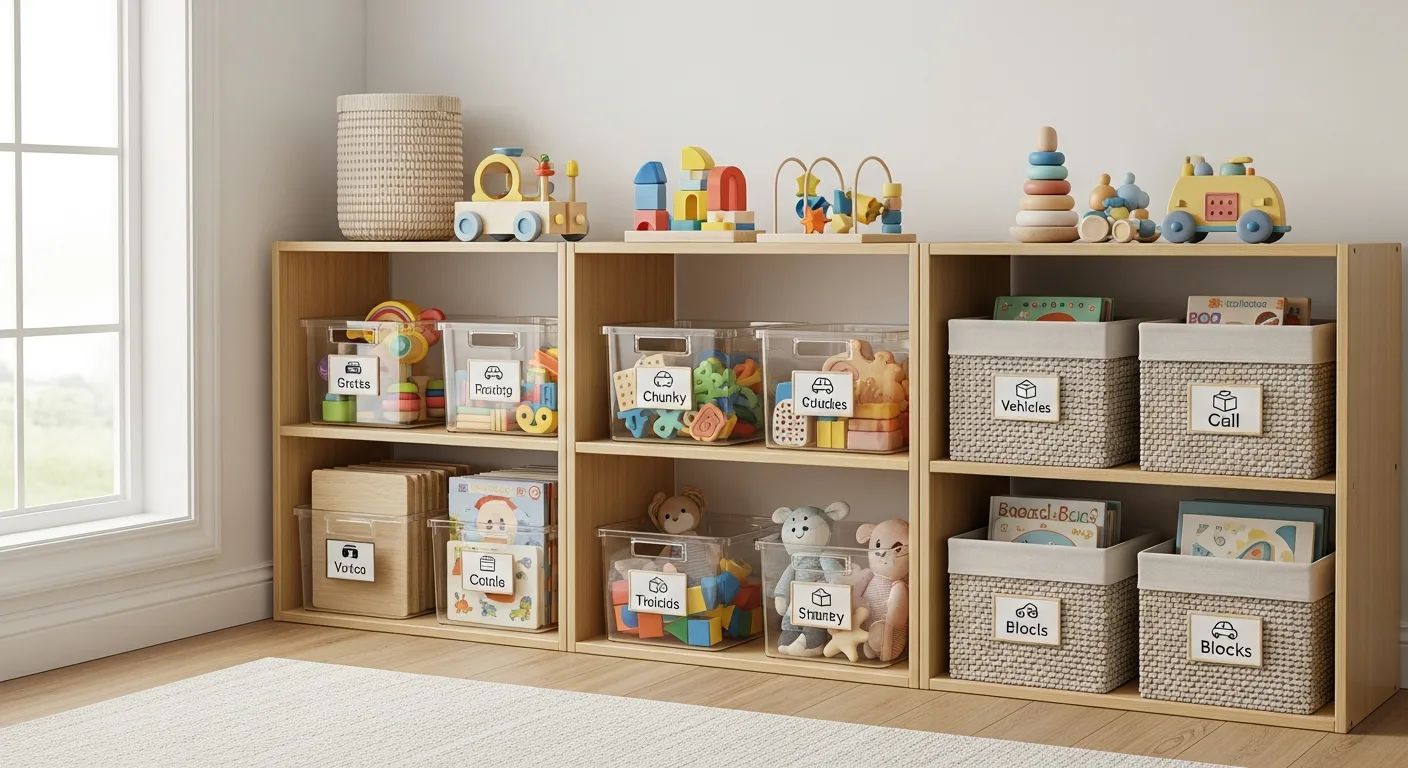
Toy rotation is one of the single most effective tools for improving play quality. Store two-thirds of your toddler's toys in labelled bins out of sight, and rotate them every one to two weeks. Returning toys feel novel and exciting, hold attention far longer, and reduce the overwhelm of too many choices. This also makes tidying dramatically easier. An organised storage room or cupboard shelving system is all you need to get started.
Build a consistent daily routine around play →7. Sensory Play Station
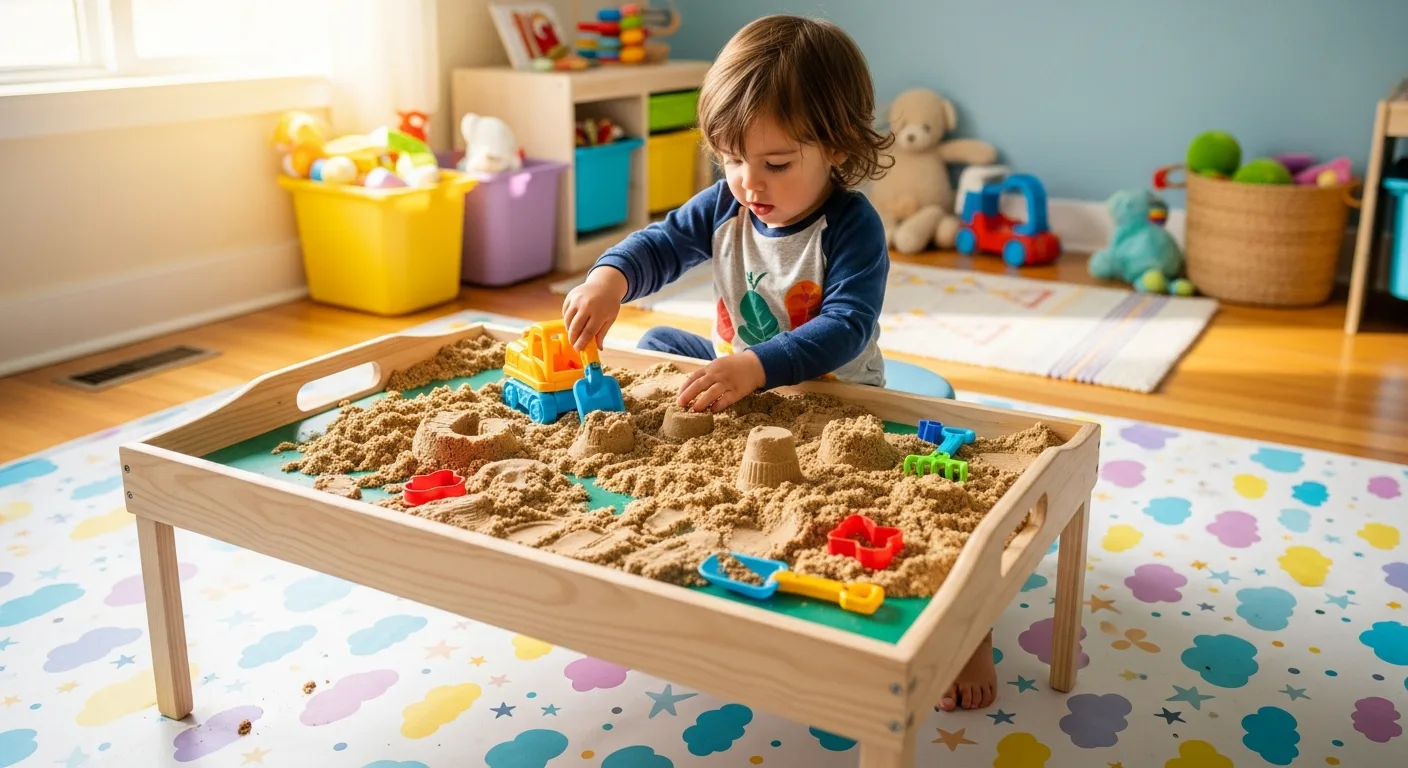
A sensory table — or even a deep tray on the floor — dedicated to sensory play gives toddlers a safe, contained space to explore textures. Fill it seasonally: dried rice and spoons in autumn, kinetic sand in winter, water beads in spring, shaving foam in summer. Add simple tools — cups, funnels, scoops, moulds. A low table at toddler height is ideal; a waterproof mat underneath makes cleanup far easier.
Try our rainy day sensory activity ideas →8. Art and Craft Station
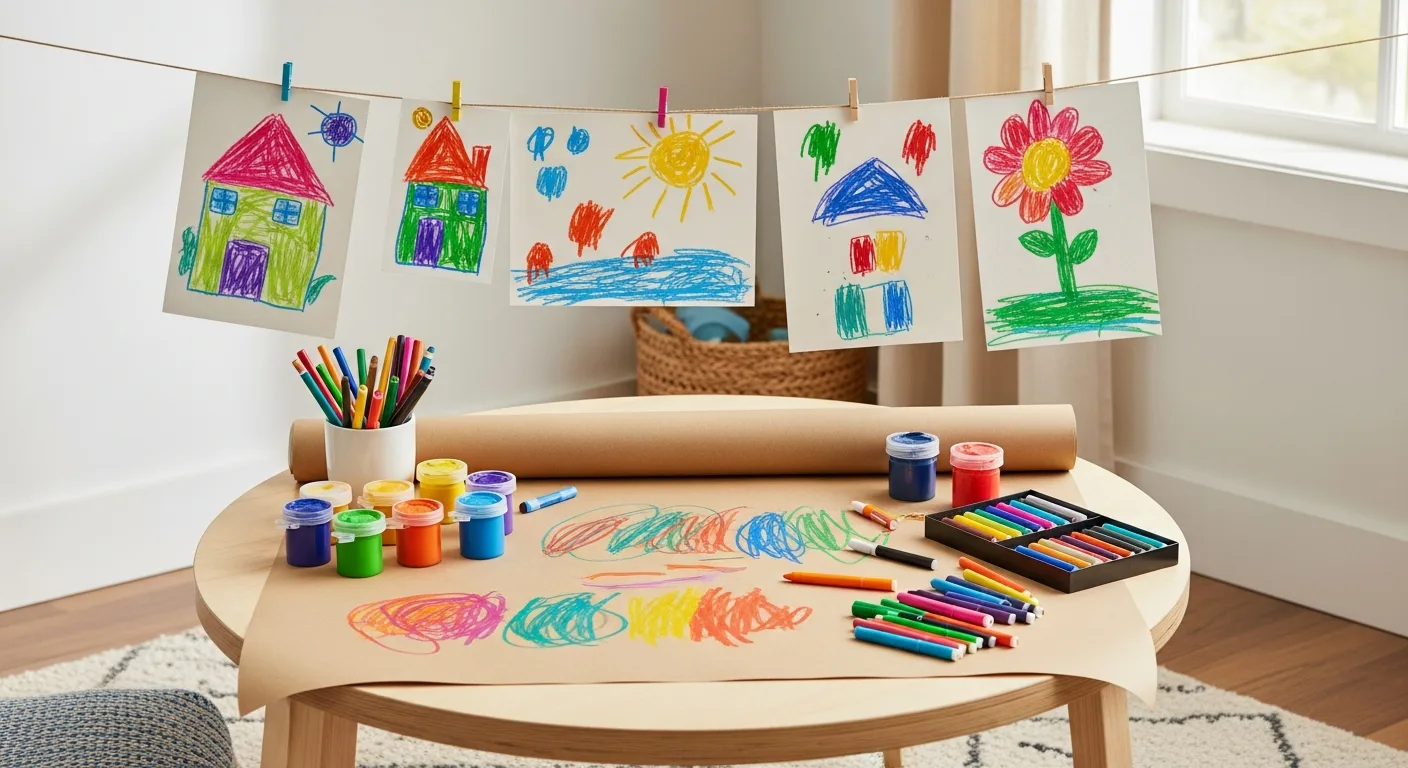
Dedicate a low table with an easy-wipe surface entirely to art. Keep supplies in open containers within reach — chunky crayons, washable paint, child-safe scissors, stickers, and a roll of kraft paper as an infinite canvas. Mount a simple wire display line or magnetic board nearby so finished artwork is celebrated before rotating out. An apron or coverall hung on a low hook builds independence with messy play.
Browse 15 simple craft ideas for toddlers →9. Shared Sibling Playroom
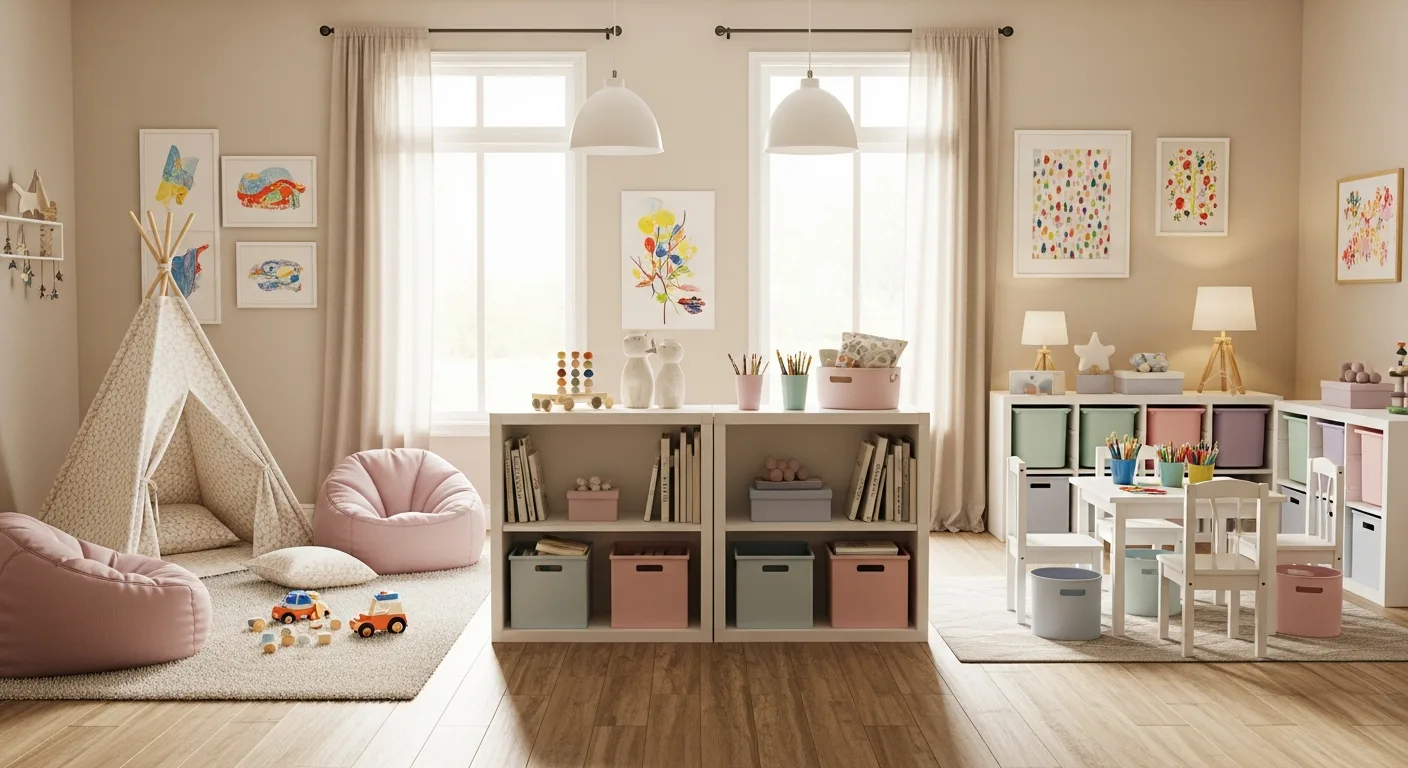
A playroom shared between a toddler and a younger or older sibling works best when each child has a clearly defined zone. Use a bookshelf or low curtain to visually separate areas. Keep small pieces (choking hazards) in the older child's zone only, with a physical barrier if needed. Shared zones work well for imaginative play, books, and soft toys that both ages enjoy. Identical storage systems for each child reduces conflict over ownership.
Read: Helping Toddlers Manage Big Emotions →10. Outdoor-Inspired Indoor Playroom
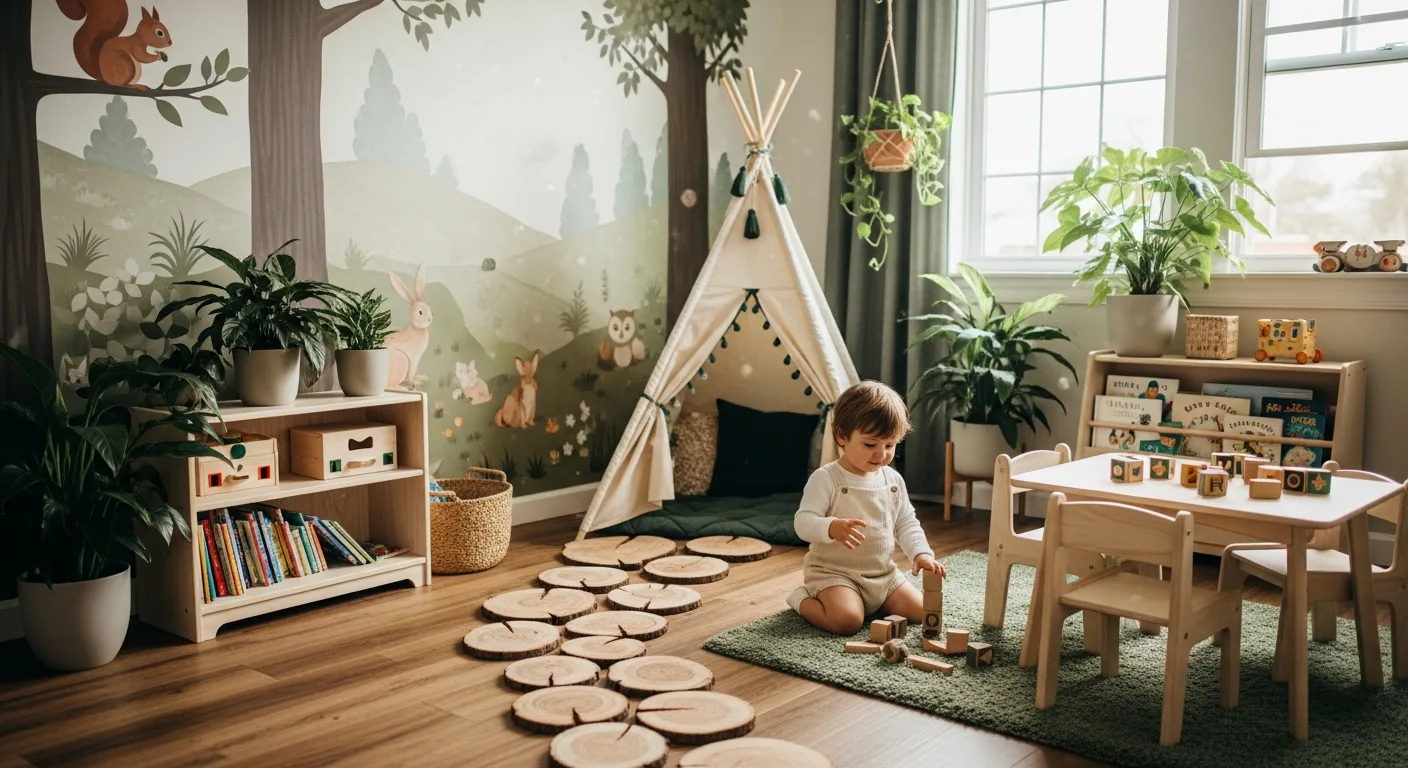
Bring the outdoors inside with nature-themed décor: a woodland wall mural, wood-slice stepping stones, pebble baskets, pinecone collections, and indoor plants (child-safe varieties only). Use earthy tones — forest green, terracotta, sand — with natural wood furniture. A nature shelf with rotating finds from walks — leaves, shells, feathers, seed pods — builds scientific curiosity and changes with the seasons.
Explore 15 nature activities for toddlers →11. Budget-Friendly DIY Playroom
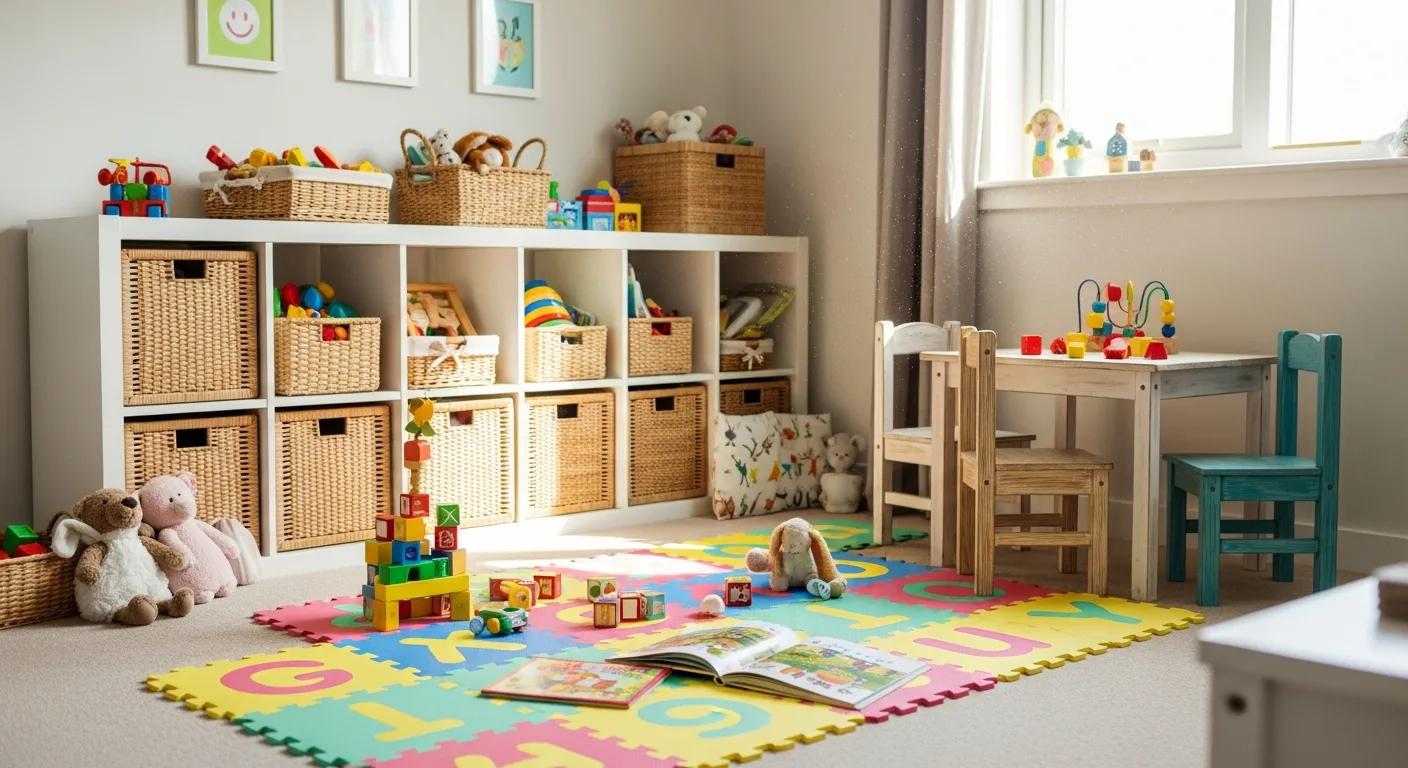
A beautiful toddler playroom does not require a large budget. Second-hand furniture painted in chalk paint, IKEA KALLAX shelving with wicker baskets, and a simple foam play mat create a functional, attractive space for well under a hundred pounds. Focus spending on one or two quality open-ended toys (wooden blocks, simple vehicles, playdough tools) rather than many cheap plastic items that break quickly and create clutter.
Read: Learning Through Play at Home →12. Dramatic Play and Dress-Up Zone
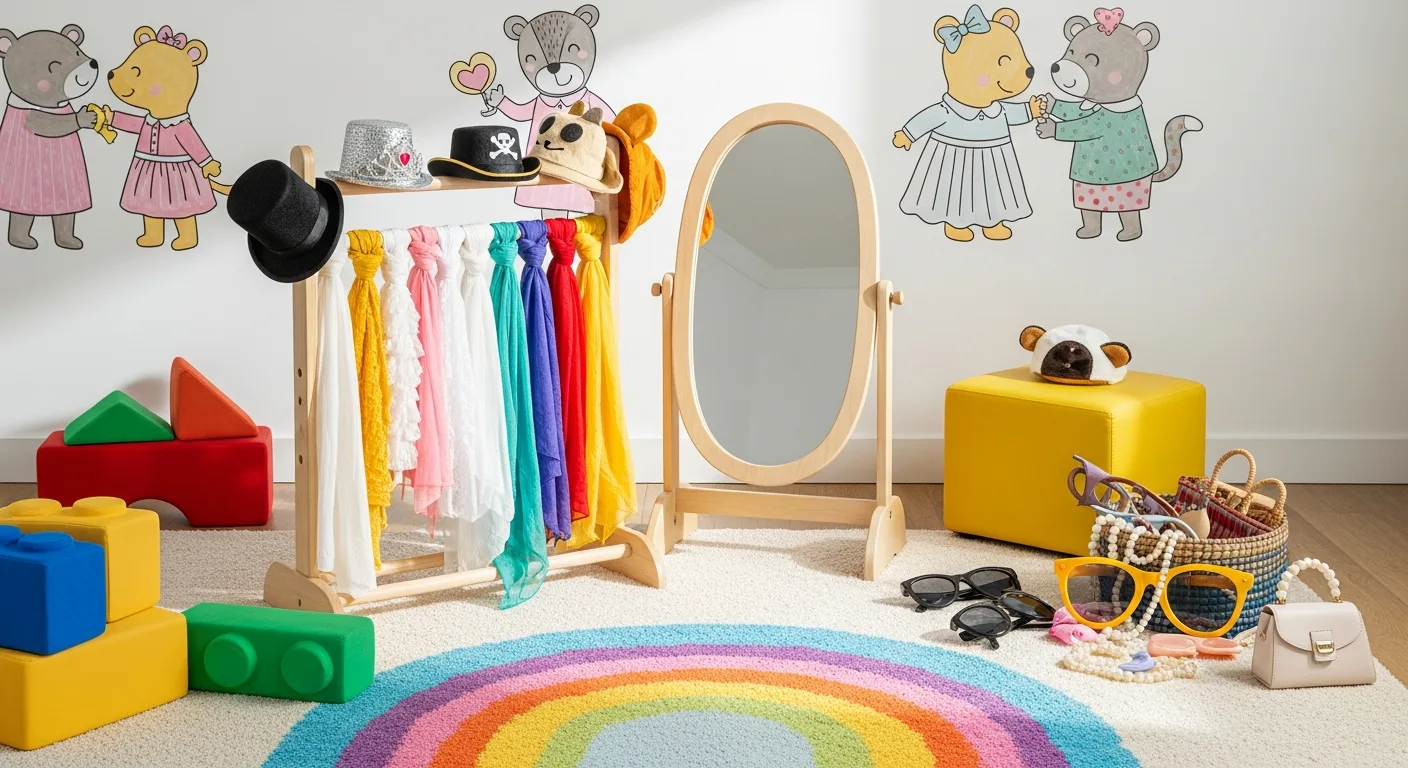
A small corner with a clothes rail, a collection of open-ended dress-up items (scarves, hats, capes, simple costumes), and a child-height mirror creates a powerful imaginative play zone. Avoid highly specific costumes — generic items (a length of fabric, a chef's hat, a hard hat) are used far more creatively than a single-use princess dress. A play kitchen nearby extends the dramatic play possibilities enormously.
Boost development with cognitive play activities →13. Music and Movement Corner
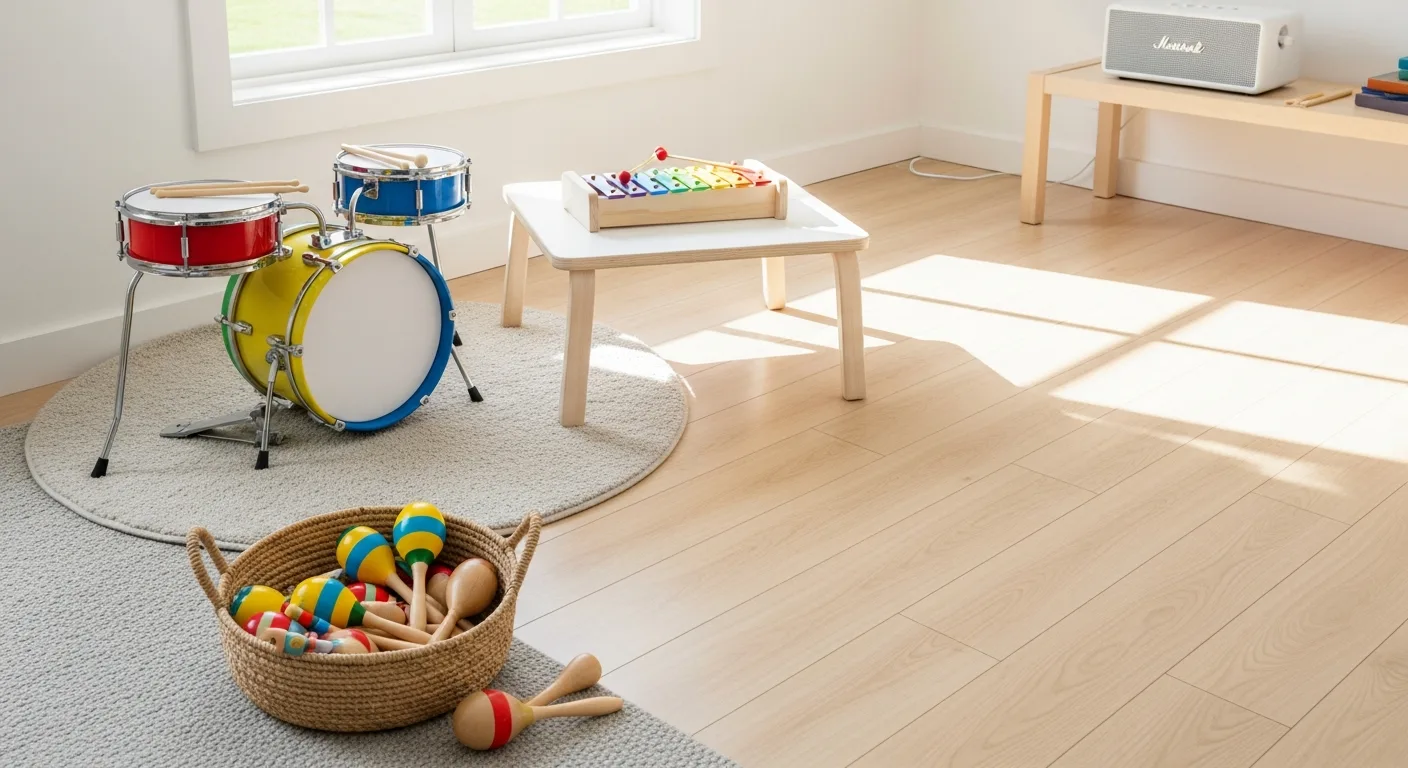
Dedicate a small section of the playroom to music and movement: a small drum, a xylophone, maracas, bells, and a rain stick stored in a basket together. Clear floor space in front for dancing. A Bluetooth speaker at toddler height that they can activate with a large button encourages music exploration. Ribbons and scarves for dancing add a beautiful, joyful dimension to movement play.
See 15 movement activities for toddlers →14. Puzzle and Fine Motor Station
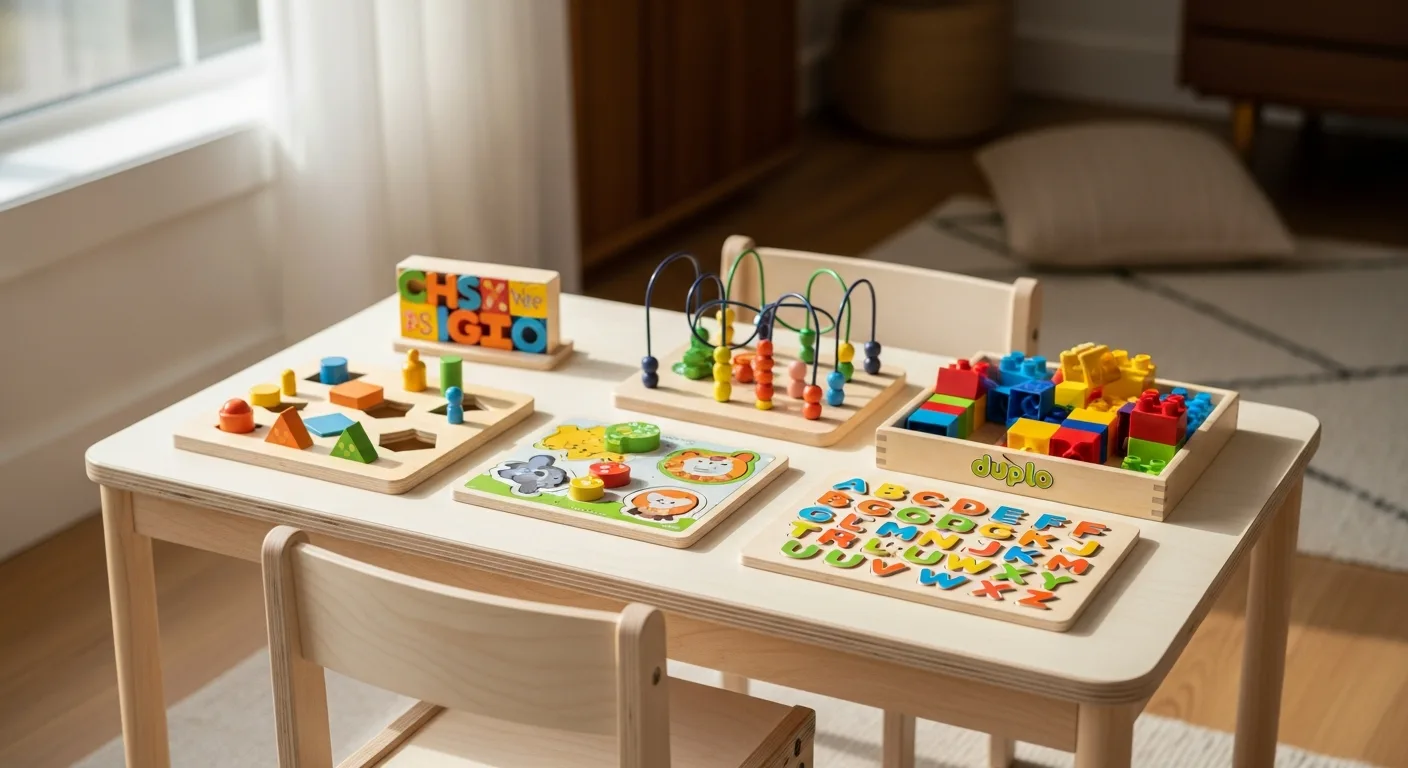
A low table dedicated to puzzles, threading activities, and small construction play (Duplo, Mega Bloks, or simple wooden connectors) gives toddlers a focused quiet-play zone. Store puzzles in their original boxes or in drawstring bags with a photo of the finished puzzle on the outside for independent access. A puzzle rotation system — three to four puzzles out at a time — keeps interest fresh.
Browse fine motor skill activities →15. Soft Play and Climbing Zone
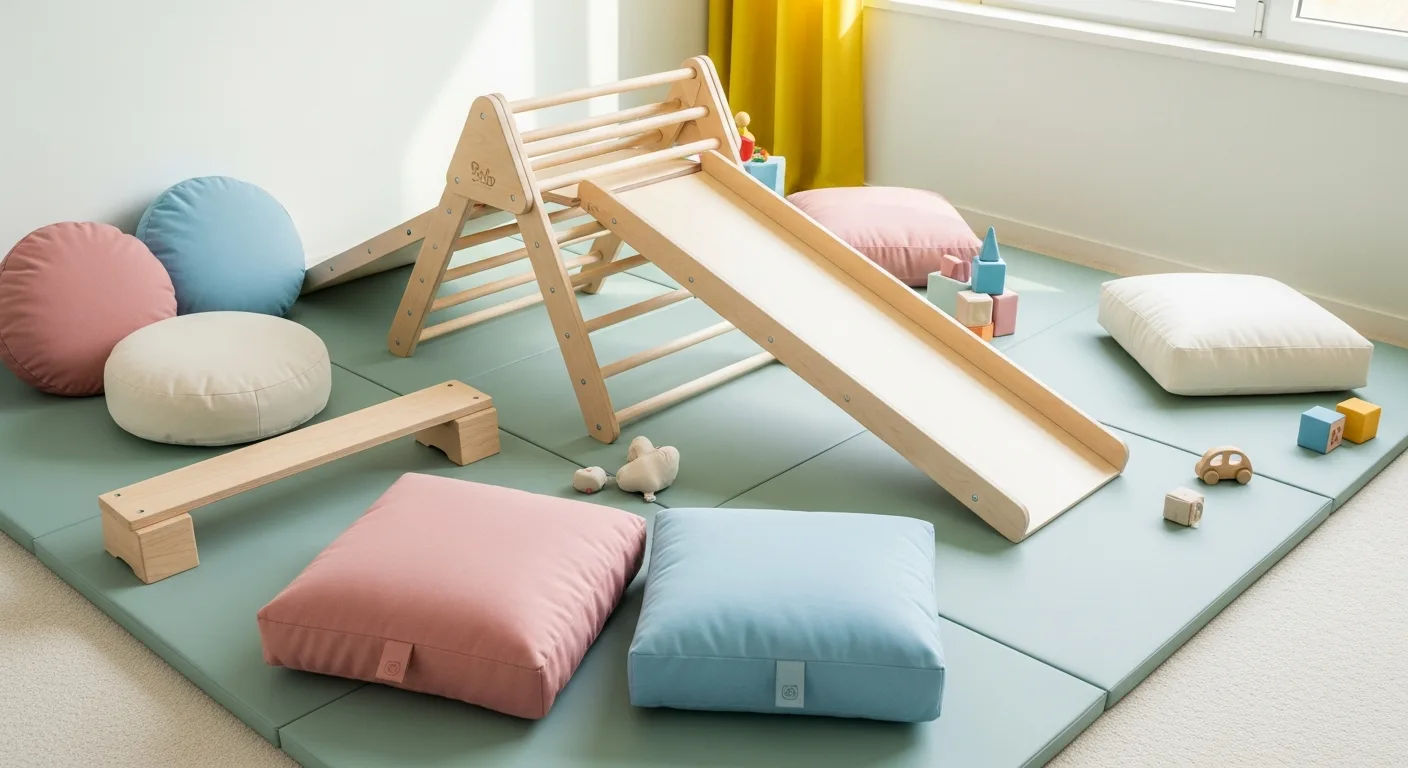
For high-energy toddlers, a dedicated movement zone with a small climbing triangle, a foam wedge for rolling, and large floor cushions for jumping meets their need for physical input at home. A pikler triangle with a slide attachment provides enormous value for the first three years. Ensure adequate clearance around all climbing equipment and use a thick foam mat underneath. This is especially useful on rainy days or during winter months.
See backyard activity ideas for active toddlers →16. Building and Construction Area
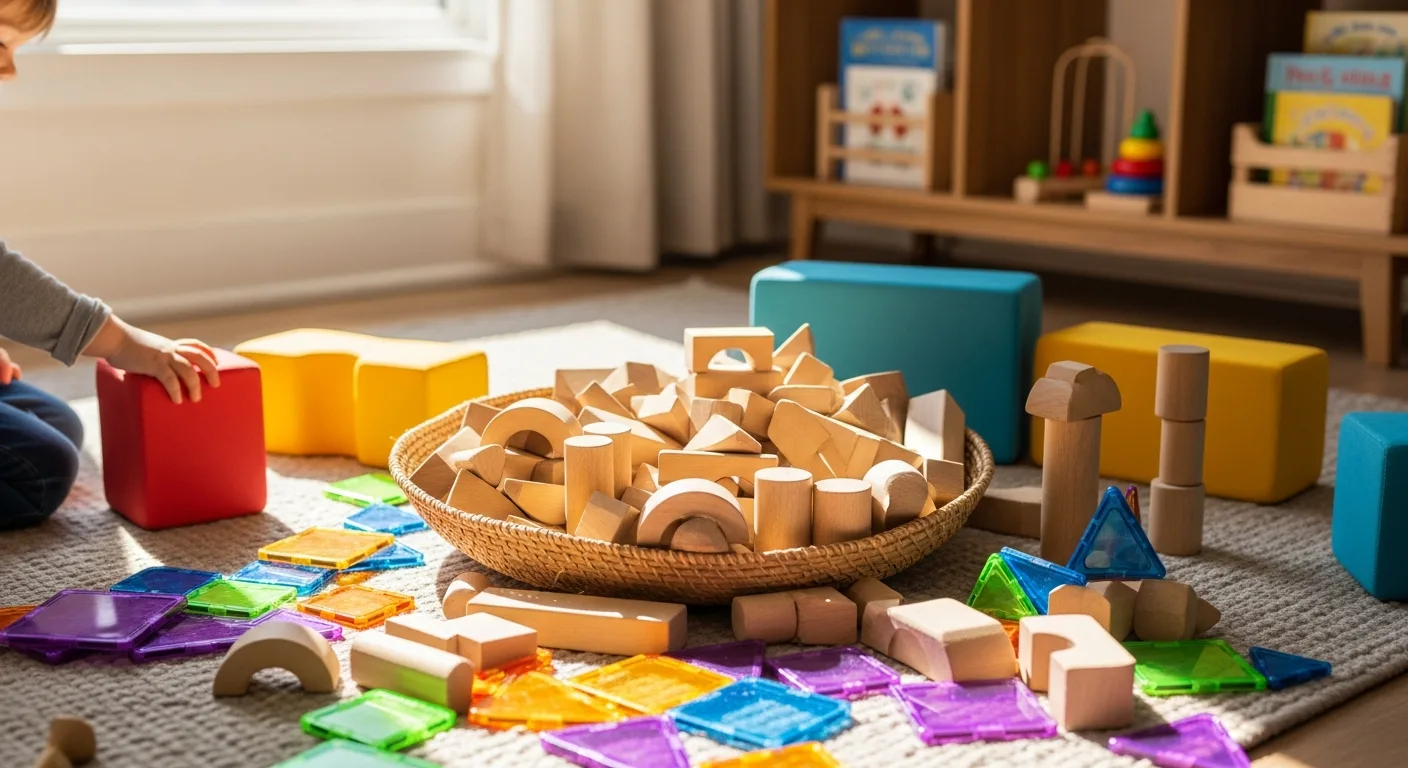
A large, low-pile rug designates the building zone and gives toddlers a defined surface for block constructions that will not slide. Store wooden unit blocks in an accessible open basket or low shelf, sorted loosely by size. Provide a variety of materials: cardboard tubes, foam blocks, magnetic tiles, and wooden arches all complement classic blocks. A small basket of loose parts — pebbles, shells, small vehicles — extends building play into storytelling.
Try our STEM activities for toddlers →17. Toddler-Height Gallery Wall
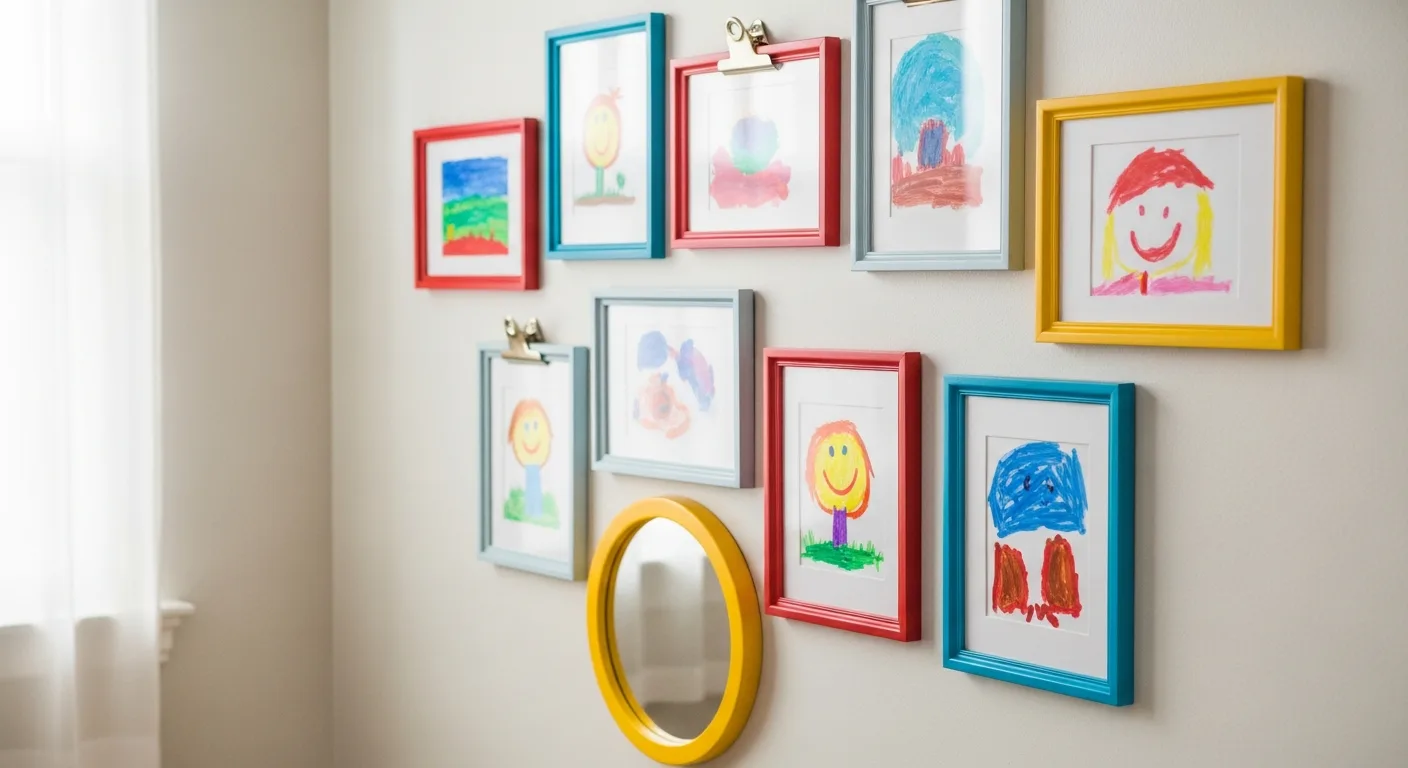
Hang framed prints, your child's artwork, and family photos at toddler eye level rather than adult height. A rotating gallery of your toddler's own paintings and drawings — framed simply in clip frames or hung with clothespins on a wire — builds genuine pride and ownership of the space. Include a mirror at toddler height to encourage self-recognition and dramatic play. The gallery does not need to be perfect — it needs to be theirs.
Read: 12 Ways to Build Confidence in Toddlers →18. Calm-Down and Cosy Corner
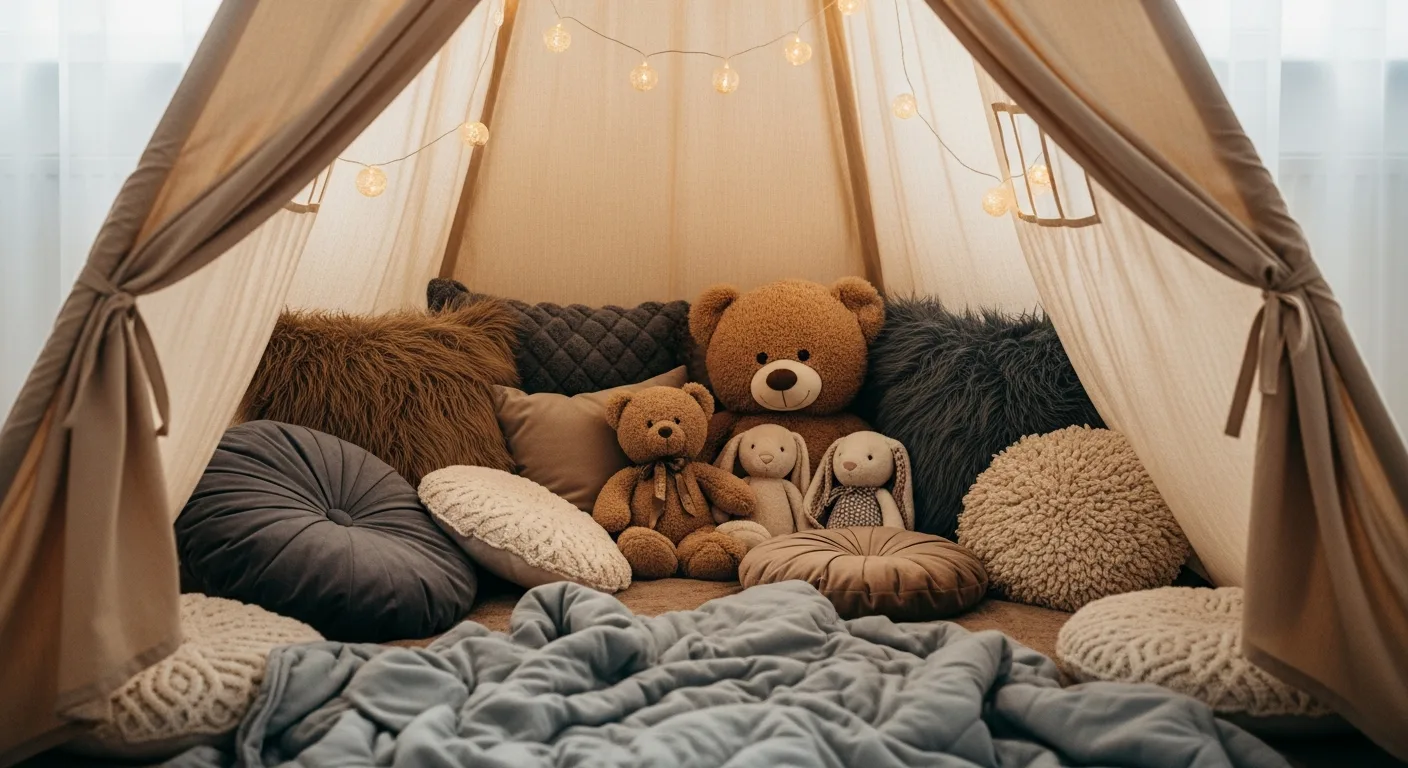
A calm-down corner — a small tent or canopy with soft cushions, a weighted blanket, a few favourite plush toys, and a calm-down jar — gives toddlers a designated place to regulate big feelings. This is not a naughty corner or time-out space: it is a positive, inviting area toddlers choose to use when they feel overwhelmed. Make it snug, low-lit (a small lamp or fairy lights work well), and reliably stocked with comfort items.
Read: Gentle Ways to Handle Toddler Tantrums →19. Play Kitchen and Pretend Store
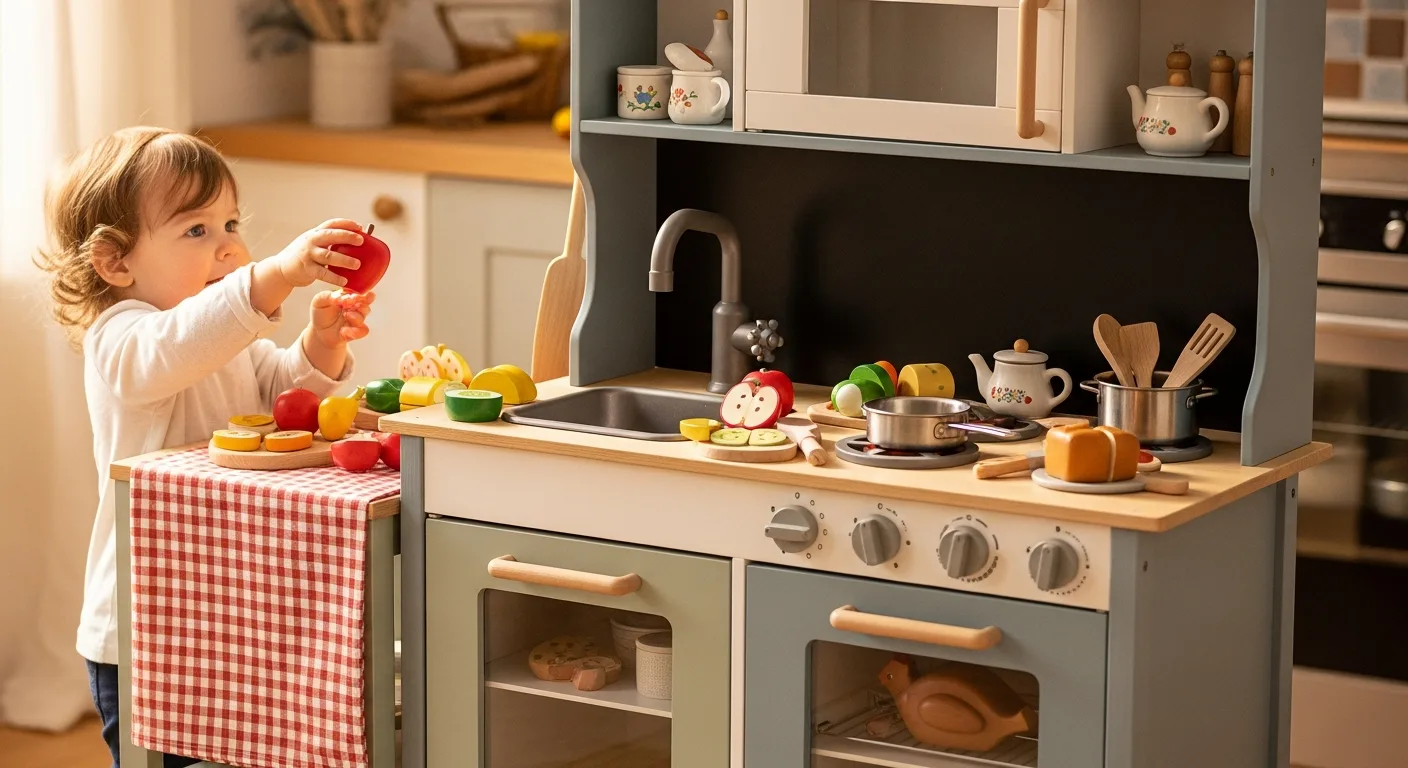
A play kitchen — even a simple second-hand one repainted in chalk paint — is one of the best investments for toddler imaginative play. Add a small collection of play food (wooden sets are durable and beautiful), pots, utensils, and a tablecloth nearby for serving meals. A simple market setup with baskets of fruit and a small cash register extends the play into shopping and maths concepts naturally through role-play.
Get toddler meal ideas to inspire the play kitchen →20. Light and Shadow Play Area
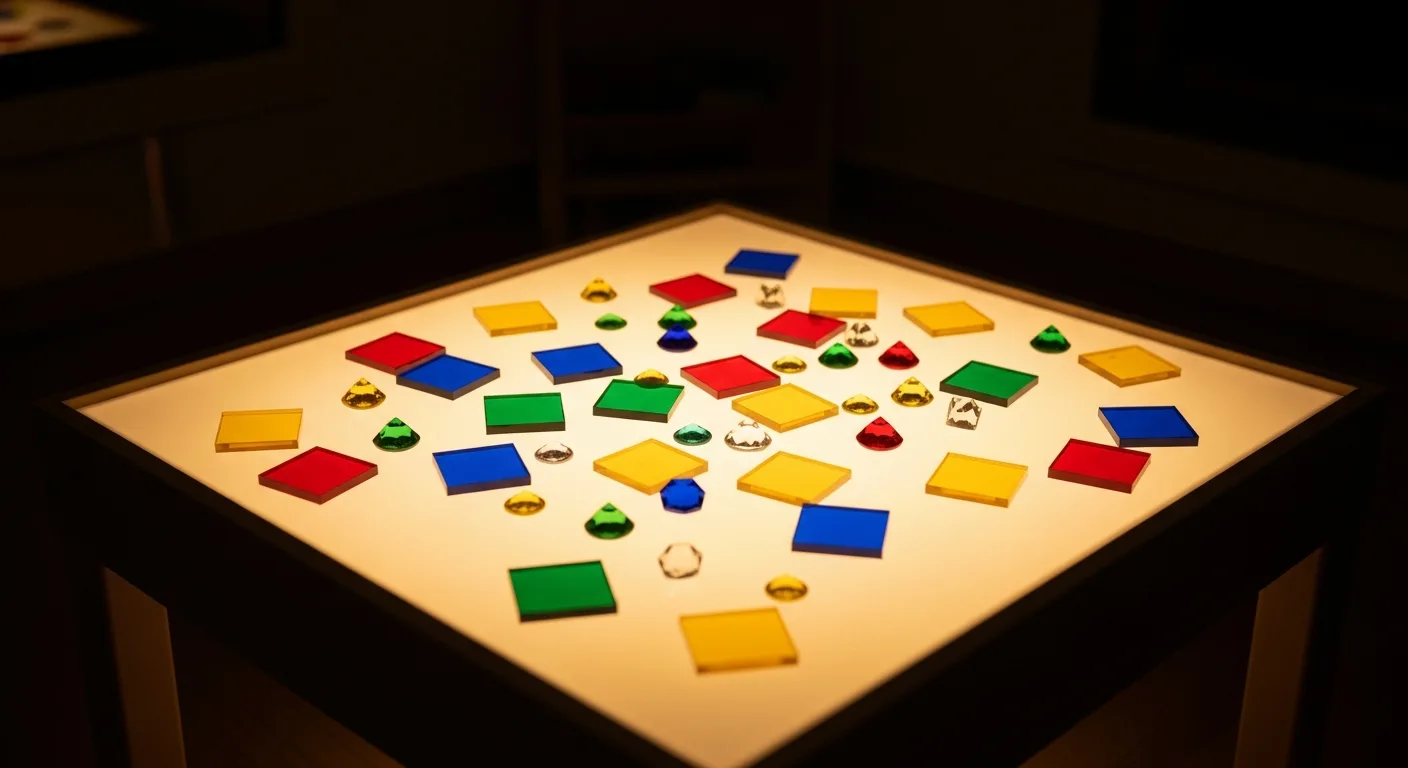
A light table (a shallow tray backlit from beneath) or a simple window light-play setup using transparent coloured materials creates a magical science and sensory experience. Translucent tiles, coloured acetate shapes, and loose gem stones placed on a light table hold toddler attention for extended periods. A projector torch casting animal shapes onto a wall is a simpler, lower-cost alternative that toddlers find equally captivating.
Try problem-solving activities for toddlers →Looking for ways to keep your toddler engaged?
Try our Toddler Activity Generator for fun, age-based activity ideas you can use at home.
Try the Activity Generator →Need toddler meal ideas too?
Use our Toddler Meal Generator for quick and easy meal inspiration.
Try the Meal Generator →Final Thoughts
The most important thing about any toddler play space is that it reflects your child — their interests, their energy, their pace. A Montessori shelf for one toddler is perfect; a chaotic art table is exactly right for another. Start small, observe what your child gravitates toward, and build the space around that.
Do not wait for the perfect room or the ideal budget. A rug, a shelf, and a basket of well-chosen toys is genuinely enough to begin. The space will evolve as your toddler does. For more on how play supports learning and development, see our Learning Through Play at Home guide, and for daily rhythm ideas that complement a great play space, read our Simple Toddler Routine Tips.