
15 Rainy Day Activities for Toddlers
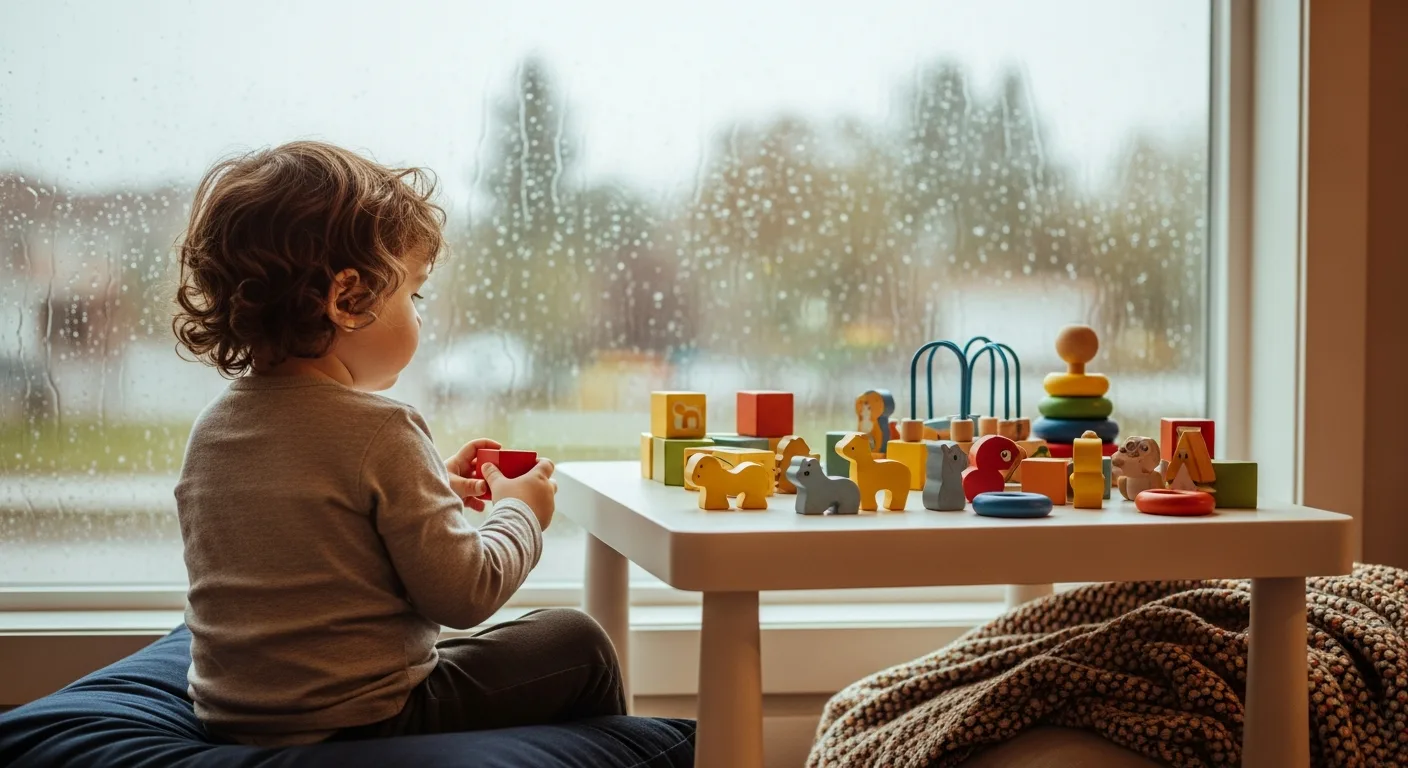
The rain is hammering the windows. You have already exhausted your usual options. Your toddler is full of energy and you are running low on yours. Rainy day activities for toddlers do not need to be elaborate — they just need to be engaging enough to hold attention and satisfying enough to feel worthwhile.
This list of 15 indoor rainy day activities for toddlers covers a range of play types — sensory, creative, physical, and imaginative — so you can match the activity to your toddler's mood and energy level on the day.
Why Rainy Day Activities Help Toddlers
Toddlers do not distinguish between boredom and dysregulation — both feel the same to them and both produce the same output: mounting energy, frustration, and eventually meltdowns. A good toddler rainy day activity does more than just pass the time. It gives a toddler's brain something purposeful to engage with, which is genuinely calming in a way that free-roaming restlessness is not.
The best indoor activities also do not require expensive equipment. Most of the best ones use what you already have. For a broader selection of indoor options beyond rainy days, see our Fun Indoor Activities for Toddlers guide.
15 Rainy Day Activities for Toddlers
Homemade sensory rice bin
Fill a large container with dry rice or pasta and add small toys, spoons, and cups for scooping and pouring.
Why it works: Sensory play with loose materials is deeply satisfying for toddlers and encourages focused, quiet exploration.
Quick tip: Lay a shower curtain or plastic sheet underneath to contain the mess and make cleanup easy.
Cardboard box fort construction
Give your toddler large cardboard boxes, tape, and blankets to build a fort or den together.
Why it works: Construction play builds spatial thinking, problem-solving, and gives toddlers a wonderful sense of ownership over something they made.
Quick tip: Start the structure yourself and let your toddler add to it — this keeps frustration low while maximising their involvement.
Kitchen band with pots and spoons
Pull out pots, wooden spoons, mixing bowls, and plastic containers for an impromptu percussion session.
Why it works: Rhythm and sound exploration develops auditory discrimination, gross motor skills, and pure joy. Most toddlers will do this for longer than you expect.
Quick tip: Set it up in a room where noise is tolerable and join in — your enthusiasm dramatically increases the length of the session.
Tape road for toy cars on the floor
Use painter's tape on a hard floor to create roads, bridges, roundabouts, and car parks for toy vehicles.
Why it works: This extends imaginative play with familiar toys while developing spatial awareness and planning.
Quick tip: Blue painter's tape comes off floors cleanly without leaving residue — avoid masking tape on wooden floors.
Coin rubbings
Place coins under paper and let your toddler rub the side of a crayon over them to reveal the pattern.
Why it works: This simple activity develops the hand pressure control and lateral crayon grip that supports later writing skills.
Quick tip: Start with the largest coins as they are easiest to rub. Work up to smaller ones as skill develops.
Blanket tent reading corner
Drape blankets over chairs or a clothes horse to create a cosy reading nook and fill it with books and soft toys.
Why it works: Enclosed spaces feel safe and calming to toddlers. Reading inside a self-made tent adds novelty that makes familiar books feel exciting again.
Quick tip: Use a small torch or fairy lights inside the tent for extra atmosphere.
Sponge painting
Cut kitchen sponges into shapes and let toddlers dip them into paint and press onto paper.
Why it works: Sponge painting requires less fine motor control than brush painting, making it more accessible for younger toddlers while still producing satisfying results.
Quick tip: Use a plate or tray for the paint to prevent over-dipping and keep colours distinct.
Obstacle course with cushions and pillows
Create a simple indoor obstacle course using sofa cushions, pillows, a rolled sleeping bag, and low step stools.
Why it works: Climbing, balancing, and crawling through obstacles is excellent gross motor development and burns rainy-day energy indoors.
Quick tip: Narrate each challenge as your toddler completes it — 'over the mountain, through the tunnel' — to make it feel like an adventure.
Simple baking project
Make a simple no-bake recipe together — like mixing oat balls or banana cookies — with your toddler helping to stir, scoop, and measure.
Why it works: Cooking activities build hand strength, early numeracy concepts, and cause-and-effect understanding, plus the result is usually something edible.
Quick tip: No-bake recipes are ideal because the waiting time is short and the result is immediate — toddlers do not do well with lengthy baking processes.
Giant bubbles at the kitchen sink
Mix washing-up liquid and water in a washing-up bowl and let your toddler use their hands or a wire loop to make large bubbles.
Why it works: Bubble play combines science exploration with sensory delight. Toddlers are naturally fascinated by the physics of bubbles.
Quick tip: Add a little glycerine to the bubble mixture to make stronger, longer-lasting bubbles.
Sock puppet theatre
Help your toddler decorate old socks with googly eyes and markers to make puppets, then put on a short show together.
Why it works: Puppet play supports language development, imagination, and storytelling — while also being a manageable craft that produces an immediately usable toy.
Quick tip: Use the finished puppets to act out familiar stories, which extends the activity well beyond the making stage.
Ripping and tearing paper collage
Give your toddler a pile of old magazines, wrapping paper, and newspaper to tear into pieces and stick onto a backing sheet.
Why it works: Tearing paper is a surprisingly good hand workout and requires bilateral coordination. It is also completely mess-free and endlessly satisfying.
Quick tip: Pre-apply glue to the backing sheet so your toddler can press torn pieces down without needing to manage the glue themselves.
Cloud dough sensory tray
Mix flour and baby oil in a 8:1 ratio to make soft, mouldable cloud dough. Let your toddler squish, mould, and shape it freely.
Why it works: Cloud dough has a unique texture — crumbly yet mouldable — that provides intense sensory input and can keep toddlers engaged for a surprisingly long time.
Quick tip: Add a small set of cookie cutters and a rolling pin to extend the play.
Paper roll building construction
Cut empty toilet rolls to different lengths and let your toddler stack, connect, and build with them on the floor.
Why it works: Open-ended construction with simple materials encourages spatial reasoning, problem-solving, and creative thinking without the constraints of pre-designed building sets.
Quick tip: Stand them upright for towers or lay them on their side for tunnels — show both possibilities and then step back.
Shadow hand puppet show
Use a torch or phone torch in a darkened room to make hand shadow animals on the wall — rabbits, dogs, birds — for your toddler to guess and copy.
Why it works: This activity is genuinely magical for toddlers and requires zero materials. It also supports early animal recognition and imaginative language.
Quick tip: Teach one shape at a time and let your toddler try. Perfect shadows are not the point — the trying and the giggles are.
Tips for Keeping Toddlers Engaged Indoors
- 🔄
Rotate the activity
Rather than pulling out everything at once, introduce activities one at a time. A fresh activity mid-morning beats having everything available from the start.
- 📦
Set up before you offer it
Toddlers engage better when an activity is already set up and ready. Watching you prepare something takes the magic out of it.
- ⏰
Follow their lead on timing
Some toddlers will spend twenty minutes on one activity; others need a new one every five. Neither is wrong — work with their attention span rather than against it.
- 🧘
Build in a calm activity at the end of the day
High-energy rainy day activities are great, but balance them with something calming — books, puzzles, quiet building — before dinner and bedtime.
For activities that specifically target toddler learning and development, our Educational Games for Toddlers guide is worth bookmarking for rainy day planning.
Need more activity ideas?
Try our Toddler Activity Generator to get quick indoor and outdoor activity ideas based on your toddler's age.
Try the Toddler Activity GeneratorFinal Thoughts
Rainy days with toddlers do not have to be something you dread. A little preparation — a mental list of go-to activities and a few supplies kept in a box — transforms an indoors day from a slog into something genuinely enjoyable. None of the activities on this list require advance ordering or elaborate setup. Most need nothing more than what you already have at home.