
Calm Home Environment for Toddlers: How Your Physical Space Shapes Their Behaviour
The environment your toddler spends most of their time in is not a neutral backdrop — it is an active influence on how regulated, focused, and emotionally stable they are. Most parents look at behaviour problems and think about what they are doing differently. Fewer think about what the room itself is doing.
Noise levels, visual clutter, lighting, and sensory load all directly affect the toddler nervous system. Small, deliberate changes to your physical space — particularly to these four factors — often produce noticeable shifts in behaviour within days. This guide explains the sensory science and the practical steps.
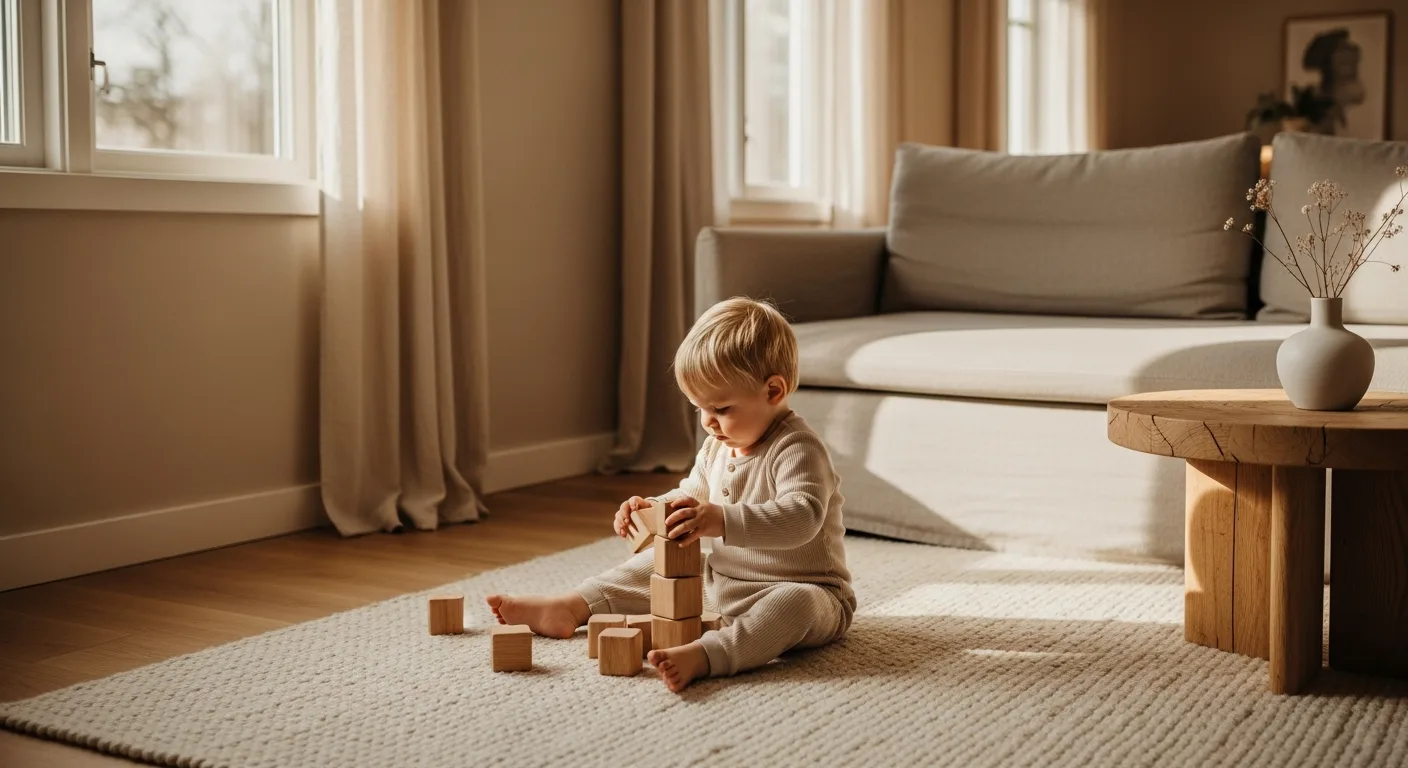
How the Physical Environment Affects Toddler Sensory Processing
Toddlers have developing sensory processing systems that filter incoming information differently from adults. What an adult experiences as comfortable background noise — a television on, music playing, other conversations happening — a toddler's nervous system may register as significant competing stimulation requiring active processing.
When environmental input exceeds the toddler's current processing capacity, their nervous system shifts into an arousal state — alert, reactive, and with a dramatically lower threshold for emotional flooding. In this state, small frustrations become large meltdowns, transitions become battles, and the same child who is manageable in a calm space becomes unmanageable in a busy one.
Sensory sensitivity exists on a spectrum. Some toddlers are highly sensitive to environmental input and need very deliberate sensory management. Others are relatively robust. Watching how your child's behaviour shifts between different environments — a quiet room versus a noisy one, a tidy space versus a cluttered one — tells you a great deal about where they sit on that spectrum.
Visual Clutter: The Underestimated Factor
Visual clutter is the most commonly overlooked contributor to toddler dysregulation. A play space overflowing with toys does not produce more creative play — it produces analysis paralysis, hyperactive switching between items, and less sustained engagement. The visual busyness itself is a source of sensory load.
Implement toy rotation
Remove two thirds of your toddler's toys from the accessible play space and store them. Bring out a small selection — 6 to 10 items — and rotate weekly. The reduction in visual overwhelm increases play quality immediately. The weekly rotation maintains novelty without adding clutter.
Organise what remains visibly
Toys in open bins or baskets are less overwhelming than toys spread across the floor. A simple organised shelf where items are visible and accessible creates a calmer visual field than a toy chest with everything piled inside. Order in the environment supports order in the nervous system.
Reduce wall stimulation
Walls covered in bright prints, educational posters, and decorations add to visual load. A few calming, simple images at toddler eye level are better than a fully decorated room. Blank wall space is not underutilisation — it is rest for the eyes.
Keep mealtimes and sleep spaces clutter-free
The areas where your toddler eats and sleeps are most important to keep simple. Visual stimulation at the dinner table increases distraction and reduces eating. Visual stimulation in the bedroom delays sleep onset and wake-up.
Noise Levels: Managing Auditory Sensory Load
Constant background noise — television, music, devices — keeps the toddler auditory system in a state of continuous low-level processing. This is exhausting in a way that is invisible until it tips into visible dysregulation. It also directly reduces the quantity and quality of parent-child verbal interaction, which is the primary driver of language development.
Turn off background TV
Television running in the background during play and meals significantly reduces toddler focus, shortens play episodes, and decreases parent-child conversation. Even if your toddler is not watching it, their brain is processing it.
Protect transition windows
The moments before nap, before meals, and before bed are most disrupted by noise. A quiet environment in these windows supports smoother transitions and better emotional regulation.
Choose audio intentionally
Soft, calm music or nature sounds in the background are significantly less dysregulating than television or fast-paced children's programming. When audio plays, let it be chosen and calm rather than habitual and loud.
Whisper as a tool
Lowering your own voice during dysregulated moments creates an auditory contrast that captures attention. A quiet voice in a loud situation draws toddlers toward you — the opposite of escalation.
Lighting: The Change That Costs Almost Nothing
Lighting has a direct effect on melatonin production and nervous system arousal. Bright, blue-spectrum light (overhead fluorescent or LED lights, screens) suppresses melatonin and keeps the brain alert. Warm, dim light supports melatonin onset and signals that the day is winding down.
Switching to warm-toned bulbs (look for 2700K on the packaging), adding lamps in the main living areas, and dimming lights from late afternoon is one of the highest-impact, lowest-cost changes you can make to your toddler's environment. Many families who make this change report noticeable improvements in evening behaviour and sleep onset within the first week. For a complete approach to evenings, our Building a Bedtime Routine That Works guide covers the full sequence.
Creating a Dedicated Calm Space
A calm corner — a small, simple, enclosed space your toddler can retreat to when overwhelmed — is one of the most practical environmental tools available. It works because it gives the toddler's nervous system a physical low-stimulation space to recover in, and it gives them agency over their own regulation rather than relying on adult intervention.
How to set up a calm corner
- Location: A corner of the main play space or bedroom — not isolated from the family but slightly separate.
- Enclosure: A small pop-up tent, a canopy over a cushion, or a draped sheet over a low table creates the sense of physical safety toddlers respond to.
- Contents: Two or three comfort items only — a favourite stuffed animal, a soft blanket, perhaps a calm sensory toy. No screens, no bright colours, no toys requiring active engagement.
- Introduction: Introduce it during calm, happy moments — not during a meltdown. 'This is your cosy space. We can go here when things feel like too much.' Make it genuinely inviting.
- Rule: The calm corner is never a punishment. It is a resource, not a consequence.
A consistent daily routine complements all of these environmental changes. Our Simple Toddler Routine Tips guide covers building a predictable rhythm that works alongside a calmer physical space.
Frequently Asked Questions
How do I know if my home is too visually stimulating for my toddler?
Signs your environment may be overstimulating include: your toddler moves rapidly between toys without engaging with any of them, meltdowns are more frequent in busier rooms than in simpler spaces, your toddler gravitates toward small enclosed spaces (under tables, inside boxes), and behaviour deteriorates noticeably after time in visually busy environments. Simplifying one room and observing behaviour for a week often makes the impact very clear.
How many toys should a toddler have out at one time?
Research on play and concentration in toddlers suggests that fewer accessible toys leads to longer, deeper engagement. A good starting point is 6 to 10 items available at one time, with the rest in storage. Rotating toys weekly introduces novelty without adding clutter. Many parents find that toy rotation produces more play and fewer meltdowns than a fully stocked play space.
What should a calm corner for a toddler include?
An effective calm corner for a toddler includes: soft seating (floor cushions, a small beanbag), low lighting if possible, a few familiar comfort items (a favourite stuffed animal, a soft blanket), minimal visual clutter, and ideally some physical enclosure — a tent, a canopy, or even a large cardboard box creates a sense of safety. The space should be introduced during calm moments, not introduced as a consequence or time-out location.
What lighting is best for toddlers in the evening?
Warm-toned, dim lighting from late afternoon onwards is significantly better for toddler melatonin production and sleep readiness than bright white or blue-spectrum overhead lights. Switching to lamps with warm bulbs (2700–3000K colour temperature), dimming overhead lights after 5pm, and avoiding screens with bright blue light in the hour before bed all support the biological wind-down that makes sleep and emotional regulation easier.
Does background television affect toddler behaviour even if they are not watching it?
Yes. Background television — even when a toddler is playing and not actively watching — has been shown to reduce the length and quality of toddler play, decrease parent-child verbal interaction, and increase distractibility. The unpredictable audio and visual activity of television creates constant low-level interruptions to a toddler's attention and processing. Turning off background television during play and mealtimes produces measurable improvements in toddler focus and interaction.