
How to Build Confidence in Toddlers: 12 Daily Habits That Work
Confidence in young children does not come from constant praise, a trophy for every effort, or shielding them from difficulty. It comes from something quieter and more powerful: the cumulative experience of being seen, heard, trusted with small challenges, and guided through the inevitable failures of early childhood with warmth.
The toddler years are an extraordinary window for building the internal structures of confidence — the belief that "I can try things, make mistakes, and still be okay." This guide explains why early confidence matters and offers 12 concrete daily habits that build it authentically.
Why Confidence Matters So Early
The foundations of self-confidence are laid in the first three years of life. During this period, children are forming their first internal working model of themselves — am I capable? Am I loveable? Are other people safe? These implicit beliefs are shaped by the quality of early attachment, the feedback received during attempts at independence, and the way adults respond to a toddler's emotional states.
Toddlers who develop secure confidence at this stage tend to show greater resilience when they encounter difficulty, more willingness to try new things, better peer relationships, and stronger school readiness. Confidence is not a personality trait you are born with — it is a skill developed through repeated, supported experience.
Importantly, confidence and independence go together. A toddler who is allowed to try, struggle a little, and succeed builds genuine competence — the true source of lasting confidence. For more on supporting toddler development through everyday activities, see our Learning Through Play at Home guide.
12 Ways to Build Confidence in Your Toddler
Let them struggle productively
Resist stepping in the moment your toddler encounters difficulty. Give them 30 extra seconds to try. The experience of figuring something out — even partially — is far more confidence-building than having it done for them.
Use descriptive praise, not generic praise
Instead of 'Good job!' try 'You kept trying even when that was hard' or 'You figured out how to make that fit.' Specific praise builds a growth mindset rather than dependence on approval.
Give them real responsibilities
Assign age-appropriate tasks: putting their cup in the sink, choosing between two snacks, picking up their toys. Real responsibilities communicate genuine trust and build competence.
Follow their lead in play
Set aside time each day for child-led play where you follow your toddler's direction entirely. This communicates that their ideas are valuable and worth pursuing.
Validate emotions rather than dismissing them
'You feel so frustrated. That was really hard.' Emotional validation — naming and acknowledging feelings without fixing or minimising — teaches toddlers that their inner world is real and manageable.
Avoid rescuing too quickly
When your toddler falls (safely), wait a beat before rushing in. When they are frustrated, resist immediately solving the problem. The message: 'I trust you to handle this, and I am here if you need me.'
Encourage risk within safe limits
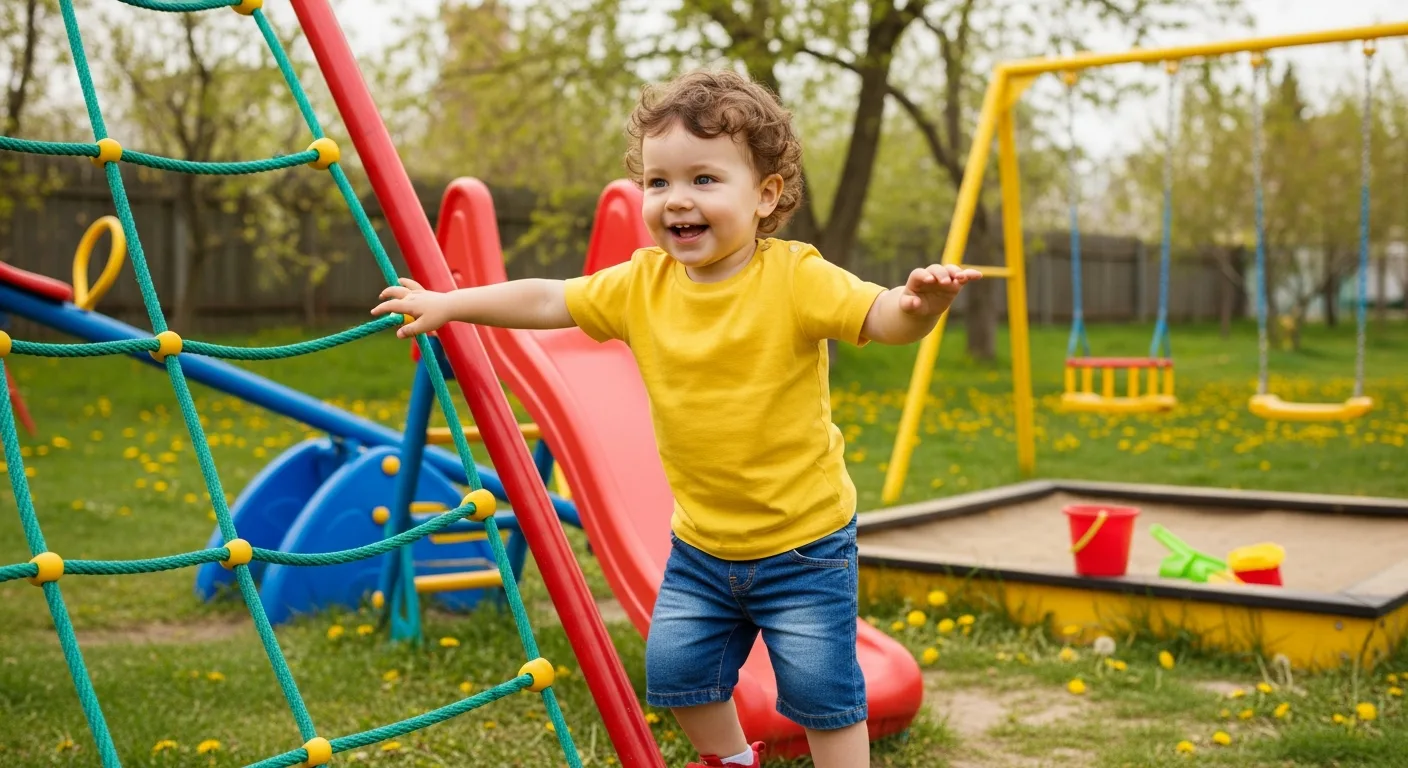
Allow appropriate physical risk — climbing to a manageable height, jumping from a low step, running on uneven ground. Managed physical risk builds bodily confidence and spatial courage.
Narrate their strengths back to them
Throughout the day, reflect what you observe: 'You were really kind to your bear today. You are so patient when you are building.' Children internalise how they are described.
Model mistake-making yourself
When you make an error, say it out loud: 'Oh, I made a mistake! Let me try again.' Toddlers who see adults handle failure calmly learn that mistakes are survivable and instructive.
Read books about courage and perseverance
Stories featuring characters who try despite fear, fail and recover, or are different and proud of it offer powerful narrative models for building confidence. Discuss the characters' feelings and choices.
Create predictable routines
Confident toddlers are usually ones who feel safe. Reliable routines — same mealtimes, same bedtime sequence, same transition rituals — create the predictability that gives toddlers the security to explore. See our <Link href='/blog/simple-toddler-routine-tips' className='text-primary hover:underline font-medium'>Simple Toddler Routine Tips</Link>.
Celebrate effort, not only outcome
When your toddler tries something and it does not work out, celebrate the attempt: 'You tried something really hard today. That is something to be proud of.' Outcome-independent praise builds intrinsic motivation.
Daily Parenting Habits That Shape Confidence
The biggest confidence-shaping moments are not big events — they are the accumulation of thousands of small daily interactions. The way you respond when your toddler drops their cereal, can't get their shoe on, or cries at the park matters enormously. Warmth, patience, and the consistent message "I believe in you" are the most powerful confidence tools available.
Pay attention to language that inadvertently undermines confidence: "Let me do that" (before they have truly tried), "Be careful!" (repeated excessively, it communicates that the world is dangerous), or "You're so shy" (which labels and fixes a temporary state). Replace these with trust-communicating language: "You can try," "I'll be right here," "I wonder what will happen if you try..."
For shy toddlers specifically, see our dedicated guide on Activities for Shy Toddlers, which offers tailored confidence-building approaches for more cautious children.
Final Thoughts
Confidence is not something you can give your toddler directly — but it is something you can create the conditions for every single day. Through trust, appropriate challenge, genuine encouragement, and the secure base of your relationship, your toddler develops the internal belief that they are capable, loveable, and worth knowing. That is the greatest gift of the early years. For activity ideas that build independence and confidence through play, try our Toddler Activity Generator.
Want Confidence-Building Activity Ideas?
Use our Toddler Activity Generator for instant, age-appropriate ideas your toddler will love.
Try the Activity Generator →Need Meal Ideas?
Try our Toddler Meal Generator for personalised, age-appropriate meal ideas in seconds.
Try the Meal Generator →Get the 30 Easy Toddler Recipes PDF
Download our printable recipe guide — 30 quick, toddler-approved meals your family will love.
Get the 30 Easy Toddler Recipes PDF →