
A Simple Toddler Curriculum for Learning at Home
The idea of a toddler curriculum can sound unnecessarily formal — images of worksheets, structured lessons, and academic pressure applied to two- and three-year-olds. That is not what a home curriculum needs to be. A good toddler learning framework is simply an intentional structure for ensuring your child encounters a broad range of learning experiences across the week, in a way that feels like play.
This guide lays out exactly what a simple toddler home curriculum can look like: the key learning areas to cover, a sample daily rhythm, a flexible weekly plan, and the principles that make home-based toddler learning genuinely effective without being stressful for parent or child.
What a Toddler Curriculum Actually Looks Like
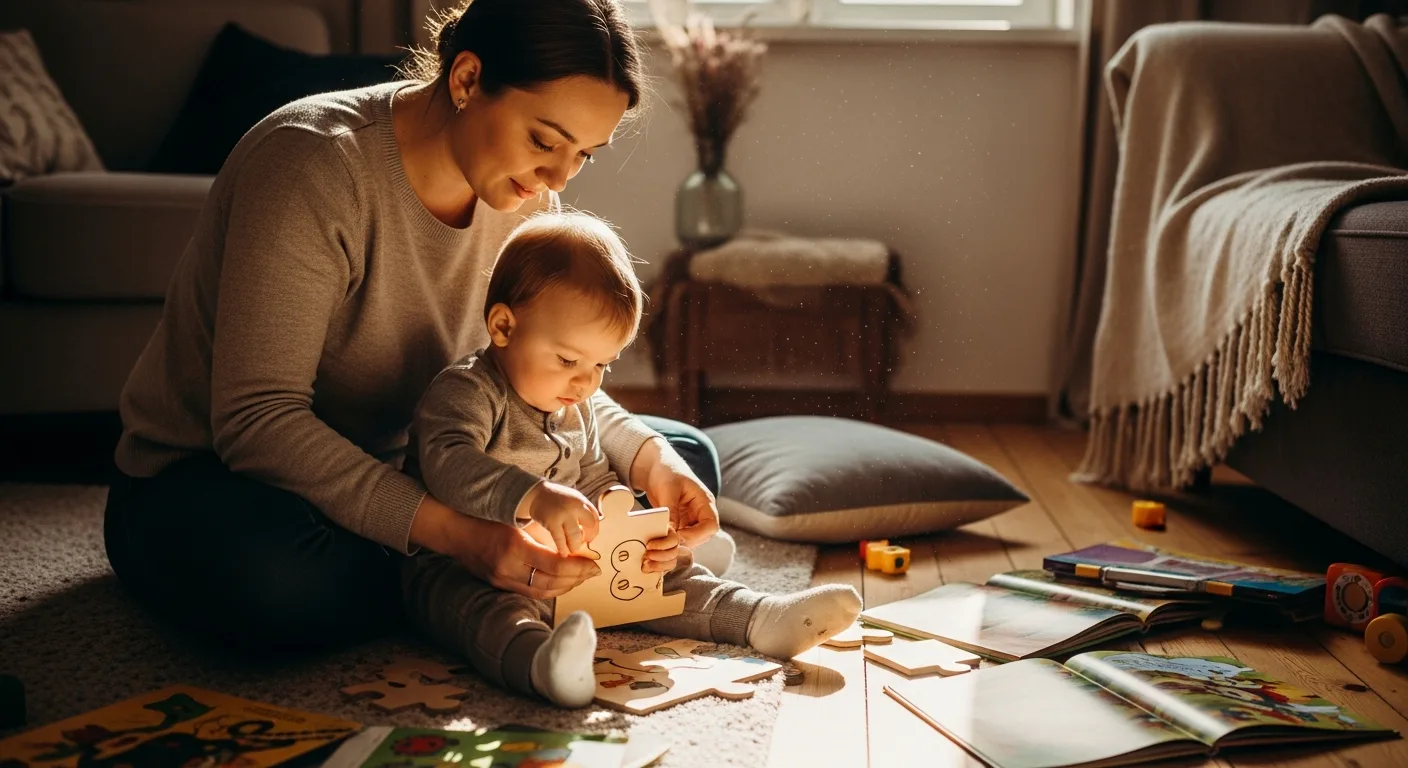
A toddler curriculum at home is not a miniature school programme. It is a flexible intention to cover key developmental areas through activities, routines, and everyday experiences — spread across the week in short, engaging sessions that honour the toddler's need for movement, repetition, autonomy, and unstructured play.
Sessions do not need to be long: ten to twenty minutes of focused activity is entirely appropriate for toddlers, and much of the richest learning happens during free play, outdoor time, meals, and conversations rather than in formal activity sessions. The curriculum provides scaffolding; life provides the majority of the learning.
Key Areas of Toddler Learning
Language and Literacy
Reading aloud daily, conversation-rich routines, rhymes, songs, storytelling, letter sounds, and print awareness. Language is the foundation of all other learning — the more words a toddler hears and uses, the better prepared they are across every developmental domain.
Early Numeracy
Counting in daily contexts (stairs, grapes, steps), simple sorting and classification, shape and pattern recognition, size comparison, and basic measurement concepts introduced through cooking, building, and play.
Science and the Natural World
Nature observation, simple experiments (what happens when we mix these?), exploring cause and effect, caring for plants or animals, weather observation, and developing the habit of curious questioning.
Creative Arts
Drawing, painting, modelling with clay or playdough, music-making, singing, dancing, and imaginative play. Creative activities develop fine motor skills, emotional expression, spatial thinking, and aesthetic appreciation.
Physical Development
Gross motor play (running, climbing, jumping, balancing), fine motor activities (building, threading, drawing), outdoor time daily, and movement games. Physical development is closely linked to cognitive and emotional development throughout the toddler years.
Social and Emotional Learning
Emotional vocabulary, turn-taking, sharing, conflict resolution through play, cooperation activities, and the modelling of emotional regulation by caregivers. Social-emotional skills are among the strongest predictors of school readiness and long-term wellbeing.
Daily Toddler Learning Routine
A loose daily rhythm — rather than a strict timetable — provides enough structure to ensure key learning areas are touched without creating the rigidity that stresses toddlers and parents alike. The following is a flexible framework, not a prescription:
Morning routine (self-care tasks as learning opportunities — dressing, teeth brushing, making bed). Brief calendar and weather check.
Focused learning activity (15–20 minutes): literacy, numeracy, or art project. This is the highest-focus period of the day for most toddlers.
Free play (indoor or outdoor). Unstructured play is not wasted curriculum time — it is where children practise, consolidate, and extend the learning from structured sessions.
Lunch (conversation, self-feeding practice, counting, colour identification, simple food science).
Physical activity or nature time (outdoor play, garden exploration, sensory play). Practical life activities (helping with simple household tasks).
Quiet reading time (1–2 picture books, story discussion). Wind-down before dinner routine.
Bedtime routine as consistent close to the learning day: bath, book, song, sleep.
Sample Weekly Toddler Curriculum
This sample week covers all six learning areas across five days, with each day having a different primary focus. Sessions are short (15–20 minutes) and paired with free play to consolidate learning.
| Day | Focus | Sample Activity |
|---|---|---|
| Monday | Language & Literacy | Letter sound hunt + read 2 picture books aloud + story retell |
| Tuesday | Numeracy & Maths | Counting walk + number matching cards + simple pattern making |
| Wednesday | Science & Nature | Garden observation + simple sink-or-float experiment + weather chart |
| Thursday | Creative Arts | Free drawing or painting + playdough + music and movement |
| Friday | Practical Life & SEL | Cooking or baking together + feelings card activity + simple household task |
Learning Through Play Tips
- 🎲
Follow the child's interest
A child fascinated by cars will learn counting, colour recognition, sorting, and spatial reasoning far more deeply through a car-themed curriculum than through abstract worksheets. Interest is the engine of toddler learning — follow it wherever it leads.
- 🗣️
Talk constantly
The single most powerful thing you can do for toddler brain development costs nothing: talk. Narrate your activities, ask questions, respond to their attempts at communication, introduce new vocabulary naturally throughout the day. The volume of language a child hears before age three is one of the strongest predictors of later academic success.
- 🔁
Revisit and repeat
Toddlers learn through repetition, not novelty. Doing the same activity multiple times across a week — or even the same day — is not a sign of boredom; it is how learning becomes mastery. Resist the urge to constantly introduce new activities before the current ones are consolidated.
- 🌿
Prioritise outdoor time daily
Nature provides the richest and most varied learning environment available to toddlers. Prioritise outdoor time every day regardless of weather — dressed appropriately, a wet garden or a cold park offers more sensory, cognitive, and physical learning than almost any indoor alternative.
For a deeper dive into play-based learning principles, our Learning Through Play at Home guide covers the research and practical applications. To support the language development component of this curriculum, our Encouraging Language Development at Home guide has targeted strategies. And for the shape and geometry component, our Shape Activities for Toddlers guide has ready-to-use activities.
Looking for fun toddler activities?
Try our Toddler Activity Generator to get instant indoor and outdoor activity ideas based on your toddler's age.
Try the Toddler Activity GeneratorNeed toddler meal ideas?
Use our Toddler Meal Generator to quickly find breakfast, snack, and dinner ideas.
Try the Toddler Meal GeneratorFinal Thoughts
A toddler curriculum at home does not need to be elaborate, expensive, or time-consuming to be highly effective. What it needs is intention — a simple awareness of the key learning areas, a loose daily rhythm that creates consistency, and a commitment to following your child's interests with genuine curiosity. The most important learning at this age happens in the spaces between structured activities: in conversations, in the garden, in the kitchen, in the bath. Your presence and engagement are the curriculum. Everything else is supplementary.