
15 Preschool Activities for Toddlers at Home
You do not need a classroom, a curriculum, or specialist equipment to give your toddler a rich preschool-style learning experience at home. Children aged two to four are in an extraordinary window of cognitive, language, and social development — and the activities that best support this development are often the simplest.
These 15 preschool activities for toddlers are designed to be done at home with everyday materials. Each one targets a specific area of early learning — literacy, numeracy, science, self-regulation, social skills, or creative expression — while feeling like play to your toddler.
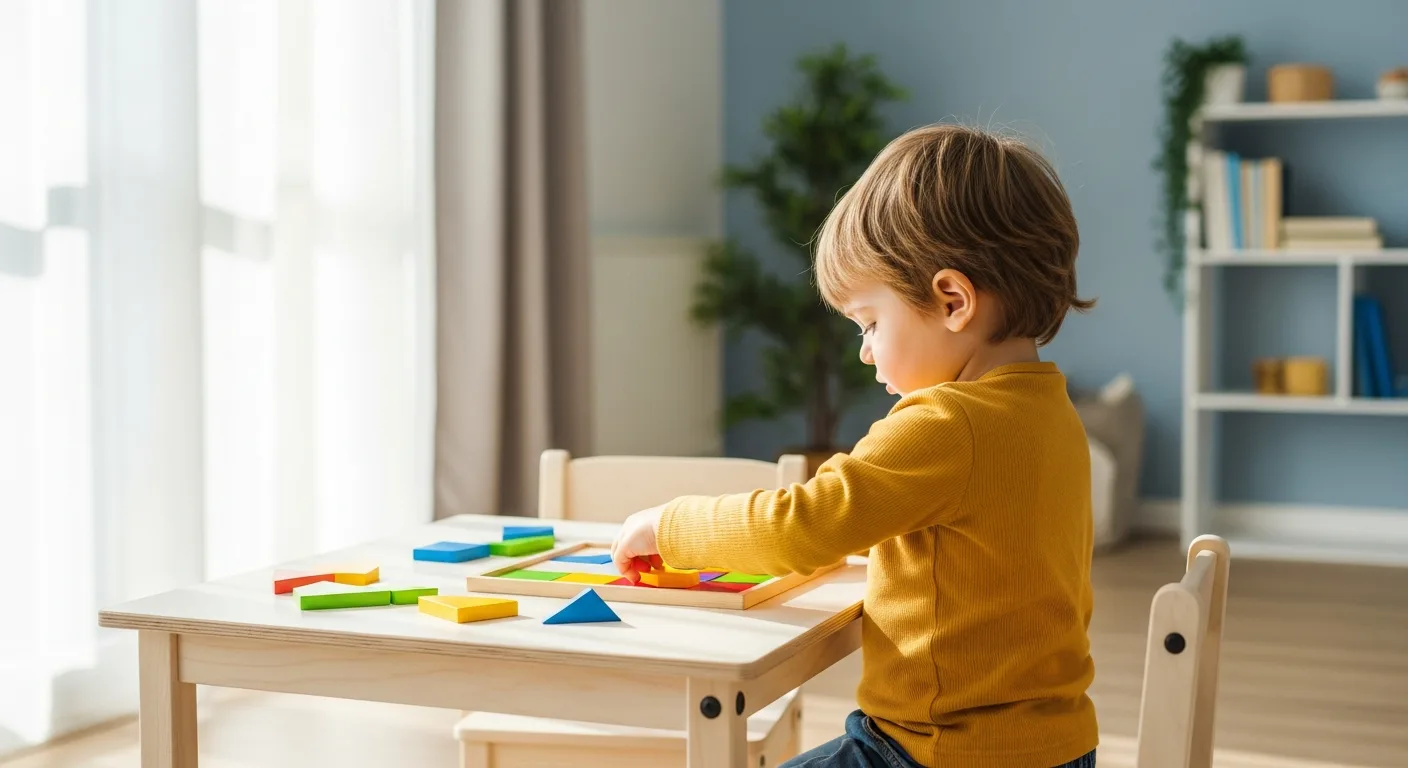
Why Preschool-Style Activities Help Toddlers
Preschool-style learning is not about drilling academic content — it is about providing structured experiences that build the foundational skills children need before formal schooling begins. These include pre-literacy skills (letter recognition, phonological awareness, story comprehension), pre-numeracy skills (number concepts, sequencing, pattern recognition), executive function (attention, working memory, self-control), and social-emotional skills (turn-taking, listening, emotional vocabulary).
When these skills are developed through playful, low-pressure activities at home, children enter formal education with a strong foundation that research consistently links to better long-term academic and social outcomes. The activities in this guide are intentional — but they feel to your toddler exactly like fun.
15 Preschool Activities Toddlers Can Do at Home
Name recognition card matching
Write your toddler's name in large letters on a card. Make a second matching card. Practice matching the letters, then gradually introduce the names of other family members. This introduces the concept of written language as meaningful and personal — a crucial pre-literacy milestone.
Letter sound hunt
Choose one letter sound per day. Walk through the house together and find objects that begin with that sound. 'Can you find something that starts with the sound sss?' This activity builds phonological awareness — the ability to identify and manipulate sounds in language — which is one of the strongest predictors of early reading success.
Tracing shapes with chalk outdoors
Draw large simple shapes (circle, square, triangle, star) with chalk on a patio or path. Have your toddler walk along the lines, then trace them with their finger, then with chalk. The physical experience of tracing shape outlines builds geometric understanding and gross-to-fine motor coordination simultaneously.
Simple pattern sequences with objects
Lay out a simple repeating pattern with household objects — red block, blue block, red block — and ask your child to continue it. Start with two-item patterns (AB), then move to three (ABC). Pattern recognition is foundational to mathematical thinking and appears consistently across early maths curricula.
Counting and number matching
Write numbers 1–5 on index cards. Place the corresponding number of small objects beside each card. Have your toddler count the objects and point to the matching numeral. This connects abstract numerals to concrete quantities — the key conceptual bridge in early numeracy.
Story retelling with puppets or toys
After reading a favourite picture book, hand your child a few soft toys or finger puppets and invite them to retell the story. Story retelling builds narrative comprehension, vocabulary, memory, and expressive language — all critical pre-literacy and early literacy skills.
Sink or float science experiment
Fill a bowl with water and collect a range of small household objects. Ask your toddler to predict before each object: 'Do you think this will sink or float?' Then test. Record results by sorting objects into two groups. This introduces basic scientific thinking: hypothesis, experiment, observation, and classification.
Simple book making
Fold and staple four or five sheets of paper to make a small blank book. Invite your toddler to draw a story across the pages — even if it is just scribbles at first — then narrate it to you. You write their words underneath. This connects drawing to writing, builds narrative thinking, and gives enormous pride of authorship.
Rhyming picture card pairs
Create simple pairs of cards with drawings or pictures of rhyming words (cat/hat, sun/run, bee/tree). Spread them face-up and find the rhyming pairs. Rhyme awareness is one of the earliest phonological skills to develop and strongly predicts reading readiness. This can be made with hand-drawn pictures in ten minutes.
Simple graphing activity
Gather a mix of objects in two or three colours (buttons, blocks, crayons). Sort them by colour and count each group. Draw a simple bar graph together with columns for each colour and fill in squares as you count. Even toddlers aged three can understand simple data representation when it is concrete and visual.
Listening walk and sound map
Go for a short walk outside (or around the home) specifically to listen. Stop every few minutes and ask: 'What can you hear?' Back at home, draw a simple map of where you walked and mark the sounds heard at different points. This develops active listening, spatial awareness, and observational language.
Calendar and weather routine
Each morning, do a simple two-minute routine: look at the calendar (what day is it today?), look out the window (what's the weather?), and mark both on a simple chart. This preschool classroom staple builds number sequencing, day-of-week concepts, observation skills, and provides a predictable starting structure to the day.
My feelings picture sort
Draw or print simple face cards showing happy, sad, angry, surprised, scared, and tired. Read short scenario cards or describe situations aloud and have your toddler choose the matching feeling face. This builds emotional vocabulary — the ability to name and identify feelings — which is foundational to self-regulation.
Dot-to-dot letter formation practice
Draw letters with a series of numbered or lettered dots that your toddler connects in order. Start with simple high-contrast letters (L, T, H, E) before moving to curved ones. Dot-to-dot letter formation is more engaging than standard tracing worksheets and builds pre-writing pencil control naturally.
Simple dramatic play restaurant or shop
Set up a simple 'restaurant' or 'shop' using kitchen items and homemade price tags. Take turns being customer and owner. Dramatic play builds social language (greetings, requests, responses), early numeracy (simple transactions, counting), sequencing, and the ability to take another person's perspective — all core preschool learning outcomes.
Simple Materials Parents Can Use
For deeper ideas on how play supports learning, our Learning Through Play at Home guide covers the full principles. For activities specifically targeting shape recognition and geometry, Shape Activities for Toddlers has dedicated ideas. And for structured games that build learning skills, Educational Games for Toddlers has a full range.
Looking for fun toddler activities?
Try our Toddler Activity Generator to get instant indoor and outdoor activity ideas based on your toddler's age.
Try the Toddler Activity GeneratorNeed toddler meal ideas?
Use our Toddler Meal Generator to quickly find breakfast, snack, and dinner ideas.
Try the Toddler Meal GeneratorFinal Thoughts
Preschool activities at home do not require a structured school schedule. Even twenty to thirty minutes of intentional, play-based learning activity each day — alongside the rich learning that happens naturally through daily life, conversation, and free play — provides a genuinely strong early learning foundation. Choose activities your toddler finds engaging, follow their lead, and keep it enjoyable. The learning follows naturally.