
How to Teach Numbers to Toddlers: 12 Fun and Effective Activities
Early number learning is one of the strongest predictors of later academic success — yet it does not require workbooks, drills, or any formal instruction. Toddlers learn numbers best through hands-on exploration, play, and the kind of casual counting that parents and caregivers can weave naturally into everyday life.
This guide covers how early number sense develops, 12 engaging number activities for toddlers, and simple ways to bring counting into your toddler's daily routine. Whether your child is just beginning to say "one, two, three" or is starting to understand what those words actually mean, you will find ideas that meet them right where they are.
Understanding Early Number Learning
There are two distinct skills involved in early number learning, and it helps to understand both. The first is rote counting — reciting numbers in order (one, two, three, four) like a song. Toddlers often master this surprisingly early, sometimes by age 2, simply through repetition and rhyme. But rote counting is like knowing the alphabet: it does not yet mean a child understands what numbers represent.
The second skill is rational counting — understanding that each number corresponds to exactly one object, and that the last number said represents the total. This cardinality concept typically develops between ages 3 and 4, but it requires hands-on practice with physical objects, not just verbal repetition.
For more on how play supports early learning, read our guide to Learning Through Play at Home, which covers how toddlers absorb concepts most naturally.
12 Number Activities for Toddlers
Count everything, all day long
The easiest and most effective number activity requires nothing at all. Count stairs as you climb them. Count crackers onto a plate. Count socks as you fold them. Count toys as you tidy up. This running commentary of real-world counting builds a genuine sense of what numbers mean without any formal instruction.
Use number songs and rhymes
Songs like 'Five Little Ducks', 'Ten in the Bed', 'One, Two, Buckle My Shoe', and 'Five Little Monkeys' combine number words with melody, rhythm, and story. Children who hear these repeatedly develop strong number word sequences long before they understand the underlying concepts — and that foundation matters.
Play with numbered blocks or puzzles
Simple wooden number puzzles (where each piece shows a numeral and a corresponding quantity of objects) help toddlers connect written numerals to real quantities. Foam number bath toys and magnetic numbers for the fridge also give toddlers a tactile, exploratory way to encounter number symbols.
Sort and count small objects
Set out a collection of small objects — buttons, blocks, toy animals, pasta pieces — and count them together. Practice putting them one at a time into a bowl or egg carton, saying the number as each one goes in. This hands-on one-to-one correspondence practice is essential for developing real number understanding.
Play dot counting games
Draw or use printed dot cards (similar to dice) and practice counting the dots. Start with 1 to 3 dots, which are easy to subitize (recognize without counting). Gradually introduce higher numbers. Dot cards are a foundational math tool used in Montessori and many early childhood programs.
Do number hunts around the house
Look for written numerals in your environment: on clocks, calendars, phones, food packaging, letterboxes, and door numbers. Point them out and name them. Toddlers love spotting familiar things in new contexts, and seeing numbers in the real world reinforces their meaning.
Play 'How many?' at snack time
Use snack time as a natural counting opportunity. 'You have five strawberries. Let's count them: one, two, three, four, five.' Ask: 'How many grapes would you like? Two? Let's count two grapes.' The combination of food (highly motivating) and counting makes this one of the most reliably engaging number activities for toddlers.
Stack and count blocks
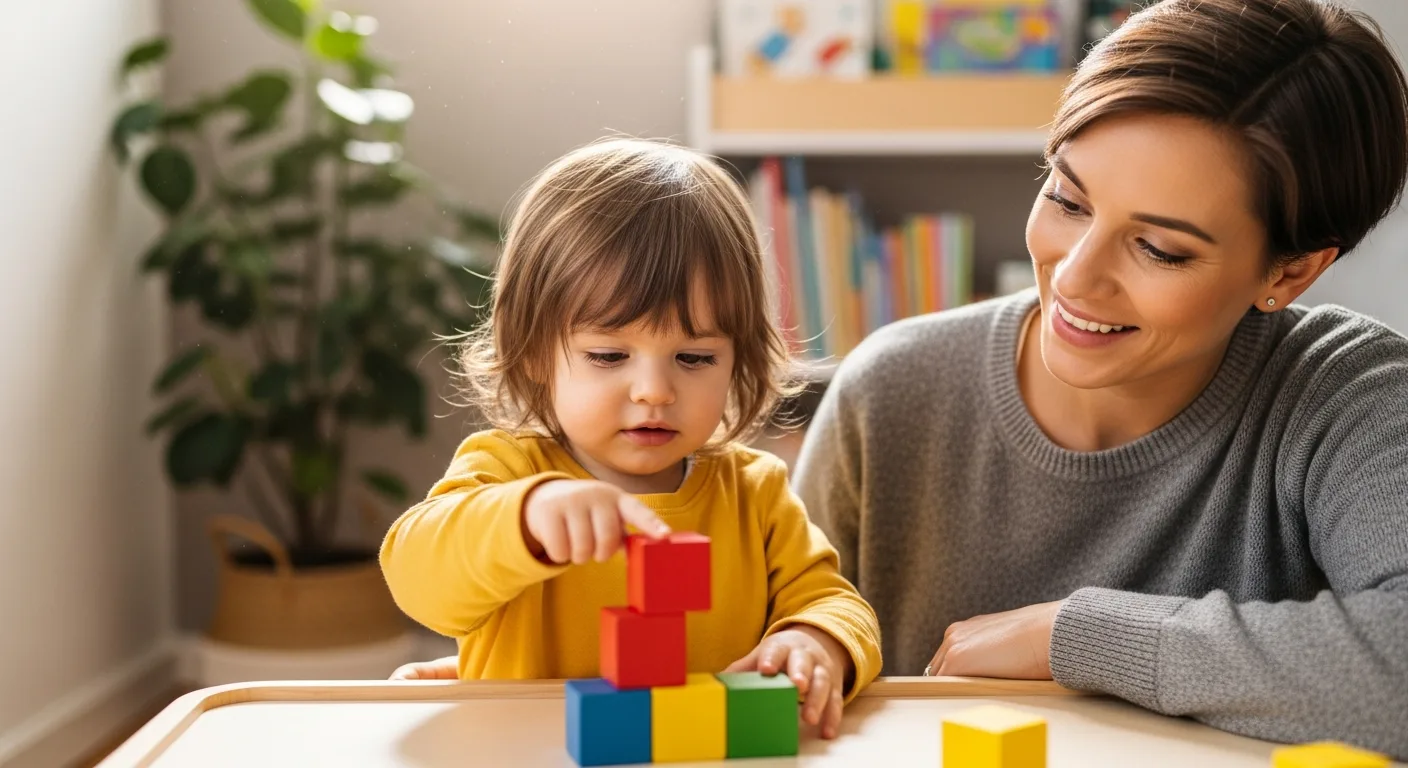
Count aloud as you stack blocks together: 'One block, two blocks, three blocks — oh, it fell!' The physical building action paired with counting creates a clear association between the number word and the object. Crash the tower together for maximum excitement and then count again as you rebuild.
Use number line mats or hopscotch
Draw a simple number line on paper or use a hopscotch grid outside. Jump from number to number saying each one. Walk along the numbers together. Physical movement and spatial position help children understand that numbers have an order and that each one is one more than the last — a concept called ordinality.
Read number-focused books together
Books like 'Ten Apples Up on Top!', 'How Do Dinosaurs Count to Ten?', and 'Chicka Chicka 1 2 3' make numbers the star of the story. Reading the same books repeatedly builds recognition and allows your toddler to anticipate numbers — a great sign of developing number sense.
Play simple board games with dice
Simple board games like Snakes and Ladders or Toddler Bingo use dice and counting moves, giving toddlers natural practice in recognizing quantities and counting forward. Even rolling a die and counting the dots together is a powerful early number activity.
Create number art
Draw a large numeral on paper and have your toddler stick that many stickers onto it, or stamp that many fingerprints. A big '3' with three stars stamped on it connects the written symbol to the concept in a creative, hands-on way. Display the finished artwork so your toddler encounters the numbers repeatedly.
Bringing Counting into Daily Life
The activities above are great for focused number play, but the most powerful number learning happens in everyday moments. When you count the buttons on a coat while doing them up, count the steps to the front door, or count spoonfuls of cereal into a bowl, you are building number sense effortlessly and naturally.
Try to make counting a running commentary rather than a lesson. Invite your toddler to join in rather than requiring it. The more naturally it appears in your day, the more quickly your child will absorb it — curiosity and repetition are the real teachers here.
For a full day structure that supports learning naturally, see our Simple Toddler Routine Tips and our Simple Toddler Curriculum at Home guide.
Looking for more toddler ideas?
Try our Toddler Activity Generator and Meal Generator for instant ideas tailored to your toddler's age.
Get the 30 Easy Toddler Recipes PDF
Download our printable recipe guide — 30 quick, toddler-approved meals your family will love.
Get the 30 Easy Toddler Recipes PDF →Final Thoughts
Early number learning does not need to be a formal exercise. It needs to be joyful, hands-on, and woven into the texture of your daily life. With consistent counting in context, number songs, and activities that use real objects, your toddler will build solid number foundations that serve them well when formal learning begins. Keep it playful, stay patient, and enjoy discovering numbers together. For more structured learning ideas, explore our guide to Learning Through Play at Home.