
15 Alphabet Activities for Toddlers
Learning letters is one of the earliest milestones on the road to reading — and the best alphabet activities for toddlers do not feel like learning at all. They feel like play. From sensory bins to bath-time foam letters to chalk writing on the pavement, the most effective toddler letter learning activities are ones that meet toddlers in the kind of play they are already doing.
This guide covers 15 hands-on ways to introduce the alphabet to toddlers through play — with practical tips for each one and clear guidance on what to focus on at different stages of development.
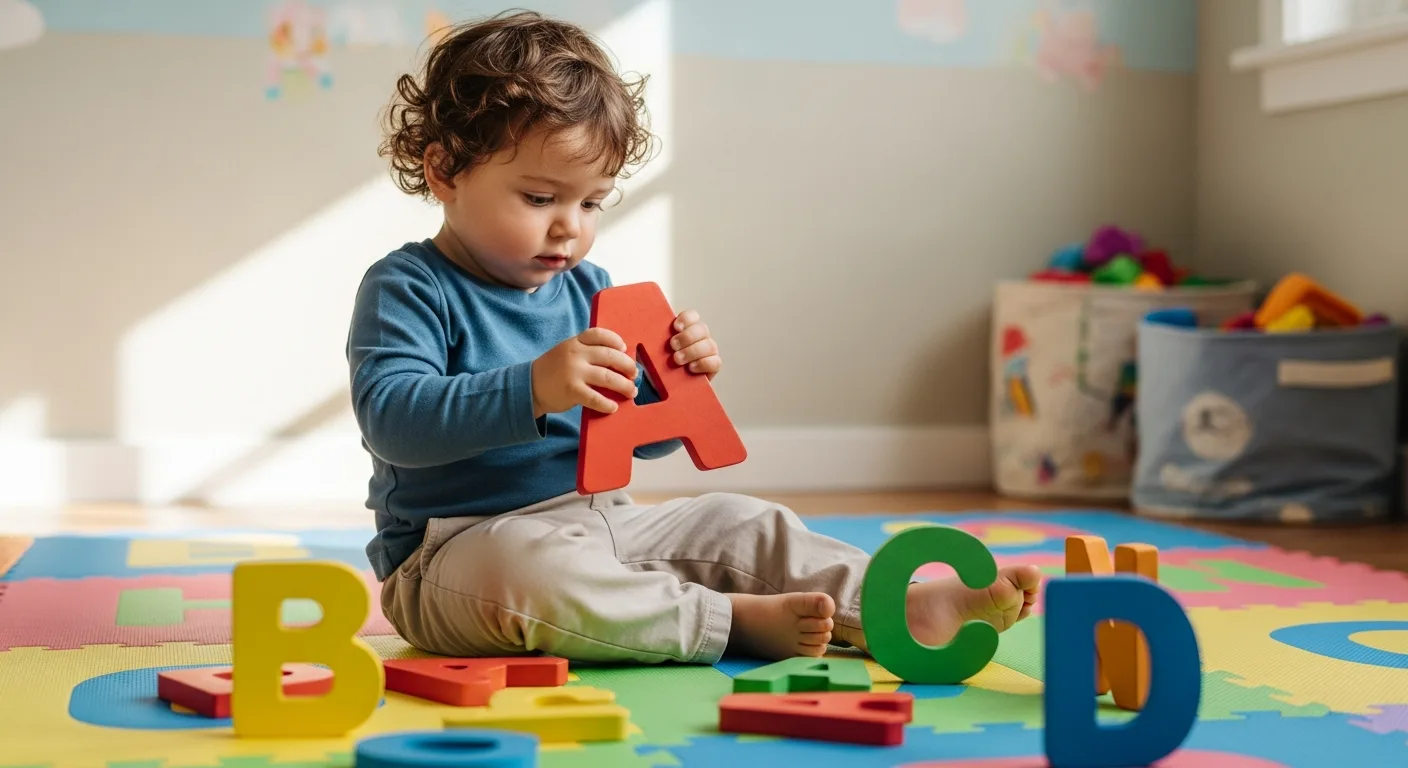
Why Learning Letters Early Helps Toddlers
Early letter exposure does not mean pushing toddlers to read before they are ready. It means building the relaxed familiarity with letters that makes formal reading instruction later feel like a natural next step rather than a sudden leap. Toddlers who have had extensive playful contact with letters — naming them, tracing them, spotting them in books — start school with a significant and lasting advantage in early literacy.
The approach that works best is incidental, repeated, and multisensory. A toddler who has stamped letter B in paint, found it in a book, pressed it into playdough, and heard it said aloud will remember it. A toddler who was drilled on a flashcard once probably will not. For more on learning through everyday play, our Learning Through Play at Home guide covers the broader approach in detail.
15 Alphabet Learning Activities for Toddlers
Alphabet sensory bin
Fill a shallow tub with coloured rice or sand and bury foam or plastic letter cutouts for your toddler to dig out and name.
Why it works: Combining sensory play with letter exposure creates strong memory associations. Finding a hidden letter feels like a reward rather than a lesson.
Quick tip: Start with just five to six letters at a time rather than the full alphabet, focusing on the letters in your toddler's name first.
Letter hunt around the house
Call out a letter and challenge your toddler to find something in the house that starts with that sound.
Why it works: Letter hunts build the crucial connection between abstract letter symbols and real-world words and objects — the foundation of phonics.
Quick tip: Begin with very obvious pairings (B for ball, C for cup) using objects in plain sight. Build difficulty gradually.
Foam letter bath play
Use foam alphabet letters that stick to the bath wall when wet, letting your toddler arrange, name, and match them during bath time.
Why it works: Turning bath time into alphabet play adds meaningful learning to a routine activity without feeling like work for either of you.
Quick tip: Ask questions during play rather than drilling: 'Can you find the letter that starts your name?' feels like a game, not a test.
Alphabet playdough letter pressing
Press plastic or foam letters into playdough to make letter impressions, then identify each letter together.
Why it works: The tactile impression left in playdough makes the letter's shape memorable in a physical way that visual exposure alone does not.
Quick tip: Let your toddler press the letters themselves rather than doing it for them. The physical act of pressing reinforces the shape.
Letter writing in a sand tray
Fill a shallow tray with fine sand or salt and use a finger or stick to draw letters together, then smooth out and repeat.
Why it works: Writing letters in sand removes the frustration of pencil control and lets toddlers focus on the shape itself. It is naturally erasable and low-stakes.
Quick tip: Guide your toddler's finger through each letter shape. Multisensory tracing — saying the letter aloud while tracing — builds the strongest memory connections.
Uppercase and lowercase card matching
Make simple pairs of cards with uppercase on one and lowercase on the other, and let toddlers match the pairs.
Why it works: Understanding that A and a are the same letter is a key early literacy concept. Card matching makes this concrete and achievable.
Quick tip: Use the same colour for each letter pair to give a visual hint that supports successful matching while skill develops.
Sponge letter stamping
Cut letter shapes from kitchen sponges, dip in paint, and stamp onto paper to print letters.
Why it works: Stamping produces clear, repeated letter exposure through an action toddlers find inherently satisfying. The print result shows the letter shape clearly.
Quick tip: Focus on the letters in your toddler's name for a personally meaningful first stamping session — seeing their name appear on paper is genuinely exciting.
Magnetic letters on the fridge
Keep a set of magnetic letters on the fridge at toddler height for regular, incidental play and letter naming.
Why it works: Repeated, casual exposure to letters throughout the day builds familiarity far more effectively than a single focused session.
Quick tip: Spell your toddler's name on the fridge and leave it there. Their name is the first set of letters they become genuinely motivated to recognise.
Letter finger painting
Let your toddler trace large letter shapes drawn on paper using finger paint, covering the outline with their fingertip.
Why it works: Finger painting letters combines tactile, visual, and motor learning in one activity — one of the richest ways to encode letter shapes in early memory.
Quick tip: Draw large, clear letter outlines in pencil first. Thick lines give a clear path for small fingers to follow.
ABC song with body movements
Sing the alphabet song together, assigning a unique movement to each letter — clap for A, jump for B, spin for C.
Why it works: Adding movement to the ABC song embeds letters in physical memory. Toddlers who learn with their bodies retain information far more effectively.
Quick tip: Create the movements together with your toddler rather than assigning them yourself. Co-creating the system increases engagement and ownership.
Letter identification in shared reading
During bedtime or story time, pause occasionally and point to a letter you have been practising: 'Can you see any letter B on this page?'
Why it works: Spotting familiar letters in books they love makes reading feel personal and interactive. It is one of the most powerful literacy foundations available.
Quick tip: Never let the letter-spotting disrupt the story flow. Keep it to one or two letters per session and move on quickly.
Pasta letter soup
Add alphabet pasta to a bowl of warm soup or water and encourage your toddler to fish out named letters with a spoon.
Why it works: Mealtime alphabet play turns an everyday activity into a learning opportunity. The physical act of fishing for a specific letter is genuinely engaging.
Quick tip: This works in a dry tray too — no soup required. A bowl of dry alphabet pasta is a perfectly functional letter activity on its own.
Letter collage
Write a large letter on paper and let your toddler fill it by sticking images cut from magazines that start with that letter sound.
Why it works: Building a letter collage reinforces both the shape and the sound of the letter simultaneously, strengthening the phonics connection.
Quick tip: Pre-cut the magazine pictures for very young toddlers so the activity can focus entirely on the sticking and naming.
Outdoor chalk letters
Write large letters on the pavement or patio in chalk and let toddlers jump onto named letters, trace them with their finger, or drive toy vehicles over them.
Why it works: Large-scale, outdoor letter engagement is multi-sensory and physically active — both features that deepen letter memory.
Quick tip: Write letters in your toddler's name first, then expand. Outdoor scale makes letters feel important and exciting.
Nature alphabet walk
On a walk, challenge your toddler to find natural objects that start with each letter you call out — A for acorn, B for bark, L for leaf.
Why it works: Connecting letter sounds to real natural objects in context builds vocabulary and phonics awareness simultaneously.
Quick tip: Keep a small bag for collecting — the physical collection of 'B things' makes the letter-sound pairing tangible and memorable.
Tips for Teaching Letters Through Play
- 🏷️
Start with meaningful letters
Your toddler's name is the most motivating set of letters available. Start there, then expand to family names, favourite animals, and familiar objects.
- 🔊
Emphasise sounds not just names
Letter names ('bee') and letter sounds ('buh') are different things. Introduce both, but lean towards sounds — they are what matter most for reading.
- 📚
Read alphabet books regularly
A simple alphabet book read daily provides consistent, low-pressure letter exposure. Repetition builds familiarity more reliably than variety.
- 🎉
Celebrate recognition without pressure
When your toddler correctly names a letter, celebrate warmly. Never correct an error in a way that creates anxiety — just gently model the correct answer.
For activities that pair well with letter learning, our Shape Activities for Toddlers and Educational Games for Toddlers guides both complement the alphabet work here.
Looking for fun activities for your toddler?
Try our Toddler Activity Generator to instantly get indoor and outdoor activity ideas based on your toddler's age.
Try the Toddler Activity GeneratorNeed toddler meal ideas too?
Use our Toddler Meal Generator to quickly find breakfast, snack, and dinner ideas.
Try the Toddler Meal GeneratorFinal Thoughts
Alphabet activities for toddlers are most powerful when they are woven into daily life rather than scheduled as separate lessons. Bath time, mealtimes, walks, and bedtime stories all provide natural openings for letter play. The goal at this stage is not mastery — it is exposure, familiarity, and a genuinely positive feeling about letters. That foundation, built through play, is exactly what sets toddlers up for successful reading when formal learning begins.