
Spring Activities for Toddlers
Spring is one of the richest seasons for toddler play. The world is waking up — puddles appear, flowers push through soil, birds return, and the whole outdoors becomes a living sensory experience. After months of winter indoor play, toddlers respond to spring with a kind of wide-eyed excitement that is genuinely wonderful to watch and easy to build on.
These 15 spring activities for toddlers are designed to be used throughout the season — not tied to a single event or holiday. They cover sensory play, nature discovery, creative making, and outdoor movement, with most needing nothing more than what you can find at home or in your garden.
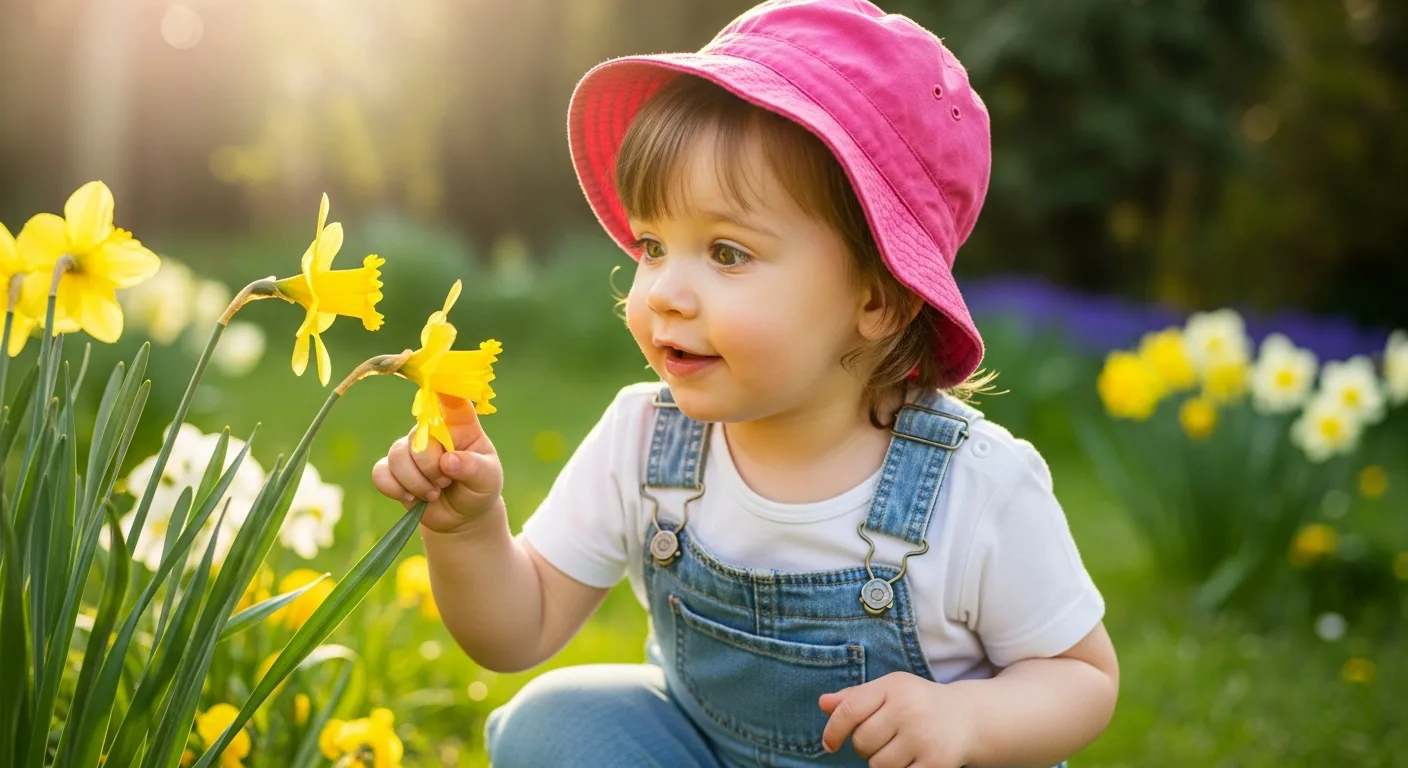
Why Spring Is Such a Rich Season for Toddler Learning
Spring offers something that few other seasons do: visible, daily change. Toddlers can watch a seed sprout over the course of a week, notice buds opening on a tree, observe the first insects emerging, and feel the temperature shifting. This constant, tangible change makes spring uniquely suited to the toddler brain, which is built for observation and cause-and-effect thinking.
Spring also opens up outdoor time after winter, and outdoor play is one of the most powerful contributors to toddler development — building gross motor skills, sensory processing, and emotional regulation in ways that indoor environments simply cannot replicate. For more on extending outdoor play year-round, see our Outdoor Activities for Toddlers guide.
15 Spring Activity Ideas for Toddlers
Sensory and Messy Play
Spring sensory bin
Fill a deep tray with damp soil, small pebbles, fresh leaves, flower petals, and small plastic insects or animals. Let your toddler dig, pour, sort, and explore freely. A spring sensory bin captures the textures and colours of the season in a contained, endlessly explorable format that toddlers return to again and again.
Mud kitchen play
Set up a simple mud kitchen — a low table, a few old pots and spoons, and access to soil and water. Toddlers instinctively create, mix, pour, and stir with enormous concentration. Mud play supports sensory processing, fine motor development, and imaginative play while connecting children to the natural world in a deeply satisfying way.
Puddle jumping and rain exploration
After spring rain, put on wellies and waterproofs and head outside specifically to jump in puddles. Extend the play by observing where the water comes from, measuring puddle depth with a stick, and watching what happens when you splash. What begins as joyful gross motor play becomes informal science exploration.
Flower petal sensory bag
Collect spring flower petals — dandelions, cherry blossom, daisies — and seal them inside a zip-lock bag with a small amount of hair gel or water. Your toddler can squeeze, smoosh, and move the petals without getting messy. This is a calm sensory activity ideal for moments when outdoor play is not possible.
Nature Discovery
Seed planting and growing
Give your toddler a small pot, some compost, and a few large easy-to-handle seeds — sunflowers, peas, or beans work well. Let them fill the pot, press in the seeds, and water it. Then observe together over the days and weeks that follow. The ritual of checking and watering builds patience, responsibility, and awe at how living things grow.
Bug hunting and observation
Take a magnifying glass into the garden and go looking for insects. Turn over stones, check under leaves, and examine the soil. What can you find? The goal is not to catch and keep but to observe and notice. Bug hunting develops scientific observation skills and a respectful curiosity about living things.
Spring nature walk with a collection bag
Give your toddler a small paper bag and go for a walk with the specific intention of collecting natural spring treasures: a yellow flower, a curved leaf, a feather, a round stone. Back home, spread out the collection and explore it together — sorting by colour, texture, size. The walk becomes a curated nature experience.
Cloud watching and sky observation
Spread a blanket on the grass and lie on your backs looking up at the spring sky. What shapes can you see in the clouds? Are they moving fast or slow? Is the sky one colour or many? This quietly magical activity develops observational language, imagination, and the habit of looking up and noticing the world.
Creative and Craft Activities
Flower pressing and collage
Collect spring flowers and press them between the pages of a heavy book for a few days. Once flat and dry, use them to make a nature collage on card with PVA glue. The waiting, the gentle handling of dried petals, and the careful arrangement of a collage all develop fine motor skill and creative thinking together.
Leaf rubbing art
Collect leaves of different shapes and sizes, place them face-down under thin paper, and rub a crayon over the top. The leaf's outline and veining appears through the paper in a way that never fails to delight toddlers. Try layering multiple leaves for a more complex pattern. This is a beautiful, low-mess spring art activity.
Rainbow watercolour painting
Spring light often produces beautiful rainbows after showers. Set up a simple watercolour activity and guide your toddler through mixing the rainbow colours in sequence: red, orange, yellow, green, blue, violet. Talk about the colours as you mix. This activity builds colour vocabulary, fine motor skill, and introduces basic colour theory through play.
Nature printing with found objects
Collect leaves, flowers, and interesting textured objects from the garden. Dip them in paint and press them onto paper to create prints. Each object creates a different pattern — a leaf creates veins and edges, a flower creates delicate petals. Nature printing is one of the most beautiful and accessible toddler art activities available.
Active Outdoor Play
Garden obstacle course
Set up a simple obstacle course in the garden or a park: crawl under a blanket draped over chairs, balance along a line of stepping stones, jump over a pool noodle, roll down a gentle slope. Spring outdoor obstacle courses build gross motor skills, coordination, and the kind of physical confidence that develops best through active outdoor play.
Bubble chasing and exploration
Blow large bubbles and let your toddler chase and pop them. Extend the play by asking questions: why do bubbles float? What makes them pop? Can you catch one without it popping? Bubble play is joyful gross motor activity with an easy science layer built in — and it works for every age from 12 months upwards.
Bird watching at a window or garden
Set up a simple bird feeder in a place your toddler can observe it easily. Watch which birds visit, what they eat, and how they behave. Keep a simple picture log of birds spotted. Bird watching builds patience, observation, and the vocabulary of the natural world — and it is one of the few activities that works equally well on sunny or rainy spring days.
Tips for Getting the Most from Spring Play
- 🌤️
Go outside even on imperfect days
A light drizzle or cool breeze should not stop outdoor spring play. Dress appropriately and go out anyway — some of the most memorable toddler outdoor moments happen in changeable weather. The world is more interesting when it is doing something.
- 🔄
Return to the same spots repeatedly
Revisiting the same tree, the same corner of the garden, or the same park path across the spring season lets your toddler notice changes over time — new leaves appearing, insects arriving, flowers opening. Repetition builds observation skills better than novelty alone.
- 📸
Document the season together
Take simple photographs on your phone of things your toddler points out — a snail, a blossom, a puddle reflection. Looking back through them together at the end of spring creates a shared memory of the season and reinforces the language and curiosity built during the activities.
- 🐛
Follow their lead outdoors
Toddlers will often find something far more interesting than whatever you had planned — a beetle crossing the path, a dandelion to blow, an interesting stick. Following this curiosity rather than redirecting it produces the richest learning and the most genuine connection with the natural world.
Looking for more toddler activities?
Use our Toddler Activity Generator to instantly get indoor and outdoor activity ideas based on your toddler's age.
Try the Toddler Activity GeneratorFrequently Asked Questions
What spring activities are safe for toddlers aged 12 to 18 months?
At this age, the safest and most engaging spring activities are sensory-based ones with close supervision: touching flower petals, feeling soil in a tray, watching bubbles float, sitting on a blanket in the garden observing the world around them. Keep anything small or loose away from this age group, and focus on open exploration rather than structured activities.
How do I adapt spring activities for rainy days?
Many spring activities work just as well indoors with minor adaptations. A spring sensory bin can come inside. Leaf pressing and nature collage use collected materials and need no garden at all. Rainbow painting and flower petal sensory bags are naturally indoor activities. And a light rain in wellies and waterproofs is itself a spring activity — puddles are a feature, not a problem.
My toddler doesn't like getting dirty. How can I encourage spring outdoor play?
Start with contained sensory experiences before moving to messy ones. A nature walk to collect things (not touch soil) is low-stakes. Bubble chasing, cloud watching, and bird observation involve no mess at all. For sensory-reluctant toddlers, introducing one small texture at a time — touching a leaf, a smooth stone — over many sessions is far more effective than pushing into mud play before they are ready.
How long should spring outdoor activities last for toddlers?
Follow your toddler's cues rather than the clock. Most toddlers aged one to two will engage enthusiastically for 20 to 30 minutes before needing a change of pace; older toddlers often happily play outside for an hour or more when the environment is interesting and they have autonomy over what they explore. End the session before they are exhausted rather than after.
Are spring activities beneficial even if we only go outside for short periods?
Yes. Even 15 to 20 minutes of genuine outdoor engagement — not just passing through — provides meaningful benefit for toddler development. Regular short outdoor sessions throughout the week accumulate into significant exposure to natural sensory input, fresh air, and physical movement. Quality of engagement matters more than duration.
Final Thoughts
Spring activities for toddlers are most valuable when they are open-ended, repeated across the season, and led by your toddler's natural curiosity. You do not need to complete all fifteen — pick two or three that suit your toddler's current interests and the week ahead. The goal is connection with the natural world, and the simple, lasting joy of exploring a season together. For more nature-based ideas, see our Nature Activities for Toddlers and Backyard Activities for Toddlers guides.
Need toddler meal ideas?
Use our Toddler Meal Generator to find breakfast, snack, and dinner ideas for your toddler.
Try the Toddler Meal Generator