
15 Water Play Activities for Toddlers
There is something universally magnetic about water for toddlers. Give a two-year-old a bowl of water and a cup, and they will play contentedly for far longer than most other activities allow. Water play activities for toddlers are not just fun — they are rich with developmental value, sensory input, and early science learning.
This list of 15 fun water activities for toddlers covers everything from simple garden play to structured science experiments — with clear tips on safety and setup so you can focus on enjoying the activity alongside your toddler.
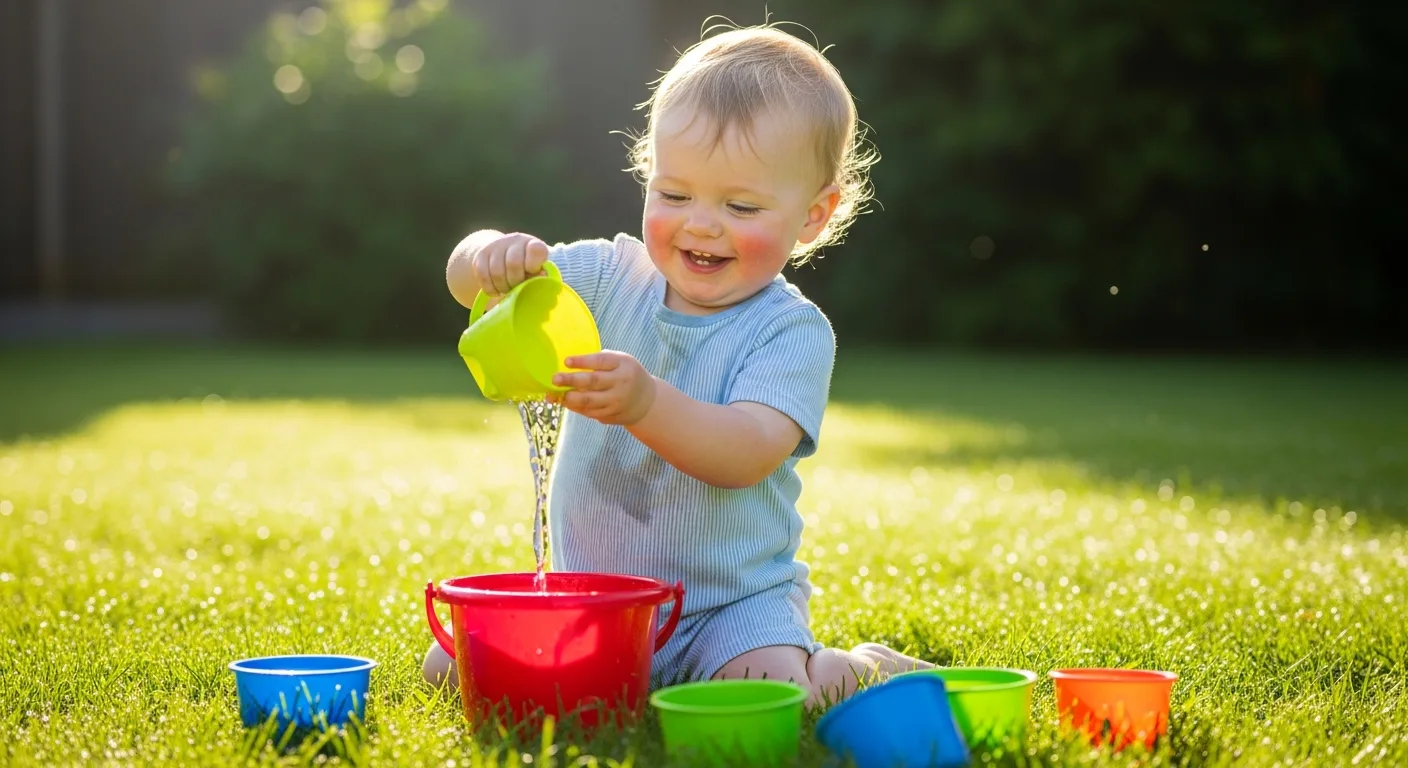
Why Water Play Is Great for Toddlers
Early science learning
Water play introduces concepts like volume, gravity, buoyancy, and cause-and-effect in a completely hands-on way.
Fine motor development
Pouring, squeezing, scooping, and transferring all build the hand muscles and coordination used in writing and self-care.
Sensory regulation
Water is naturally calming. For many toddlers, water play is one of the most effective self-regulating activities available.
Language development
Water play is rich in vocabulary — full, empty, heavy, light, float, sink, pour, splash — that builds naturally during play.
For outdoor activities that go beyond water play, our Outdoor Activities for Toddlers guide has a wide range of ideas for all weathers and seasons.
15 Water Play Activities for Toddlers
Water transfer with sponges
Set up two bowls — one full of water, one empty — and let your toddler transfer water from one to the other using a sponge.
Why it works: Squeezing a sponge is excellent for hand strength. The transferring task gives purposeful direction to the play, which extends engagement.
Quick tip: Use different-sized sponges to vary the challenge. A large sponge transfers quickly; a small one takes more squeezes.
Floating and sinking experiment
Collect a range of household objects and test whether each one floats or sinks in a washing-up bowl.
Why it works: This is a genuine early science experiment that builds prediction skills, cause-and-effect understanding, and vocabulary.
Quick tip: Use a mixture of surprising results — a heavy key that sinks, a light sponge that floats — to keep predictions interesting.
Washing baby dolls
Set up a small washing station with warm soapy water, a facecloth, and a towel for drying, and let your toddler bathe their dolls.
Why it works: Role-play washing activities build nurturing behaviour, sequencing skills, and give purposeful structure to water play.
Quick tip: Use a plastic storage tub at a low table height so toddlers can reach comfortably without leaning over.
Toy car wash station
Set up a bucket of soapy water with a small brush and a rinsing bucket for washing toy vehicles.
Why it works: The purposeful task of cleaning something a toddler cares about is highly motivating. Car wash play also mirrors real-world activities they find fascinating.
Quick tip: A toothbrush is a perfect size for getting into wheel wells and edges. Keep one in your water play kit.
Colour mixing with food dye
Fill three small jugs with red, blue, and yellow water using food dye. Let toddlers pour and mix to discover what colours they make.
Why it works: Colour mixing is genuinely exciting for toddlers — the transformation is immediate and magical. It also builds early colour and science vocabulary.
Quick tip: Use clear cups so the colour change is fully visible. Label each starting colour with a sticker so they learn the names.
Ice excavation play
Freeze small plastic animals or toys in a block of ice. Give your toddler a pipette of warm water to free them slowly.
Why it works: Ice excavation is a high-engagement sensory activity that builds patience, cause-and-effect reasoning, and temperature vocabulary.
Quick tip: Freeze in a yogurt pot for a manageable size. Work on a tray to contain the water as the ice melts.
Foam soap sculpting
Squirt shaving foam or foam soap into a tray and let toddlers sculpt, swirl, and shape it freely.
Why it works: The texture of foam is unique and deeply satisfying for sensory exploration. It is also easy to clean up and safe.
Quick tip: Add a few drops of food colouring for visual interest. Mixing it through the foam is an activity in itself.
Spray bottle target practice
Set up a target — chalked circles on a fence, paper shapes, small toys — and let toddlers spray them with a water bottle.
Why it works: Squeezing a spray bottle strengthens the hand muscles needed for writing. The targeting element builds hand-eye coordination.
Quick tip: Adjust the nozzle to a steady stream rather than a mist for the most satisfying effect for toddlers.
Waterfall cups setup
Stack cups with holes drilled in the bottom so water pours from one to the next in a cascade when poured from above.
Why it works: Watching the waterfall effect is captivating for toddlers and builds understanding of gravity, flow, and cause-and-effect.
Quick tip: This is easy to set up on a fence with cable ties. Old cups with a nail hole in the bottom work perfectly.
Mud kitchen play
Set up an outdoor mud kitchen with old pots, utensils, natural materials, and water for free-play cooking and mixing.
Why it works: Mud kitchen play is one of the richest open-ended activities available — it combines sensory exploration, role play, and science in one.
Quick tip: Designate specific mud kitchen clothes so the activity can happen freely without worry about what gets dirty.
Watering the garden
Give your toddler a small watering can and the responsibility of watering a specific plant or patch of the garden.
Why it works: Watering builds a sense of responsibility and care for living things, as well as providing excellent water play in a purposeful context.
Quick tip: Mark a specific plant with a small flag as 'their' plant to water. The ownership makes the activity significantly more engaging.
Drip painting on concrete
Use droppers or a small jug to drip food-coloured water onto concrete or paving in patterns that spread and blend.
Why it works: Watching the water flow and colours blend on a textured surface is visually fascinating and builds observation skills.
Quick tip: This works beautifully on a warm day when evaporation causes patterns to change and shift over time.
Water balloon catch and squash
Fill small water balloons and let your toddler catch, roll, and squash them in a warm outdoor setting.
Why it works: The tactile sensation of squashing a water balloon is deeply satisfying. Catching and throwing balloons builds gross motor coordination.
Quick tip: Only use biodegradable balloons and collect all pieces immediately after play to prevent any safety or environmental risk.
Washing fruit before snack
Let your toddler wash their own snack fruit under the tap or in a bowl as a functional water play activity.
Why it works: Purposeful real-life tasks are deeply satisfying for toddlers. Washing their own snack gives them agency, responsibility, and sensory water play all at once.
Quick tip: Provide a small colander or bowl and let them do the full process independently. The independence matters as much as the water play.
Rain gutter racing
Prop a plastic gutter at a slight angle and let toddlers float leaves, toy boats, or cork stoppers down the water channel.
Why it works: Racing objects down a channel introduces basic physics concepts — slope, speed, buoyancy — through a format toddlers find endlessly engaging.
Quick tip: Tilt the gutter at different angles to explore how the speed changes. Ask 'which do you think will be fastest?' before each race.
Safety Tips for Water Play
Always supervise
Even shallow water requires adult supervision at all times. Never leave a toddler alone with a container of water, regardless of depth.
Check water temperature
Ensure water is comfortably warm for indoor play, especially for younger toddlers who cannot regulate body temperature efficiently.
Plan for spills
Lay a towel around the play area before you start and keep a change of clothes nearby. Planning for spills removes stress and lets play flow freely.
After water play, our Healthy Snacks for Little Ones guide has quick ideas to refuel a tired, happy toddler.
Need more activity ideas?
Try our Toddler Activity Generator to get quick indoor and outdoor activity ideas based on your toddler's age.
Try the Toddler Activity GeneratorFinal Thoughts
Toddler water play is one of those rare activities that manages to be deeply developmental and completely joyful at the same time. The 15 ideas here require almost no specialist equipment — just water, a few containers, and your presence to supervise and play alongside. Whether you are in the garden on a warm day or setting up a small water tray at the kitchen table, these activities are always a reliable source of extended, happy toddler play.