
15 Park Activities for Toddlers
The park is one of a toddler's favourite destinations — and for good reason. It offers space, freedom, fresh air, novel stimulation, and the irresistible combination of playground equipment and open grass. But a park visit can be far more than a swing and a slide if you bring a little intention to it.
These 15 park activities for toddlers transform a standard park visit into a rich, varied experience — with nature exploration, physical games, creative challenges, and sensory discoveries that make the most of the unique environment a park provides.
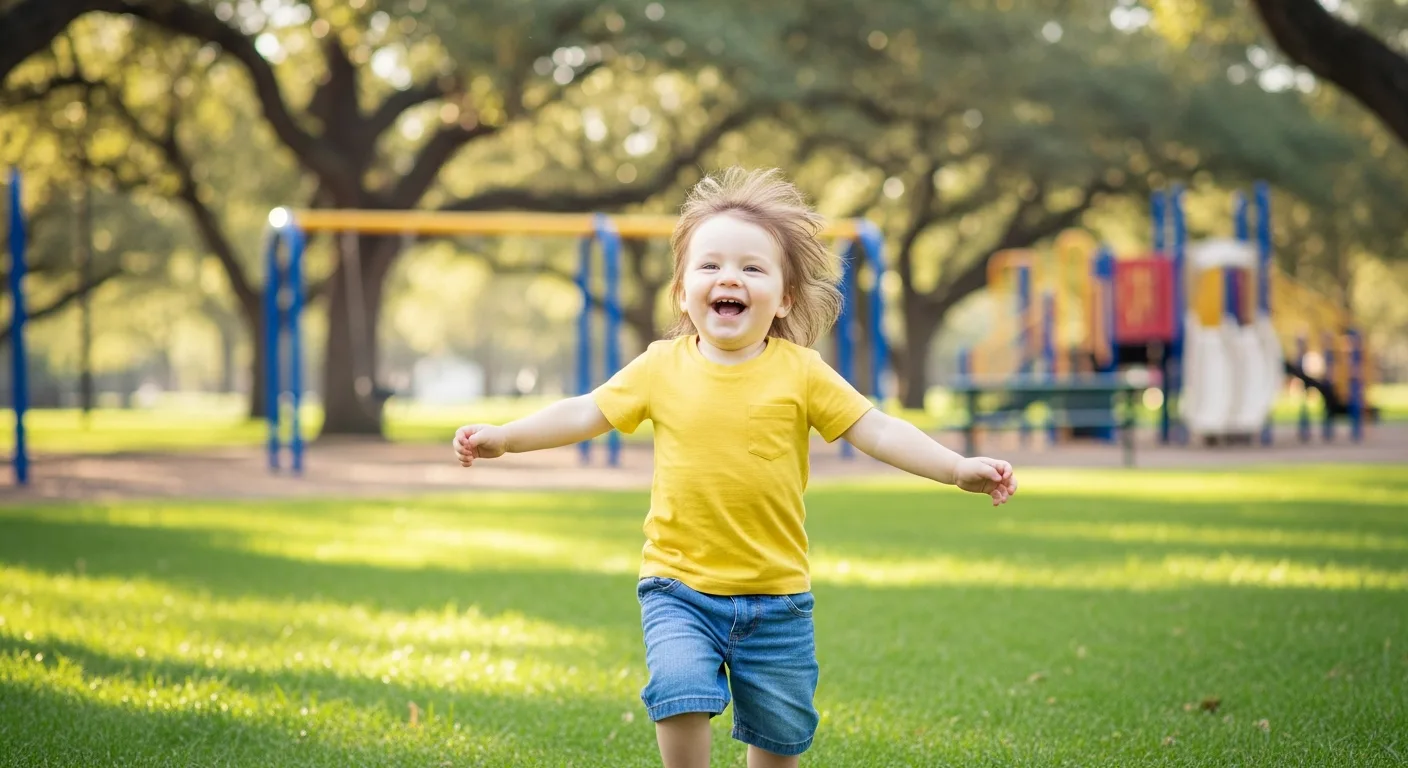
Benefits of Park Play for Toddlers
Large-scale physical movement
Parks provide the open space for running, jumping, rolling, and climbing at a scale simply not available indoors or in most backyards — which is essential for gross motor development.
Social experience
Parks are one of the primary social environments for toddlers — a place where parallel play, observing other children, and first-contact social interactions happen naturally.
Novel nature stimulation
Different parks offer different trees, plants, birds, and terrain — a richer variety of natural environments than most home gardens provide.
Mood and wellbeing benefits
Regular park visits are consistently associated with improved toddler mood, better sleep, reduced anxiety, and stronger emotional regulation through the day.
15 Park Activities for Toddlers
Tree leaf identification walk
Collect a different leaf from each tree you pass. Compare the shapes, sizes, and colours. Name the trees together using a simple identification app or field guide. The purposeful collecting gives structure to the walk while building vocabulary and observation skills.
Feeding ducks at a pond
If your local park has a pond, visit together with a bag of appropriate food (oats or cracked corn rather than bread). Observe the ducks closely: how they move, how they eat, the sounds they make. This gentle encounter builds awareness of wildlife and develops patient, careful observation.
Cloud spotting and shape naming
Lay on the grass together and look up at the clouds. Name the shapes you can see — a dragon, a hat, a boat. Describe what the clouds look like and how they are moving. This slow, imaginative activity develops creative language, shared attention, and the habit of looking up.
Balance beam walking on low equipment
Most parks have low balance beams or curb edges. Challenge your toddler to walk along them without stepping off — arms out, taking it slowly. Balance beam walking develops proprioception, core strength, and the focus required for precision physical challenges.
Running races to trees and back
'Race you to that big oak and back!' Spontaneous running races develop speed, directional awareness, and the joyful physical confidence of running flat-out in open space. Let your toddler win sometimes and genuinely race them at others — both have developmental value.
Swing counting game
Count the pushes on the swing together: how many until you reach ten? Count backwards from ten. Swap between English and another language if you know one. The rhythmic, repetitive nature of swing pushing makes it perfect for counting practice, and the counting gives the swing activity new purpose.
Hide and seek among trees
Use a small copse of trees or large shrubs for a gentle hide and seek game. Toddlers at this age find the anticipation of being found as exciting as the hiding, and the outdoor setting — uneven ground, different light, natural cover — makes the game richer than the indoor version.
Colour trail challenge
Set a simple colour challenge: find something red, then something blue, then something yellow, then something green. Move from colour to colour across the park. This game channels the tendency to wander into directed exploration and builds colour recognition, attention, and the satisfaction of completing a sequence.
Shadow measuring with sticks
Collect a straight stick and use it to measure your shadows on a sunny day — how many stick lengths is your shadow? Compare at different times: do shadows grow or shrink as the day progresses? This direct science observation introduces the concept of time, light angle, and shadow in an entirely concrete and physical way.
Nature journal entry at the park
Bring a simple notebook and a few crayons. Sit in one spot and draw everything you can see — the tree, the bench, the path, the sky. Write or dictate one sentence about what was noticed. The slow, observational practice of nature journaling at the park develops attention, drawing, and the habit of recording the world.
Picking up litter together
Bring disposable gloves and a bag and spend five minutes collecting any litter in the park area you use most. Talk about why it matters and where it goes. This simple act builds environmental awareness, the concept of shared responsibility, and the satisfaction of leaving a place better than you found it.
Animal sound guessing game
Take turns making an animal sound and guessing what animal it is. Progress to 'I'm thinking of an animal that lives in the park — what am I?' This imaginative guessing game builds vocabulary, categorical thinking, and the kind of playful cognitive engagement that children find irresistible.
Rolling a ball on the grass
Sit facing each other on the grass with your legs out wide and roll a ball back and forth. Gradually move further apart. Aim for the gap between each other's legs. This deceptively simple activity builds bilateral coordination, spatial accuracy, and the turn-taking that underlies social play.
Wand making from a found stick and ribbon
Find a fallen straight stick, tie a length of ribbon to one end, and wave it in the air. Dance with the wand, make patterns in the air, chase the ribbon together. A simple found object becomes an imaginative prop for thirty minutes of active outdoor play.
Throwing and catching with a balloon
A lightweight balloon is far easier for a toddler to track and catch than a ball — the slow, floaty movement matches their reaction time perfectly. Throwing, tapping, and chasing a balloon on a calm day develops hand-eye coordination and the anticipatory tracking that underpins ball sports, all in a format that is genuinely achievable and fun.
Tips for Making Park Visits Fun
- 🎒
Bring a small bag of supplies
A few chalk pieces, a notebook and crayons, a ball, and a bag for collecting things transforms what you can do at the park without adding much weight or complexity.
- ⏰
Go at the right time of day
Mid-morning is the optimal window for most toddlers — after breakfast and before the pre-lunch tiredness sets in. Avoid the park in the hour before nap or bedtime when regulation is lowest.
- 🌧️
Go in all weathers
Rain, wind, and overcast days each offer different sensory and play experiences. With appropriate clothing, a rainy park visit is often more memorable than a sunny one.
- 📱
Put your phone away
Park visits are one of the richest opportunities for connected, face-to-face play with your toddler. The activities in this guide work best when you are fully present and following their lead.
For a wider range of outdoor play ideas beyond the park, our Outdoor Activities for Toddlers guide covers all settings and seasons. And for the physical movement skills that park play develops, our Movement Activities for Toddlers guide has more structured gross motor ideas to complement free park play.
Looking for more toddler activities?
Use our Toddler Activity Generator to instantly get indoor and outdoor activity ideas based on your toddler's age.
Try the Toddler Activity GeneratorNeed toddler meal ideas?
Use our Toddler Meal Generator to find breakfast, snack, and dinner ideas for your toddler.
Try the Toddler Meal GeneratorFinal Thoughts
Park activities for toddlers do not need to be elaborate or planned in advance. The park itself is the activity — the space, the freedom, the other people, the trees, the sky. The ideas in this guide simply give you a repertoire of things to do alongside the playground, so that your park visits become richer, longer, and more satisfying for both of you. Go often. Stay a little longer each time.