
How to Be a Good Parent to a Toddler
If you have ever googled how to be a good parent to a toddler, you are already doing something right. The fact that you are asking the question means you care — and caring deeply is the foundation everything else is built on. Being a good parent to a toddler is not about being perfect. It is about showing up consistently, staying connected through the difficult moments, and understanding what your child actually needs at this stage of life.
Toddlers aged one to four are in one of the most demanding — and most formative — developmental phases of childhood. What you do and how you respond in these years shapes their emotional security, their self-confidence, and their relationship with you for years to come. This guide covers the foundational qualities and daily habits of good toddler parenting, grounded in what we know about child development.
What Toddlers Actually Need From You
Before listing strategies, it helps to understand what a toddler is developmentally doing during this period. Toddlers are not small adults. They are navigating enormous brain development, language acquisition, emotional regulation, and physical independence — all at the same time, with very little capacity to manage any of it calmly.
What they need most is a safe, consistent relationship with at least one caregiver who is warm, present, and predictable. This is called a secure attachment, and it is the single most protective factor for a child's long-term wellbeing. Good parenting at the toddler stage is fundamentally about being that secure base. See our guide on how to create a calm home environment for toddlers for practical ways to support this at home.
10 Qualities of a Good Parent to a Toddler
1. You stay present, even when it is hard
Good toddler parenting is not about having endless patience — it is about returning to presence after you lose it. Toddlers read your attention and attunement constantly. When you put your phone down, make eye contact, and genuinely engage in what they are doing — even for five minutes — it fills their connection cup more than hours of distracted time. Aim for moments of genuine presence every day, not constant availability.
2. You respond to emotions without dismissing them
One of the most important things you can do for your toddler is to take their feelings seriously. When your two-year-old collapses in tears because their banana broke, it is genuinely devastating to them. The feeling is real even if the cause is tiny. Saying 'I know, that felt so disappointing' before you solve the problem teaches your child that their inner world matters and that you are a safe person to come to with big feelings. Read our article on helping toddlers manage big emotions for more on this.
3. You set clear, consistent limits
Good parents are not permissive — they are warm and firm at the same time. Toddlers need boundaries. They genuinely feel safer when the rules are consistent and predictable. Limits that keep coming and going, or that shift depending on your mood or energy level, create anxiety rather than security. Pick your non-negotiables (safety, respect for others, basic routines) and hold them warmly and calmly every time.
4. You explain rather than just command
Toddlers are more cooperative when they understand why a rule exists. 'We hold hands in the car park because cars cannot always see small people' is far more effective long-term than 'because I said so'. Brief, concrete explanations — matched to your toddler's language level — build understanding and internal motivation rather than just compliance driven by fear.
5. You play with them
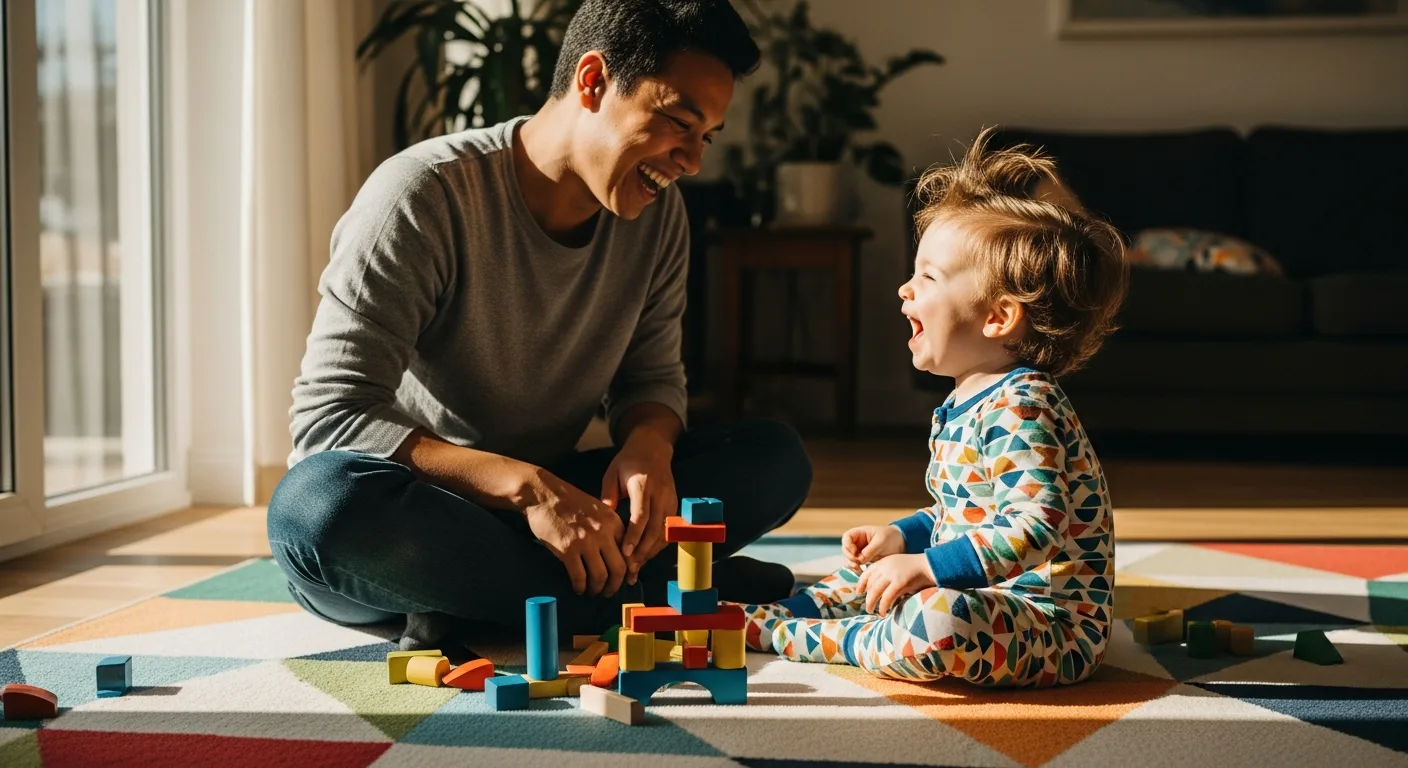
Play is the primary language of toddlerhood, and playing with your child — following their lead, joining their game, narrating what you see — is one of the deepest investments you can make. Even 10 to 15 minutes of dedicated, child-led play per day makes a measurable difference to the quality of your relationship and your child's behaviour. Our learning through play guide has ideas for every age.
6. You build predictable routines
Toddlers thrive on predictability. A consistent morning, nap, and bedtime routine reduces power struggles, meltdowns, and separation anxiety — because your child always knows what comes next. Routines are not rigid schedules; they are a reliable sequence of events that gives toddlers a sense of control over their world. Explore our simple toddler routine tips to build one that works for your family.
7. You praise effort, not just outcome
When a toddler tries to do something difficult — button their jacket, stack the blocks, draw a circle — noticing the effort matters more than praising the result. 'You kept trying even when that was hard' builds resilience and a growth mindset far more effectively than 'you're so clever'. Specific, honest praise also builds more confidence than generic flattery. Our article on how to build confidence in toddlers goes deeper into this.
8. You repair after conflict
Every parent loses their temper. Every parent says something they regret. What separates good parenting from perfect parenting is the repair. Coming back to your child after a difficult moment — 'I got too cross earlier, that was not okay, I am sorry' — models emotional accountability and reassures your toddler that the relationship is bigger than any single moment. Repair is one of the most powerful things you can do.
9. You encourage independence at their pace
Good toddler parenting walks a line between supporting your child and stepping back to let them try. Toddlers who are allowed to struggle a little — to try and fail and try again — build self-efficacy. Toddlers who are always rescued develop a belief that they cannot manage on their own. Offer help when needed, but leave space for the attempt first. Our guide on encouraging toddler independence has practical ways to do this every day.
10. You take care of yourself too
You cannot pour from an empty cup. Being a good parent to a toddler requires regular rest, adult connection, and moments of genuine recovery. This is not selfish — it is structural. A regulated, rested parent regulates their child. A depleted, burned-out parent cannot. Build in whatever small pockets of recovery are available to you, and ask for help when you need it.
Stressed about toddler meals?
Take one thing off your plate with our Toddler Meal Generator — quick, healthy meal ideas at your fingertips.
Try the Meal Generator →How to Be a Good Parent to a Toddler on a Hard Day
Good parenting is not a continuous state — it is a practice. Some days you will nail it. Other days you will lose your patience, say the wrong thing, and feel like you have failed. Neither of those days defines you. What matters is the overall pattern: more connection than disconnection, more understanding than frustration, more warmth than harshness.
On hard days, lower the bar. A toddler who is fed, safe, and with a parent who loves them — even an exhausted, overwhelmed parent — is having a good enough day. Good enough parenting, consistently applied, produces secure, confident children.
If you find yourself in a cycle of constant conflict with your toddler, read our article on positive parenting tips for toddlers for strategies that break the cycle without breaking your child's trust.
Looking for activity ideas to connect through play?
Try our Toddler Activity Generator for fun, age-based ideas that make the most of your time together.
Try the Activity Generator →Final Thoughts
Being a good parent to a toddler does not require a parenting degree, perfect patience, or a beautifully curated home. It requires your genuine presence, your willingness to stay curious about your child, your commitment to repair when things go wrong, and your desire to keep learning.
You are already showing up by reading this. That is what good parenting looks like.
30 Easy Toddler Recipes
Quick, nutritious meals your toddler will actually eat — download the printable PDF.
Get the PDF →