
Toddler Won't Sleep in Own Bed — What Actually Works
Quick Answer
A toddler who won't sleep in their own bed is usually experiencing separation anxiety, fear of the dark, or has become accustomed to co-sleeping. The most effective approach combines a consistent bedtime routine, a gradual transition method, and emotional validation. Most toddlers successfully transition to independent sleep within 2–4 weeks with gentle, consistent boundaries.

Photo: Pexels
It is 2am. You are asleep — deeply, finally asleep — when you feel it. A tiny hand tapping your shoulder in the dark. You open your eyes and there they are: your toddler, standing beside your bed in their pyjamas, wide-eyed and waiting. Again.
You do the mental arithmetic in the fog. This is the third time tonight. You think about walking them back — again — the long walk down the hall, the settling, the negotiating, the creeping back to your own room only to hear the patter of feet following you before you even reach the door. And then the guilt of even thinking about letting them just climb in next to you. The exhaustion. The confusion. The desperate hope that surely this phase ends soon.
If you are reading this at any hour of the day or night, you are in the thick of one of the most common and most exhausting toddler challenges there is. A toddler who won't sleep in their own bed is not a sign that you have failed, that you have made permanent mistakes, or that your child is unusually difficult. It is a developmental phase — and it has practical, gentle solutions.
First — You Are Not Doing Anything Wrong
Before any strategy or sleep plan, you need to hear this plainly: this is not your fault. A toddler who refuses to sleep alone is not a reflection of your parenting. It is not evidence of a mistake you made in infancy. It is not something that happened because you responded to their cries, because you let them sleep in your room, or because you were too soft or too inconsistent or too anything.
Research consistently shows that toddler sleep refusal is one of the most common parenting challenges globally. Child development research suggests that between 20 and 30 percent of families with toddlers experience significant sleep resistance at some point. That means if you are at a playgroup with ten other families, two or three of them are doing the same exhausting midnight walk right now.
It is also worth saying clearly: bed sharing and co-sleeping are valid, widely practised choices across many cultures. This guide is written specifically for parents who want to help their toddler sleep independently — not as a judgment of those who choose otherwise. If co-sleeping is working for your family and you are all sleeping well, this is not the article for you. If you are here, it is because you want a change — and that is a completely reasonable thing to want.
Definition
What does it mean when a toddler won't sleep in their own bed?
Toddler sleep refusal refers to a pattern where a child aged 1–4 years consistently resists sleeping alone in their own bed or room. It is one of the most common toddler sleep challenges, affecting an estimated 20–30% of families at some point during the toddler years. It is almost always a developmental phase rather than a permanent problem.
Why does it happen now — even if your toddler slept well before? Because toddlerhood is a period of rapid neurological change. The same brain development that gives them language, imagination, and a fierce sense of self also gives them separation anxiety, an awareness of danger, and the ability to miss you at night in a way they simply could not before. Sleep challenges often emerge or worsen between 18 months and 3 years precisely because the brain is doing so much at once.
Why Your Toddler Won't Sleep in Their Own Bed
Understanding the reason behind your toddler's sleep refusal helps you choose the right response. Most of the time there is a clear, developmentally logical explanation.
Separation Anxiety
Separation anxiety peaks at around 18 months and again between ages 2 and 3. At these ages, toddlers genuinely miss you when you leave — their attachment system is working exactly as it should. What makes nighttime separation feel bigger than daytime separation is a combination of darkness, quiet, and the absence of any distraction. During the day there are toys, activities, and other people. At night there is only the awareness that you are not there. Paediatric sleep experts agree this is neurologically normal and not manipulation.
Fear of the Dark or Being Alone
Around ages 2 to 3, toddler imagination switches on in a significant way. This is wonderful for play and language — and genuinely challenging for sleep. The monsters under the bed are not a manipulative tactic; they are real to your toddler's developing brain. Child development research suggests that imaginative fear at bedtime is a healthy sign of cognitive development. The appropriate response is validation followed by gentle reassurance — not dismissal, and not reinforcing the fear by checking under the bed with a flashlight every night as the central sleep strategy.
They Have Got Used to Co-Sleeping
If your toddler has spent months — or years — falling asleep with you present, their brain has formed a strong association between your physical presence and the state of sleep. This is not a character flaw or a bad habit in the moral sense; it is a learned sleep onset association. The good news is that sleep associations can be changed. The reason gradual transition methods work better than abrupt ones is that they allow new associations to form without the trauma of a sudden loss of something the child has come to rely on completely.
Big Life Changes
A new sibling, a house move, starting daycare, a parent returning to work, a change in childcare arrangement — any significant transition can trigger sleep regression even in a previously settled toddler. Sleep is often the first thing to go when a toddler feels uncertain about their world. This kind of regression is normal and typically temporary. The most effective response is to increase connection during the day and maintain your bedtime routine as a stable, predictable anchor.
Developmental Leaps
The 18-month developmental leap and the 2-year developmental leap are two of the most sleep-disruptive periods of toddlerhood. Brain development is genuinely demanding work — it uses energy, disrupts sleep cycles, and increases emotional sensitivity. If your toddler has suddenly become a worse sleeper at 18 months or just after their second birthday, there is a very good chance a developmental leap is at least partially responsible. These phases are temporary.
The Cot-to-Bed Transition
Moving from a cot to a big bed removes a physical boundary that previously kept your toddler in place. Many toddlers who slept well in their cot begin night walking for the first time after the transition — not because anything psychological changed, but because they can now. A big bed can also feel unfamiliar and too large. Making the new bed feel special, safe, and theirs — with their own chosen bedding, a comfort object, and a familiar nightlight — helps bridge the gap.
📊 Research shows that 20–30% of families experience toddler sleep resistance at some stage — making it one of the most common challenges in the toddler years.
How to Get Your Toddler to Sleep in Their Own Bed — 10 Strategies
These strategies are evidence-aligned, gentle, and practical. You do not need to try all ten — choose one or two that fit your child's temperament and your family's circumstances, and apply them consistently.
Strategy 1: Build the Perfect Bedtime Routine — Do This First
Studies consistently find that a consistent, predictable bedtime routine reduces the time it takes toddlers to fall asleep and improves overall sleep quality — often within one week of implementation. A bedtime routine is the single most powerful tool you have. Before you try any other strategy, get this right.
The same order, every single night: bath → warm milk or water → teeth → story → cuddle → lights out. It does not need to be elaborate. It needs to be consistent. The routine signals to your toddler's nervous system that sleep is coming — it reduces the cortisol spike that keeps them wired and alert.
Script to use every night:
"Time for our bedtime routine. First bath, then milk, then teeth, then one story in your bed, then cuddles, then sleep. Mummy/Daddy will be right outside."
For a complete bedtime routine guide, see our Building a Bedtime Routine That Works post, which covers timings, activities, and common pitfalls in detail.
Bundle mention: If you are looking for a complete done-for-you bedtime routine guide, the Little Rhythms Bundle includes a step-by-step bedtime routine resource along with 11 other toddler routine tools — all in one instant download.
Strategy 2: Make Their Room and Bed Feel Safe and Special
A toddler will not willingly sleep somewhere that feels scary or boring. Your job is to make their room feel warm, safe, and theirs — not exciting (excitement is the enemy of sleep) but genuinely comforting.
- • Nightlight placement: dim warm light, not bright cool light — positioned away from the eyes
- • Let them choose: their pillowcase, their comfort toy, which stuffed animal guards the room tonight
- • Special items: a photo of you by the bed, a comfort blanket with your scent
- • The distinction: safe and cosy is the goal — not so exciting they want to stay up playing
Script:
"This is your special sleeping place. Look — Teddy is already waiting for you. And here's the nightlight so it's cosy. I'm going to be right down the hall."
Strategy 3: The Gradual Retreat Method
This is the most widely recommended gentle sleep transition method. It takes approximately two weeks but works without prolonged crying and maintains your presence throughout the process.
- • Nights 1–2: Sit on the floor beside your toddler's bed until they fall asleep
- • Nights 3–4: Move your chair or position halfway to the door
- • Nights 5–7: Sit in the doorway
- • Nights 8–10: Sit just outside the door, visible
- • Nights 11–14: Full independent sleep with brief verbal check-ins
Script for each stage:
"I'm moving my chair a little further tonight because you are getting so good at this. I'll still be right here. Close your eyes and I'll check on you."
Strategy 4: The Camping Out Method
For particularly anxious toddlers or those making a significant transition, the Camping Out method works well. You sleep in their room on a mattress or sleeping bag for a week, then gradually reduce your presence.
- • Week 1: Sleep in their room — you are present but they fall asleep in their own bed
- • Week 2: Begin the Gradual Retreat from their room door
- • Best for: Very anxious toddlers, post-illness regression, significant life changes
This approach takes longer but is particularly useful when anxiety is the primary driver. See our Toddler Separation Anxiety guide for more on managing nighttime anxiety specifically.
Strategy 5: The Ticket System
Paediatric sleep experts recommend the ticket system for toddlers 2.5 and older. Give your toddler two small cards or tickets at bedtime. Each ticket buys one legitimate visit — a drink of water, a cuddle, a toilet trip. When the tickets are gone, the door stays closed. Why it works: it gives the toddler genuine control, which reduces the anxiety behind the night waking.
Script:
"Here are your two sleep tickets. You can use them whenever you need me — but once they're gone, it's sleeping time. You choose when to use them. They're yours."
Strategy 6: The Social Story Approach
Child development research suggests that narrative processing helps toddlers make sense of new expectations. Create a simple three to five page story about a brave little child — using your toddler's actual name — who sleeps in their own special bed. Read it every night as part of the bedtime routine for two weeks.
Sample story opening:
"Once there was a very brave child called [Name]. Every night [Name] had a special bedtime routine — bath, milk, a story, and then sleep in their own cosy bed. Mummy and Daddy were always just down the hall, and [Name] knew that morning always comes after sleep."
Strategy 7: Address the Fear Directly
If fear of the dark or imaginary creatures is the driver, address it head-on — but avoid making fear management the centrepiece of every bedtime. The goal is to validate, then redirect.
- • Monster spray: a small spray bottle of water — "special monster repellent" — spritzed around the room
- • Brave bear: a designated stuffed animal whose job is to protect the room while your toddler sleeps
- • The check: do one calm check under the bed together, confirm it is clear, then it is done for the night — do not repeat
Validation then redirect script:
"I hear you — the dark can feel a bit funny sometimes. Brave Bear is right here keeping watch, and we've done our check. Everything is safe. Now it's time for your eyes to rest."
Strategy 8: The Return Escort Method
When your toddler comes to your bed at night: get up, take their hand, walk them back to their room. No negotiation. No lengthy conversation. No special treatment. The entire interaction should be boring, calm, and consistent.
- • Every single time — inconsistency teaches that persistence is rewarded
- • No conversation beyond one short phrase
- • No anger — calm and matter-of-fact, even at 3am on the fifth return trip
Script — say this and only this:
"Bedtime. Back to your bed."
That is it. Nothing more. The power of this method is in the consistency, not the conversation.
Strategy 9: Sticker Chart Reward System
For toddlers aged 2.5 and older, a simple visual reward system can be highly motivating. A sticker chart works best when the reward is a small experience rather than a toy — a trip to the park, choosing dinner one night, a special outing.
- • One star per night they stay in their bed until morning
- • Celebrate every star — even partial wins in the beginning
- • After 5 stars: small reward. After 14 stars: bigger celebration
- • Frame positively: never remove stars as punishment
Script:
"Every morning you wake up in your own bed, you get to put a star on your chart. Look how many you've got already — you are doing so well."
Strategy 10: Set Clear and Loving Expectations
Toddlers need to know what the rules are. Vague boundaries — "try to stay in your bed" — do not give them the clarity they need. State the expectation clearly, warmly, and consistently.
At bedtime:
"Tonight you are going to sleep in your own bed all the way until morning. If you wake up and feel lonely, you can hug Bear. I love you and I'll see you in the morning."
When they come to your room:
"I love you. Bedtime is in your bed. I'm walking you back now."
Consistency matters more than perfection. You will have nights where you bend the rule out of exhaustion — that is human. Just return to the expectation the next night without guilt or extended explanation.
Key Takeaways — When Your Toddler Won't Sleep in Own Bed
- 1Toddler sleep refusal is extremely common and almost always temporary
- 2Never force — gentle, consistent boundaries work better than crying it out for most toddlers
- 3A consistent bedtime routine is the single most powerful tool
- 4Gradual transition methods work better than cold turkey for most toddlers
- 5Emotional validation comes first — always acknowledge the fear
- 6Consistency is more important than perfection
- 7Most toddlers successfully transition within 2–4 weeks
- 8You are not failing — this is a developmental phase
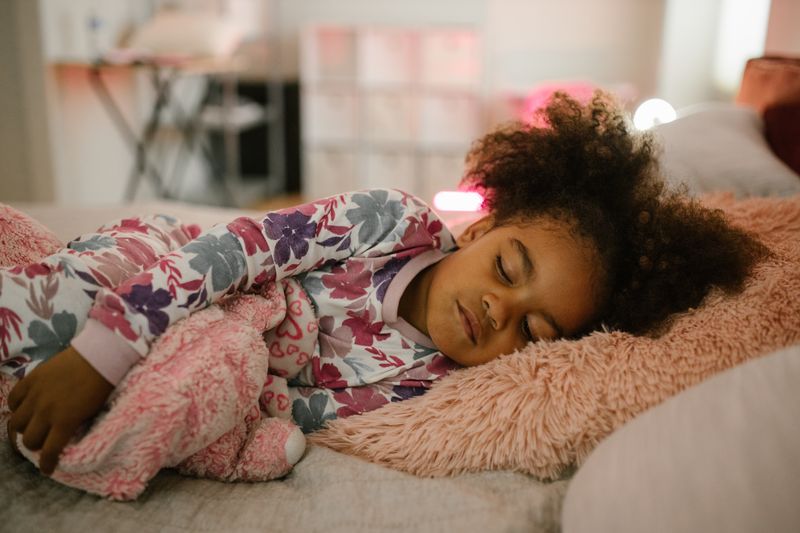
Photo: Pexels
The 2-Week Sleep Transition Plan — Night by Night
Here is a realistic timeline for what to expect when you begin transitioning your toddler to independent sleep. This plan combines the Gradual Retreat method with consistent return escorts.
Week 1 — Establishing Safety
Nights 1–2: Full Presence
Complete your bedtime routine, sit beside their bed until they are asleep. When they wake in the night, use the return escort — walk them back, say your one phrase, sit briefly, then leave. Expect multiple wake-ups.
Nights 3–4: Beginning the Retreat
Move your chair or position halfway to the door at bedtime. Return escort continues for night waking. You may see some protest — this is normal. Stay calm and consistent.
Nights 5–7: Doorway Position
Sit in the doorway at bedtime. Most families notice a reduction in night waking by night 5 or 6. If they come to your room, return escort without conversation.
Week 2 — Building Independence
Nights 8–10: Outside Door Presence
You are now visible just outside the door but not in the room. Many toddlers are settling within 10–15 minutes by this stage. If they come to your room at night, continue return escort.
Nights 11–14: Independent Sleep with Check-Ins
Leave after the bedtime routine. Offer a verbal check-in: "I'm going to check on you in five minutes." Most toddlers are asleep before the check-in happens. Night waking should be significantly reduced or absent.
What to Expect — Realistic Timeline
- • Nights 1–3: Usually the hardest — expect protest, multiple wake-ups, and exhaustion
- • Nights 4–7: Beginning to improve — fewer wake-ups, shorter settling time
- • Week 2: Most toddlers are settling within minutes and waking once or not at all
- • When to start over: If illness, travel, or a major change disrupts progress, return to Week 1 for two nights then fast-track back through the stages
📊 Paediatric sleep experts recommend toddlers aged 1–2 get 11–14 hours of sleep per day including naps, and toddlers aged 3–5 need 10–13 hours. Consistent independent sleep supports these targets significantly.
Age-Specific Advice — What Works When
Toddler Won't Sleep in Own Bed at 18 Months
Eighteen months is peak separation anxiety. Your toddler genuinely misses you at night — this is their attachment system functioning correctly. The Camping Out or Gradual Retreat methods work best at this age. Avoid approaches that involve significant crying as they tend to intensify anxiety at this developmental stage. Focus heavily on a warm, consistent bedtime routine and increasing daytime physical closeness.
What to avoid: Cold-turkey approaches, locking the bedroom door, long verbal explanations (language comprehension is limited at this age).
2 Year Old Won't Sleep in Own Bed
Age two is the most common age for this challenge. Many two-year-olds have just transitioned from a cot to a big bed and are navigating a new developmental leap simultaneously. The cot-to-bed transition removes the physical boundary that kept them in place — now they need an internal boundary to replace it. The Gradual Retreat combined with the Return Escort and a sticker chart works extremely well at this age. See our Toddler Sleep Routine for 2 Year Olds for a complete age-specific guide.
3 Year Old Won't Sleep Alone
At three, imagination is fully active and fear is often the primary driver. Monster spray, Brave Bear, social stories, and the Ticket System all work well at this age. Three-year-olds can understand simple explanations and benefit from being part of creating the sleep plan — ask them what would make their room feel safer, what they need in their bed, what the rule should be. More reasoning is possible, but do not over-explain at bedtime when cortisol is already elevated.
4 Year Old Still Won't Sleep Alone
When sleep refusal has been a pattern for a year or more, the habit is more entrenched and a more structured approach is needed. The Gradual Retreat and Return Escort remain effective but may take three to four weeks rather than two. Be explicit about the new expectation, use a sticker chart with meaningful rewards, and consider whether underlying anxiety may need additional support. If your four-year-old shows persistent daytime anxiety, sleep avoidance despite a calm routine, or extreme distress, a conversation with your GP or a child psychologist is a reasonable and helpful next step.
📊 Studies show that a consistent, predictable bedtime routine reduces the time it takes toddlers to fall asleep and improves overall sleep quality — often within one week of implementation.
What NOT to Do When Your Toddler Won't Sleep in Own Bed
Child development research is clear on the approaches that make sleep refusal worse rather than better. Avoid these — not because they are morally wrong, but because they genuinely do not work long-term.
✗ Never shame or frighten them into sleeping alone
Telling a toddler that "big kids don't cry" or that something bad will happen if they leave their room increases anxiety and makes sleep harder, not easier. Fear is not a sustainable sleep strategy.
✗ Never lock the door
Locking a toddler in their room is not a sleep strategy — it is containment. It does not teach independent sleep; it teaches that fear and calling out go unanswered. It can cause genuine distress.
✗ Never make threats you won't keep
"If you come out one more time, we're not going to the park tomorrow" — and then you go to the park. Toddlers learn very quickly which consequences are real. Empty threats erode trust and have no effect on sleep.
✗ Avoid overstimulation before bed
Screens within 60 minutes of bedtime, rough physical play, exciting activities, or sugary snacks all make settling significantly harder. Wind down must actually wind down.
✗ Don't start something you can't sustain
If you lie down with your toddler until they fall asleep every night, that becomes the sleep association. Only use a strategy you are prepared to maintain consistently.
✗ The inconsistency trap
Some nights returning them calmly, other nights letting them stay, other nights getting frustrated and relenting — teaches one thing: that persistence is rewarded. Inconsistency is the primary reason gentle methods fail.
When Toddler Sleep Refusal Is a Bigger Concern
Most toddler sleep refusal is normal, developmental, and temporary. But there are signs that suggest something beyond typical refusal may be happening.
Night terrors (screaming episodes where the child is not fully awake and cannot be easily comforted) vs. nightmares (where the child wakes distressed but is responsive) vs. simple sleep refusal — these are different and benefit from different responses
Persistent daytime anxiety that follows the child into other settings — separation difficulties at daycare, extreme clinginess, somatic complaints
Sleep refusal combined with significant feeding difficulties, sensory sensitivities, or developmental concerns
A child over age 4 with long-standing sleep refusal that has not responded to consistent approaches over 4–6 weeks
If any of these resonate, please speak to your GP or paediatrician. A referral to a child psychologist or paediatric sleep specialist is a sign of good parenting, not failure. You deserve support — and asking for help is one of the most effective things you can do.
A Note for Working Mums — The Extra Layer of Guilt

Photo: Pexels
There is an extra layer to nighttime struggles that working mums carry that does not get talked about enough. When you have been away from your toddler all day — even if you love your work, even if the childcare is excellent — there is a connection gap. You have missed them. And somewhere, they have missed you.
That gap shows up at bedtime. Your toddler is not manipulating you at 2am — they are trying to close the distance. The nighttime calling, the constant requests, the inability to settle — part of this is attachment and the normal toddler sleep challenges described in this article. But part of it, for working families specifically, is about connection.
Research on attachment and working parents consistently finds that quality of connection matters more than quantity of time. Twenty minutes of fully present, screen-free, child-led play before the bedtime routine — no phone, no half-attention, just you and them — can significantly reduce nighttime neediness. Not because you are fixing sleep directly, but because the connection cup is fuller.
After daycare days are particularly challenging — toddlers often hold it together all day and then release everything the moment they see you. See our Toddler Routine After Daycare guide for a practical approach to the after-daycare-to-bedtime window that reduces evening meltdowns and nighttime waking. And to help with the big emotions that come with transitions, our Helping Toddlers Manage Big Emotions guide is worth reading alongside this one.
You are enough. Working or not. Perfect bedtime routine or not. You are the person your toddler is calling for at 2am, which means you are exactly what they need.
FAQs — Toddler Won't Sleep in Own Bed
How long does it take for a toddler to learn to sleep in their own bed?
Most toddlers successfully transition to independent sleep within 2 to 4 weeks when a consistent approach is applied every night. The first three nights are typically the hardest. By the end of the first week most families see meaningful improvement. The key is consistency — children who experience different responses on different nights take significantly longer to settle.
Should I let my toddler cry it out when they won't stay in their own bed?
Cry it out — or extinction sleep training — can be effective for some families but it is not the only option and it is not right for every child or every parent. Gentler methods such as the Gradual Retreat or Camping Out approaches work well for most toddlers, particularly those with higher separation anxiety. The best method is the one you can apply consistently and calmly every single night.
Is it normal for a 2 year old to refuse to sleep alone?
Yes — completely. Age two is statistically the most common age for toddler sleep refusal. The cot-to-bed transition, a surge in separation anxiety, developing imagination, and a drive for autonomy all converge at this age. Research suggests 20 to 30 percent of families experience significant toddler sleep challenges at some point, with peak prevalence around 18 months to 3 years.
My toddler slept fine and now suddenly won't sleep in their own bed — why?
Sudden sleep regression in a previously settled toddler is almost always triggered by a change — a new sibling, starting daycare, a house move, an illness, a developmental leap, or a shift in the daily routine. It is a regression, not a permanent reversal. Returning to your consistent bedtime routine and using gentle return escorts typically resolves it within one to two weeks.
Should I let my toddler sleep in my bed if they refuse their own?
This is entirely your choice and there is no right or wrong answer. Co-sleeping is a valid, widely practised parenting approach in many cultures worldwide. This guide is written for parents who want to transition to independent sleep — not for parents who are happy with co-sleeping. If you are genuinely comfortable with your toddler in your bed and it is working for your family, there is no developmental problem with that.
What is the gentlest way to get a toddler to sleep in their own bed?
The Gradual Retreat method is widely considered the gentlest evidence-aligned approach. You begin by sitting beside your toddler's bed until they fall asleep, then move your chair a little further away each night over two weeks. It avoids prolonged crying, maintains your physical presence during the transition, and builds the child's sense of safety incrementally. Paired with a warm consistent bedtime routine, most toddlers respond well within two weeks.