
How to Handle Toddler Separation Anxiety
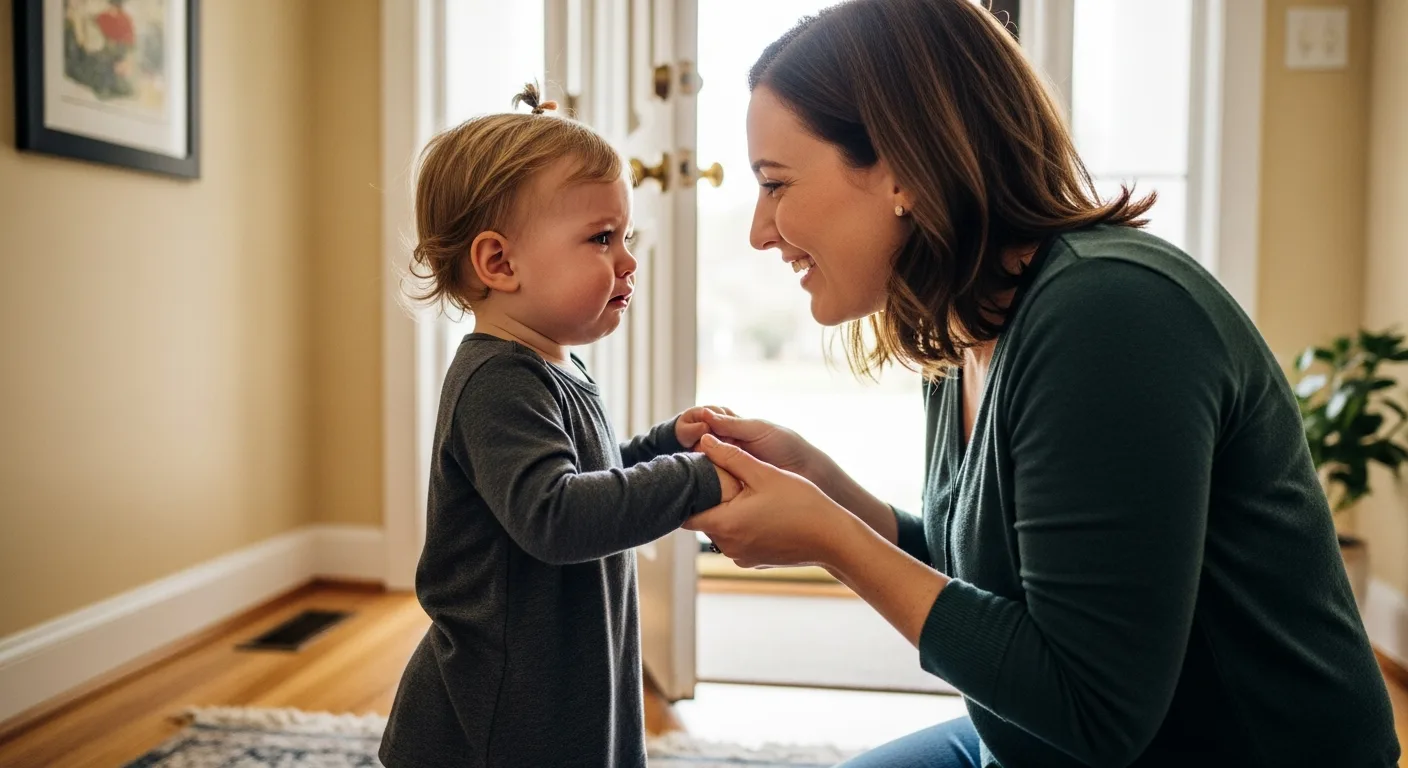
If your toddler clings to your leg every morning at nursery drop-off, dissolves into tears the moment you reach for your coat, or screams the moment you step out of the room — you are not alone, and there is nothing wrong with your child. Toddler separation anxiety is one of the most common parenting challenges, and it is also one of the most misunderstood.
Understanding why it happens and knowing what to do about it makes a genuine difference — both for your toddler and for you. This guide covers everything you need to know about separation anxiety in toddlers and the practical strategies that actually help.
What Is Separation Anxiety?
Separation anxiety is the distress a child experiences when separated — or anticipating separation — from their primary caregiver. It is not misbehaviour, manipulation, or a sign that your child is poorly attached. In fact, the opposite is true: separation anxiety is evidence of a healthy, secure bond between a toddler and their caregiver.
It tends to peak between 10 and 18 months, can resurface during toddlerhood at stressful transitions, and typically eases as children develop a stronger sense of object permanence — the understanding that you still exist, and will come back, even when you cannot be seen.
Why Toddlers Experience Separation Anxiety
Brain development
The toddler brain is not yet wired to understand time in the way adults do. 'You're coming back in two hours' means very little to a toddler whose sense of time is entirely present-focused.
Attachment is the goal
Crying when a caregiver leaves is an attachment behaviour — the evolutionary signal that brings protective adults close. It is the system working exactly as it should.
A world that feels big
Toddlers are navigating a world that is genuinely overwhelming. You are their safe base. Leaving feels unsafe, not because it is, but because their nervous system reads it that way.
Developmental leaps
Separation anxiety can intensify at developmental transitions — starting nursery, a new sibling, moving house, or any disruption to routine that makes the world feel less predictable.
Signs of Separation Anxiety in Toddlers
- •Intense crying or screaming when you leave or prepare to leave
- •Clinging to you, refusing to let go
- •Following you from room to room throughout the day
- •Waking at night calling for you more than usual
- •Refusing to go to familiar caregivers, grandparents, or childcare settings they previously accepted
- •Physical complaints (stomach ache, headache) at separation times
- •Increased neediness and clinginess for days before an anticipated separation
Practical Tips for Helping Toddlers Feel Secure
Create a consistent goodbye ritual
A predictable, brief goodbye sequence — a hug, a specific phrase ('I'll be back after lunch'), a wave from the door — gives your toddler a script for separation. Predictability reduces the fear of the unknown. Keep the ritual short: prolonged goodbyes increase anxiety rather than reducing it.
Never sneak away
It is tempting to slip out while your toddler is distracted. This almost always backfires. When your toddler realises you have gone without warning, it teaches them that you might disappear at any moment — which increases vigilance and clinginess rather than reducing it. Always say goodbye, even if it causes a brief upset.
Validate the feeling without prolonging the moment
'I know you feel sad when I go. That's okay. I love you and I will always come back.' Then leave. Lingering to comfort extends the anticipatory distress. A brief, warm acknowledgement followed by a confident departure is kinder than an extended goodbye full of parental anxiety.
Use a transitional object
A soft toy, a photo of you in their bag, or a small item of yours that they can hold gives toddlers a physical connection to you during separation. Many nurseries actively encourage this. The object becomes associated with your return and provides genuine comfort.
Build separation in gradually
If your toddler is about to start nursery or a new care setting, practise separation in shorter, lower-stakes contexts first — leaving them with a trusted person for twenty minutes while you are in the house, then for an hour, then away from the house. Gradual exposure builds tolerance.
Keep your language confident and positive
Toddlers read your emotional tone more than your words. 'I'll miss you so much' communicates that separation is something to be sad about. 'You are going to have such a lovely time' communicates safety. Your confidence is the single most important regulator of your toddler's anxiety level at goodbye.
Establish a return ritual too
What you do when you come back matters as much as how you leave. A warm, enthusiastic reunion — a hug, naming what you did while you were apart — reinforces the message that you always come back. Consistency in the return builds trust in the departure.
Maintain the routine around separations
Consistent daily routines create the broader sense of predictability that reduces background anxiety. When toddlers know what is coming next in their day, the world feels safer — and separations feel less threatening within that stable framework. Our <Link href='/blog/simple-toddler-routine-tips' className='text-primary font-semibold hover:underline'>Simple Toddler Routine Tips</Link> guide covers this in more detail.
When Separation Anxiety Needs More Support
Most toddler separation anxiety is developmentally typical and resolves on its own with consistent, warm handling. However, it is worth speaking to your GP or health visitor if your toddler's distress is so severe that it significantly disrupts their daily life for an extended period, if it appears to be worsening rather than improving after months, or if you are noticing other signs of significant anxiety alongside separation distress.
For the emotional side of separation anxiety — the tantrums and emotional flooding that often accompany it — our Gentle Ways to Handle Toddler Tantrums and Setting Gentle Boundaries with Your Toddler guides both have relevant strategies.
Looking for activities for your toddler?
Try our Toddler Activity Generator to get quick indoor and outdoor activity ideas based on your toddler's age.
Try the Toddler Activity GeneratorNeed toddler meal ideas?
Use our Toddler Meal Generator to find breakfast, snack, and dinner ideas.
Try the Toddler Meal GeneratorFinal Thoughts
Helping a toddler with separation anxiety is not about eliminating the feelings — it is about building the trust that separations are safe and that you always come back. That trust is built one consistent goodbye at a time. The crying at the door is hard. But the research is clear: toddlers with secure attachments, consistent caregiving, and predictable routines develop into resilient, confident children. You are building that foundation every single day.