
Toddler Sleep Routine for 2 Year Olds: What Actually Works
You had it figured out. Around 12 months, bedtime became manageable — a rough routine, a reasonable amount of protest, and then sleep. Then 2 arrived. Suddenly the child who used to go down in 20 minutes is bouncing off the walls at 8pm, calling for water, calling for one more hug, climbing out of bed, or just crying. Hard.
The 2 year old sleep regression is real, it is exhausting, and it is not your fault. But a consistent, well-timed toddler sleep routine for 2 year olds is the most powerful tool available for making bedtime manageable again. This is what that looks like in practice — step by step, adapted for the most common situations, with strategies for the battles that inevitably come up.
Why 2 Year Olds Are So Hard to Get to Sleep
Two-year-olds are not being difficult at bedtime because they are testing you (though it can feel that way). They are fighting sleep because of genuine developmental and biological factors converging at the worst possible time of day.
Brain development at 2
The prefrontal cortex — the part of the brain responsible for self-regulation, impulse control, and the ability to wind down on demand — is in its most rapid period of development. A 2 year old cannot reliably 'decide' to stop being stimulated and go to sleep. They need environmental and routine cues to do that work for them.
Separation anxiety peaks at 2
Developmentally, separation anxiety often increases again around 18–24 months as toddlers become more aware of object permanence and relationships. Bedtime is, from their perspective, a separation. The protests, the curtain calls, the 'one more hug' — these are attachment behaviours, not manipulation.
Overtiredness cycle
When a toddler misses their sleep window — the narrow period where melatonin is rising and sleep pressure is high — the body compensates with a cortisol surge. This 'second wind' looks like energy and alertness but is actually exhaustion making sleep harder. The overtired toddler at 8pm who seems wired is not ready for a later bedtime — they needed an earlier one.
Nap transition affecting night sleep
At 2, many toddlers are in the middle of nap transition — some days napping, some days not, nap lengths varying. This unpredictability makes bedtime timing genuinely difficult to predict, and sleep debt accumulated on no-nap days crashes into bedtime in the form of overtired protest.
How Much Sleep Does a 2 Year Old Actually Need?
The American Academy of Sleep Medicine recommends 11–14 hours of total sleep per 24 hours for children aged 1–2 years. For most 2 year olds, this breaks down as:
1–2 hrs
Daytime nap
One nap, typically finishing by 3pm. Napping later than 3pm pushes bedtime and creates early morning waking.
10–12 hrs
Night sleep
Typically 7:00–7:30pm to 6:30–7:30am. Some 2 year olds sleep 11 hours; some need 12. Know your child's natural amount.
Signs of overtiredness in a 2 year old:
Hyperactivity and 'wired' behaviour in the hour before bedtime
Emotional volatility — tears over tiny things
Eye rubbing, ear pulling, yawning but unable to settle
Waking frequently in the night after going to sleep quickly
Waking before 6am consistently
Signs of undertiredness in a 2 year old:
Takes more than 45 minutes to fall asleep despite a calm routine
Waking after 7:30am consistently and still full of energy
Refusing nap without any signs of tiredness or grumpiness
Late bedtime (after 8pm) without adverse effects
The Perfect Toddler Sleep Routine for 2 Year Olds — Step by Step
This is the routine that works for most 2 year olds with a 7:00–7:30pm target bedtime. It takes 30–45 minutes, wind-down starts at 6:45pm, and every step has a purpose. For a comprehensive look at how sleep fits into the full day structure, our toddler daily routines guide covers the whole day schedule. And for the evening hours leading up to bed, our toddler routine after daycare guide has the after-6pm structure in detail.
Dinner
Dinner before the routine begins, not during. Eating too close to sleep raises core body temperature slightly — aim to finish at least 90 minutes before lights out. Keep dinner calm: no screens, no overstimulating conversation.
Bath
A 10–15 minute warm bath is one of the most reliable sleep triggers available. The drop in body temperature after the bath signals the brain that sleep is coming. Keep it calm — no splash games this close to bed.
Pyjamas, lotion, quiet play
5–10 minutes of very calm quiet play — puzzles, building blocks, colouring — gives the bath time to complete its temperature regulation effect. No screens. No chasing. No tickling.
Brush teeth
Make tooth brushing predictable and non-negotiable. A song, a counting routine, or a two-minute timer removes the argument. It also signals: we are nearly at the end now.
Two books in bed
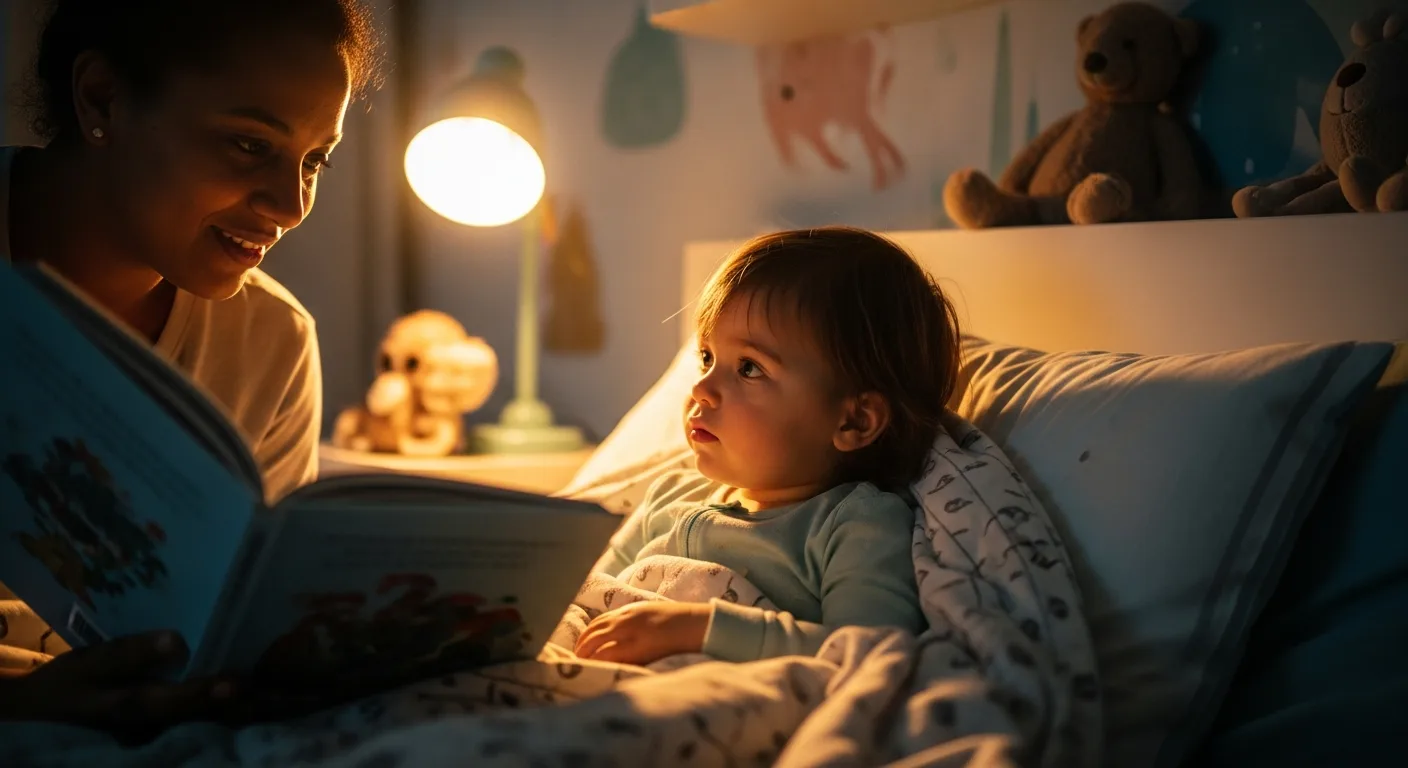
Two books maximum — chosen in advance if possible, to prevent the negotiation dragging out. Read in dim light. Keep your voice calm and slow. This is the transition from awake to almost-asleep.
Lights out routine
Say goodnight to the same things in the same order every night — the window, the teddy, the door. This ritual is not indulgent; it is a powerful sleep association cue that tells the brain: sleep comes next. Then leave.
Total routine time: 30–45 minutes. If your routine consistently takes longer, something in the pre-routine period (screens, rough play, overstimulation) is likely preventing the wind-down from working. The routine itself is fine — what happens in the 60 minutes before it starts matters enormously.
2 Year Old Sleep Routine by Common Situation
The core routine above works for most families, but 2 year old life comes in many forms. Here is how to adapt it for the most common situations. For nap-specific guidance, our toddler nap routine guide covers nap timing and nap transition in depth.
Sleep routine for a 2 year old still napping
If your 2 year old naps well (1–2 hours finishing by 3pm), a 7:00–7:30pm bedtime works perfectly. The routine above runs from about 6:45pm. Ensure nap ends by 3pm at the absolute latest — naps finishing at 3:30pm or later push bedtime to 8pm or beyond, which creates early morning waking that exhausts the whole family.
Sleep routine for a 2 year old dropping their nap
Nap dropping at 2 is early but not unheard of. If your 2 year old is skipping naps without showing signs of overtiredness, move bedtime earlier — 6:30pm is not too early. Replace nap time with mandatory quiet rest: dim room, calm music, soft toys, no screens. Even if sleep doesn't happen, the rest reduces the cortisol build-up that makes bedtime impossible.
Sleep routine for a 2 year old in daycare
Daycare introduces a layer of complexity: your toddler naps at daycare on daycare's schedule, not yours. Talk to your daycare provider about nap timing — most are willing to cap nap length or timing if you explain the bedtime problem. When you collect your toddler, resist the urge to allow car-napping on the way home. Start your routine within an hour of arriving home: dinner, bath, books, lights out. The routine's consistency matters more than the exact clock time.
Sleep routine for a 2 year old with a new baby sibling
A new baby sibling is one of the most common triggers for 2 year old sleep regression. The separation anxiety increase is real and normal. In the short term, some families find it helpful to have one parent do a slightly longer version of the routine — an extra book, a little more connection time — while the other parent handles the baby. The goal is to maintain the structure while increasing the feeling of security. This phase typically resolves within 4–6 weeks as the new normal becomes familiar.
How to Handle 2 Year Old Sleep Battles
Even the best toddler sleep routine for 2 year olds does not eliminate all bedtime resistance. Here is what to do when the most common battles come up. For the foundation that makes all of this easier, our building a bedtime routine that works guide covers the behavioural principles behind sleep training in more detail.
Curtain calls (one more drink, one more hug)
Pre-empt curtain calls by building them into the routine. Offer a small cup of water before the final goodnight. Give the long hug as part of the goodbye ritual. Then hold the boundary: 'You've had your water. You've had your hug. It's sleep time now.' One calm, warm, firm repetition. Don't negotiate and don't re-enter for non-emergencies.
Getting out of bed repeatedly
For toddlers in a toddler bed, the 'silent return' is the gold standard: walk them back to bed without speaking, without eye contact, without emotional response. Every time. The tenth silent return is as calm as the first. It is exhausting but it works — and it stops working if you engage.
Crying at bedtime
Separation anxiety peaks at 2, and some crying at bedtime is developmentally normal. A brief check-in system — returning every 3–5 minutes, placing a hand on their back without picking up, then leaving again — reassures your toddler of your presence without creating a full reunion that resets the process from the start.
Early morning waking
Early morning waking in 2 year olds is almost always overtiredness — the sleep pressure has built so high that the brain surfaces at the end of a sleep cycle and cannot re-settle. The fix is an earlier bedtime, not a later one. Move bedtime 15 minutes earlier each night until morning wake time shifts forward. A Gro-clock or 'okay to wake' light teaches the concept of a 'sleep time' that hasn't ended yet.
Toddler Sleep Routine Tips for Working Moms
When you get home at 6pm and bedtime is 7:30pm, you have 90 minutes. That is not a lot — but it is enough if you protect it. For the full evening structure for working parents, our consistent daily routine for toddlers guide has the framework that makes this work.
Getting home late and still maintaining the routine
The routine does not need to start at the same time every day — it needs to end at roughly the same time. If you get home at 6pm, compress dinner to 20 minutes and move straight to bath by 6:30pm. The sequence matters more than the clock. Skip quiet play if needed and go straight to books — two books in dim light at 7:00pm, lights out by 7:15pm.
Weekend vs weekday consistency
The biggest sleep mistake working parents make is letting the weekend bedtime drift — 8pm, 9pm, because 'it's the weekend'. This shifts the body clock and means Monday and Tuesday nights are a miserable fight against a shifted circadian rhythm. Keep bedtime within 30 minutes of the weekday time on weekends. It feels unfair but the whole week goes better for it.
What to do when the routine is broken
Travel, illness, visitors, holidays — the routine will be broken. Don't catastrophise. Get back to the routine the night you get home, not a 'gradual return'. One night of a broken routine sets back nothing; a gradual return over a week does. The toddler sleep routine for 2 year olds is most powerful when it is boring and reliable — make your way back to boring as fast as possible.
Frequently Asked Questions
What time should a 2 year old go to bed?
Most 2 year olds sleep best with a bedtime between 7:00pm and 7:30pm. This window aligns with the natural melatonin rise in young children and prevents the overtiredness cycle that makes bedtime much harder. If your 2 year old is taking a nap until 3pm, a 7:30pm bedtime works well. If naps are dropping or shorter, move bedtime earlier — closer to 6:30pm or 7:00pm — to avoid that over-tired second wind that makes settling take an hour.
How long should a 2 year old sleep routine take?
A 2 year old sleep routine should take 30–45 minutes from start to finish. This is enough time to wind down properly without dragging into the evening. Longer routines — over an hour — tend to overstimulate rather than calm, and often signal that screens, big emotions, or too much interaction are creeping into what should be a quieting-down period. If your routine is consistently taking over an hour, tighten it to: bath, teeth, two books, lights out.
Should a 2 year old still nap?
Most 2 year olds still need a daytime nap. The average age for dropping the nap entirely is between 3 and 4 years, with some children needing naps until 5. At 2, a single nap of 1–2 hours in the early-to-mid afternoon (finishing by 3pm at the latest) is ideal. If your 2 year old is resisting the nap but clearly still tired by 4pm, quiet rest time in a darkened room often substitutes effectively — around 50% of children who resist nap will actually sleep if given the opportunity with no pressure.
Why does my 2 year old fight sleep every night?
The most common reasons a 2 year old fights sleep are: (1) overtiredness — they have gone past their sleep window and are in a cortisol spike that makes settling hard; (2) the routine is inconsistent, so the brain hasn't built the associations that signal sleep is coming; (3) separation anxiety is peaking, making the transition from your presence to alone time genuinely distressing; (4) nap timing is off — napping too late pushes bedtime, creating a fight; (5) overstimulation in the hour before bed — screens, rough play, or big emotions all delay melatonin release.
How do I get my 2 year old to stay in bed?
For toddlers in a toddler bed, the most effective strategies are: a consistent, brief response to curtain calls (one drink of water provided at the start of the routine, one hug at the door — then a firm but calm 'it's sleep time now'); a visual sleep signal like a Gro-clock or a simple 'okay to wake' light that is red until morning; a short check-in system where you return every few minutes with no interaction — just a quiet hand on the back — until asleep; and a social story read during the day (not at bedtime) about staying in bed. Consistency across all caregivers is the most important factor.
Want a full daily routine for your toddler?
Try our Toddler Activity Generator for ideas that fit your toddler's schedule and energy level.
Try the Toddler Activity Generator