
Toddler Evening Routine Tips for a Calm Night
The hours between dinner and lights-out can be the most exhausting part of a parent's day — or, with the right approach, a genuinely peaceful transition. Toddler evening routines are not about following a rigid schedule. They are about creating the predictable, calming sequence of events that shifts your toddler's nervous system from the stimulation of the day towards the rest they need.
These 10 evening routine tips for toddlers cover the practical adjustments that make the biggest difference — from timing and light to tone and transition rituals — so that bedtime becomes something your toddler moves towards rather than resists.
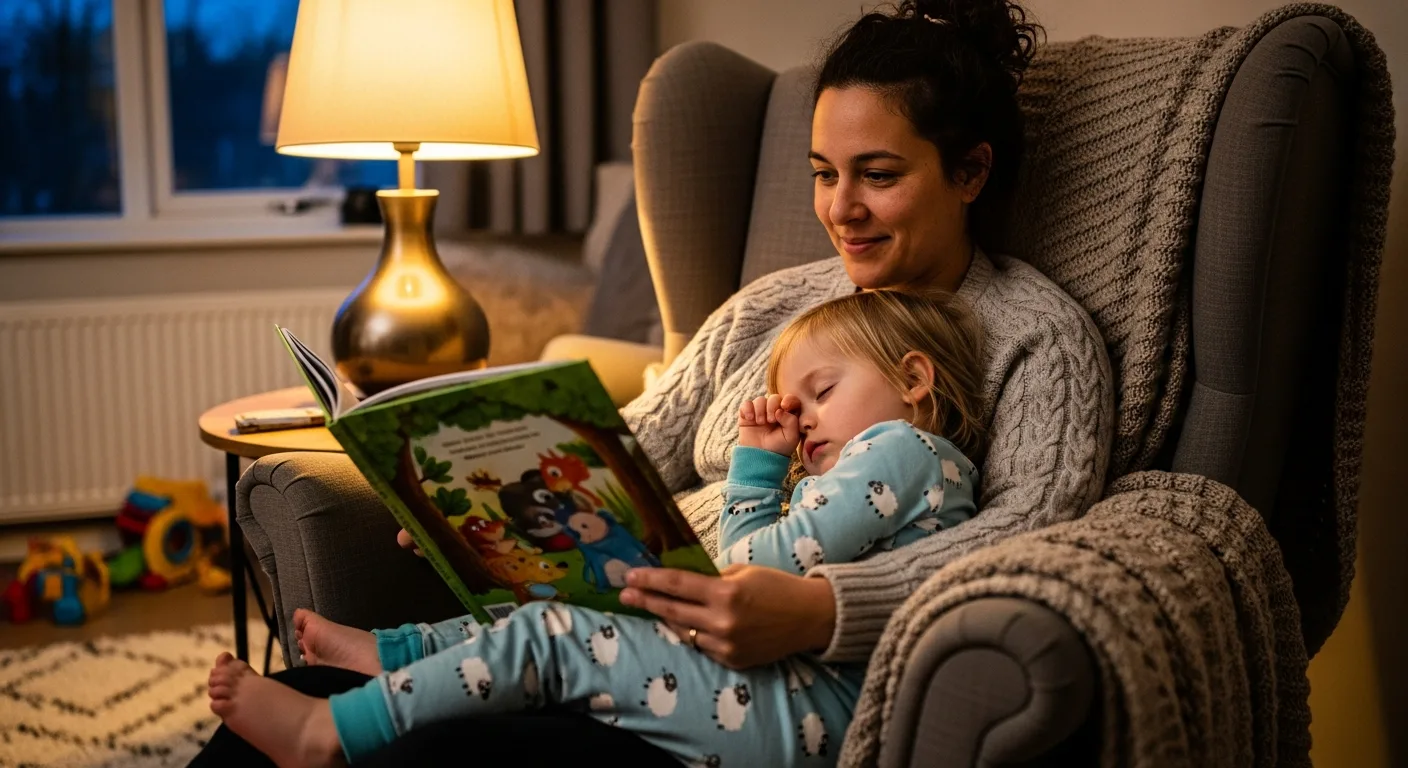
Why Evening Routines Matter
Toddlers do not automatically wind down at the end of the day. Their bodies need cues — environmental, sensory, and social — that signal the shift from active daytime mode to the restful state required for sleep. Without a consistent evening routine, the transition from dinner to bed becomes a battle because the nervous system never received clear signals that it was time to shift gears.
A predictable evening routine for toddlers does two things: it reduces the cognitive and emotional load of the end of the day (toddlers know what is coming, so they do not need to resist or negotiate every step), and it triggers the physiological cascade — melatonin release, heart rate reduction, body temperature drop — that makes falling asleep possible. For the specific bedtime portion of the evening, our Building a Bedtime Routine That Works guide covers the final steps in detail.
10 Evening Routine Tips for Toddlers
Start the wind-down earlier than you think
Most parents begin the evening routine too late. By the time a toddler is visibly tired — rubbing eyes, becoming emotional, having difficulty with small frustrations — they are often overtired. Starting wind-down activities an hour before target sleep time, even when your toddler seems energetic, prevents the overtired spiral that makes bedtime hard.
Dim the lights from early evening
Bright overhead lighting in the evening actively suppresses melatonin production and keeps the brain in daytime mode. Switching to warmer, dimmer lamps from around 5 or 6pm signals to your toddler's body clock that the day is winding down. This simple environmental change consistently improves bedtime ease.
End screens at least an hour before bed
Fast-paced content and the blue light of screens both interfere with melatonin onset and leave toddler nervous systems in a heightened state. An hour screen-free before bed is the minimum. Some toddlers need closer to ninety minutes. Replace screens with physical books, quiet play, or conversation.
Offer a small, consistent evening snack
Hunger at bedtime is a significant sleep disruptor. A small, protein-containing snack offered at a consistent time each evening — a cup of warm milk, a few crackers with cheese, a banana — steadies blood sugar and removes hunger as a barrier to sleep onset. Keep it small and consistent.
Make the transition from dinner to routine explicit
A clear, verbal signal marks the shift from dinner to evening routine: 'Dinner's finished — now it's bath time.' This explicit transition prevents the negotiating and stalling that happens when the end of one activity and the beginning of the next blurs together. The routine has a clear, named start point.
Protect the bath as a calming ritual
Warm water is one of the most effective physiological sleep triggers available. A warm bath raises body temperature slightly, and the subsequent cooling when your toddler gets out triggers the body temperature drop that initiates sleep. Make bath time calm, unhurried, and screen-free — it is doing important neurological work.
Use the same sequence, every night
The power of an evening routine is its predictability. Bath, pyjamas, teeth, story, sleep — or whatever your sequence — should happen in the same order, every night, even at weekends. Your toddler's nervous system learns to anticipate what comes next, and the anticipation itself becomes part of the calming cascade.
Lower your own voice and pace
Toddlers co-regulate with their caregivers. If you are rushing, speaking loudly, or feeling stressed during the evening routine, your toddler's nervous system picks this up and stays activated. Consciously slowing your speech, lowering your volume, and moving at a gentler pace shifts the emotional tone of the whole routine.
Choose calming books deliberately
Not all picture books are equal at bedtime. Books with simple, gentle narratives, predictable rhythms, and soft imagery lower arousal. Books with exciting action, complex plots, or highly stimulating pictures do the opposite. Keep a small collection of specifically calming books designated for evening use.
Create a reliable goodbye ritual
A short, consistent goodbye ritual at the very end — a specific song, three kisses, a phrase you always say — gives your toddler a clear signal that the routine is complete and it is time to sleep. This ritual does not need to be elaborate. It needs to be identical every night. Consistency is everything.
How Evening Routines Reduce Bedtime Struggles
Predictability reduces resistance
When every step is known and expected, there is nothing to fight. Toddlers resist the unknown. They cooperate with the familiar.
Routine triggers biological sleep
Consistent sequences activate the body's sleep-preparation systems through conditioned response. The routine literally becomes a sleep cue over time.
Connection before separation
A warm, calm, connected evening routine fills the attachment tank before the long separation of sleep — reducing the separation anxiety that drives many bedtime struggles.
It gets faster over time
A new routine feels slow and uncertain. A practised routine runs almost on autopilot, for both parent and toddler. The investment in the first weeks pays off for months or years.
Creating a Peaceful Environment Before Bed
The physical environment of your toddler's bedroom matters as much as the routine itself. A room that is too warm, too noisy, or too bright will work against the sleep-preparation the routine has started. The ideal sleep environment for a toddler is cool (around 18°C/65°F), dark (blackout blinds in summer), and either quiet or playing very soft, consistent white noise.
Keep the bedroom a calm, consistent space rather than an active play space during the day. When toddlers associate their room primarily with rest rather than stimulation, the environmental cues of the room itself become part of the sleep trigger. For more on building the whole-day rhythm that supports a smooth evening, our Simple Toddler Routine Tips guide covers the full daily framework.
Looking for fun activities for your toddler?
Try our Toddler Activity Generator to get instant indoor and outdoor activity ideas based on your toddler's age.
Try the Toddler Activity GeneratorNeed toddler meal ideas?
Use our Toddler Meal Generator to quickly find breakfast, snack, and dinner ideas.
Try the Toddler Meal GeneratorFinal Thoughts
A calm toddler evening routine is built gradually, held consistently, and adapted as your toddler grows. The first week of a new routine is always the hardest — your toddler's nervous system has not yet learned to trust the sequence. By week three, most families notice a significant difference. By month two, the routine runs on its own momentum. The investment you make in these evening hours pays dividends in every night that follows.