
Toddler Screen Time Tips: How to Set Limits Without the Battles
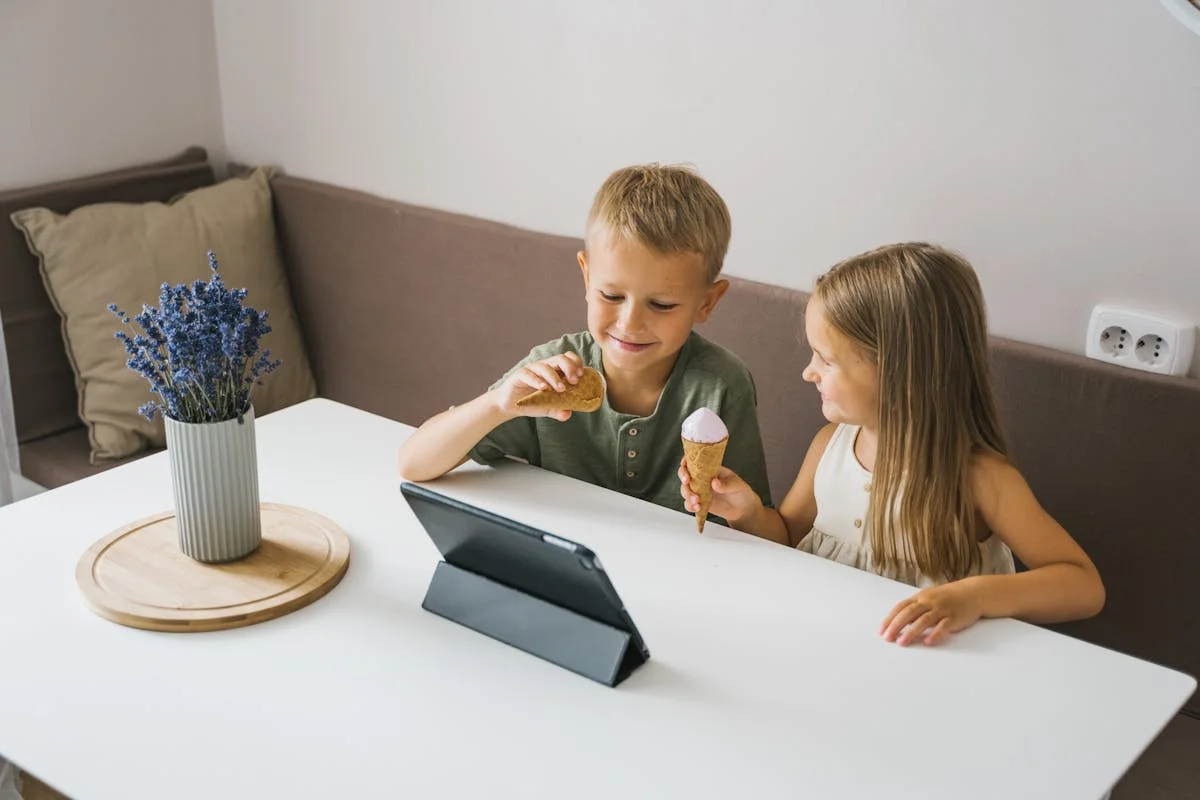
You hand over your phone. Not because you want to — but because dinner needs to happen, or the older one needs something, or you genuinely just need ten uninterrupted minutes. And the moment you take it back? The meltdown. The reaching, the arching, the howling as though you've removed a vital organ. You promised yourself you'd be different. You'd do wooden toys and sensory bins and outdoor adventures every single day. And then reality showed up.
If any of that sounds familiar, you are not failing. You are parenting. The truth is that most toddler parents use screens more than they planned to — and the answer is not guilt, it's a workable approach. These toddler screen time tips are built for real life, not an idealised version of it. The goal isn't zero screens. It's a relationship with technology that works for your family.
How Much Screen Time Is Too Much for Toddlers?
The two major bodies that set guidelines — the World Health Organization (WHO) and the American Academy of Pediatrics (AAP) — give fairly consistent advice, though it's worth understanding what those guidelines actually mean rather than treating them as pass/fail thresholds.
Video calls only (FaceTime, Zoom)
No solo screen time at all. Toddler brains under 18 months cannot yet transfer what they see on screen to real-world understanding. The one exception is live video calls, where the back-and-forth interaction mimics real human engagement.
High-quality content, with a parent
A small amount of educational content can be introduced, but only with a parent watching alongside and talking about it. On their own, children this age get almost no learning transfer from screens.
Maximum 1 hour per day
Quality programming, ideally co-viewed with a parent. A 30-minute show watched together and discussed is far more valuable than 60 minutes of passive scrolling.
The quality vs. quantity question matters more than most parents realise. A toddler watching a carefully produced educational programme with you asking questions is having a meaningfully different experience than the same toddler watching algorithmically served videos on YouTube Kids for the same length of time. The guidelines are a useful starting point — but context, content, and co-viewing make a far bigger difference than the exact number of minutes.
Why Toddlers Get Addicted to Screens
Before we talk about limiting screens, it helps to understand why they're so hard to limit — and to stop blaming yourself for the fact that your toddler loses their mind when you turn it off. Screens are not designed to be put down. They're engineered by some of the world's most sophisticated designers to maximise engagement — in adults. In a toddler brain, those same techniques land with explosive force.
The dopamine hit explained simply
Every time something new appears on screen — a new character, a new scene, a new sound — the brain releases a small hit of dopamine. Dopamine is the brain's reward chemical, and it's the same system involved in eating, playing, and all the things we find deeply satisfying. The faster the content changes, the more dopamine hits per minute. YouTube Kids videos average a new visual stimulus every 2–3 seconds. Toddler brains haven't developed the prefrontal cortex capacity to override that pull — even most adults struggle.
What this means practically: when you take a screen away from a toddler, you're asking their still-developing brain to go cold turkey on a dopamine loop. The meltdown isn't manipulation — it's a genuine physiological response. Understanding this makes the reaction less infuriating and the transition strategies more effective.
Research on toddler brains during screen time shows increased activation in the reward circuits, decreased activity in the areas responsible for language processing and attention regulation, and measurable changes in sleep quality when screens are used within an hour of bedtime. None of this means screens are inherently harmful — but it does explain why a thoughtful approach to when, what, and how long genuinely matters.
Building a predictable structure around screen time is one of the most effective things you can do — which is why our guide on toddler daily routines is so useful here. When screens happen at the same time every day, toddlers stop asking constantly — because they know when it's coming.
10 Toddler Screen Time Tips That Actually Work
These are not theoretical. These are the toddler screen time tips that make a genuine, measurable difference in the day-to-day reality of managing screens with a small child.
Use a visual timer, not just words
Toddlers have no concept of '10 more minutes'. A visual timer — a sand timer, the Time Timer clock, or a countdown displayed on screen — makes time tangible and concrete. When the timer ends, it's the timer's decision, not yours. This removes the adversarial dynamic that comes with you saying it's time to stop.
Give a 5-minute warning, every single time
Never turn off screens without warning. Always say '5 more minutes and then we're going to [specific next activity]'. Transition warning time is not optional — it's what allows the toddler brain to begin preparing for the shift. The meltdowns happen when screen time ends abruptly and without warning.
Never use screens as reward or punishment
The moment screens become a reward ('if you eat your dinner you can watch') or a punishment ('no tablets today because of what happened this morning'), they gain enormous psychological power in your toddler's mind. Screens become the most precious thing — the thing that can be taken away or given. Keep them neutral: they happen at a regular time, like any other part of the day.
Create screen-free zones
Certain rooms or contexts are simply screen-free, all the time: the bedroom, the dinner table, the car on short journeys. These aren't punishments — they're just the household rules, the same way shoes don't go on the sofa. Consistency here prevents the toddler from campaigning for screens in those settings.
Have a replacement activity ready before turning off
The replacement activity goes out before screens go off — not after the meltdown has started. Put out the playdough. Open the craft supplies. Suggest the specific thing. 'When the timer goes off we're going to make a tower' is infinitely more effective than 'okay, time's up, go play'.
Watch together when you can
Co-viewing transforms passive consumption into an interactive experience. Ask questions ('where are they going?'), make connections ('that's like the park we went to!'), and talk about feelings ('she looks sad, doesn't she?'). Even 20 minutes of co-viewed, discussed content has better developmental outcomes than 20 minutes of solo viewing.
Choose quality content deliberately
Not all toddler content is equal. Slow-paced, narrative-driven shows like Bluey or Sesame Street are meaningfully different from fast-cut, stimulus-heavy YouTube content. If your toddler is going to watch, choose content you've pre-screened and feel good about.
Keep mealtimes completely screen-free
Mealtime is one of the most important daily rituals for language development, connection, and learning to read hunger cues. Screens at meals disrupt all of this. The 'they won't eat without it' cycle is real but breakable — it usually takes about a week of difficult meals to reset, and it's worth it.
Let the daily schedule do the work
When screen time is at the same time every day — say, after lunch while you do the dishes — toddlers stop asking for screens at other times because they know it's not screen time. Predictability is your most powerful tool. The asking escalates when screens feel random.
Model what you want to see
Toddlers watch you more than they watch anything else. If you're on your phone at the dinner table, scrolling while you talk to them, or reaching for your phone the moment there's a quiet moment — they notice. Putting your own phone away during toddler time is one of the most effective screen time strategies available.
How to End Screen Time Without a Meltdown
The transition off screens is where most toddler screen time battles happen. A few changes to how you approach this moment make an enormous difference.
The transition warning system
Five-minute warning, then two-minute warning, then 'one more minute and then the timer will go off'. Three warnings feels excessive until you realise that each one is allowing the toddler brain to incrementally prepare for the shift. By the time the screen goes off, it shouldn't be a surprise.
What to say instead of 'turn it off'
Rather than 'turn it off', try: 'The timer's going to go off in a minute — let's get ready to go make that tower' or 'One more minute and then we're going to have your snack'. The language shifts the focus from what's ending to what's coming next. You're not taking something away — you're transitioning to something else.
The replacement activity trick
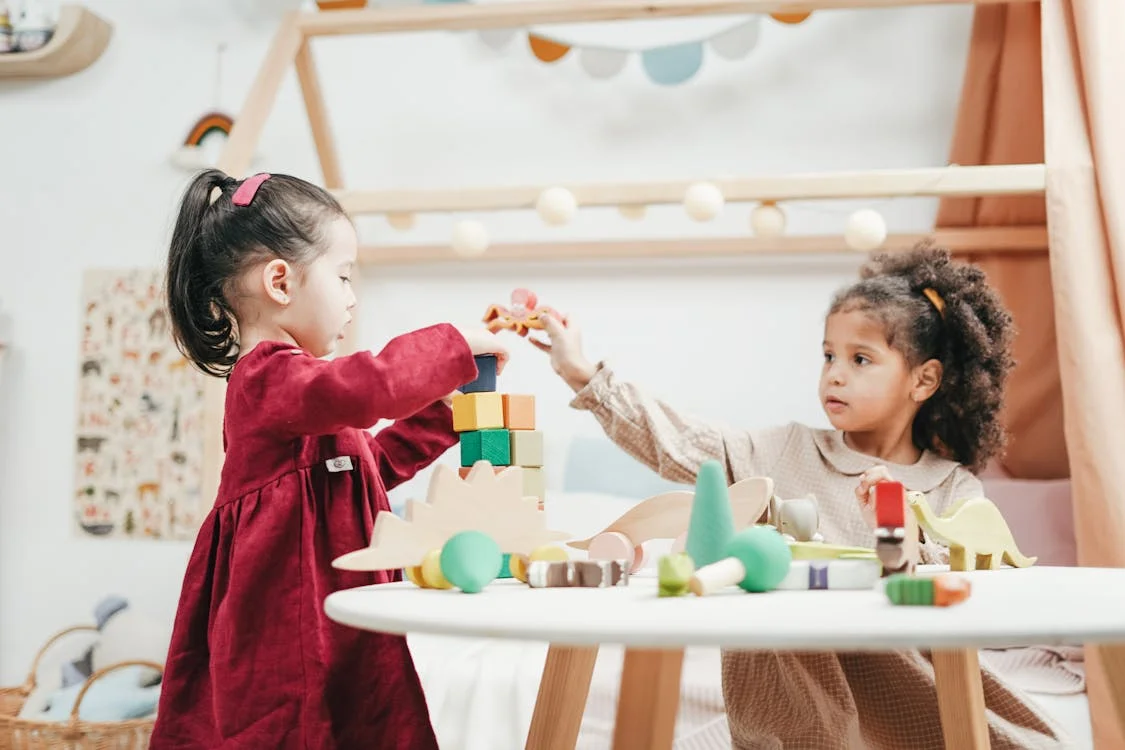
The replacement needs to be specific, physical, and ready to go before the screen goes off. 'Go play' is not a replacement activity. 'Come help me build the train track' is. The more specific and immediate the alternative, the shorter the transition window during which a meltdown can develop.
When they still melt down anyway
Sometimes, despite doing everything right, the meltdown happens. Your job is to stay calm, hold the boundary, and wait it out. Don't turn the screen back on to stop the meltdown — this teaches your toddler that melting down works. Acknowledge the feeling ('I know you wanted to keep watching, that's really frustrating') but don't negotiate. It passes faster than it feels like it will.
If the meltdowns around screen time are part of a broader pattern of big emotional reactions, our guide on positive discipline for toddlers covers the wider toolkit for handling these moments without losing your own calm.
Best Screen-Free Activities to Replace Screen Time
The most effective way to reduce screen time is to have genuinely engaging alternatives ready — not just 'go play'. Toddlers need a prompt, a setup, or an invitation to shift their attention. These are the activities most likely to work across different ages and scenarios.
When you need 10 minutes of peace
- →Playdough with a few small tools set out
- →Sensory bin (rice, dried pasta, kinetic sand)
- →Water play at the sink with cups and funnels
- →Drawing with new markers they don't get often
Rainy day alternatives
- →Fort building with cushions and blankets
- →Obstacle course through the living room
- →Sorting activities (buttons, blocks, food)
- →Simple baking — muffins, banana bread, pancakes
Quick engagement starters
- →Puzzles (have a few at their level ready to go)
- →Building blocks with a challenge ('make it taller than me')
- →Colouring books with new colouring pencils
- →Small world play — figures, animals, vehicles
If they need to be near you
- →Helper tasks — washing veg, sweeping, sorting laundry
- →Drawing next to you while you work
- →Audiobooks or music with simple props to act out
- →Magnetic tiles near you at the kitchen table
For a fuller bank of ideas, see our guide on fun indoor activities for toddlers and our rainy day activities for toddlers — both full of specific, tried-and-tested ideas for different ages. Or use the Toddler Activity Generator to get personalised ideas based on your toddler's age and what you have at home.
Screen Time for Working Moms — The Honest Truth
Let's be direct about something: the families who keep perfectly within screen time guidelines are almost exclusively families where one parent is home full-time with significant support, few competing demands, and toddlers who are temperamentally easy. For working parents, single parents, parents with multiple children, parents dealing with illness, stress, or any of the thousand things real life throws at you — the guidelines are aspirational, not realistic as a daily standard.
Using screens without the guilt
- 1.Screens that allow you to cook dinner, finish a work call, or just breathe for ten minutes are serving your family. A regulated, present parent is better for your toddler than an exhausted, depleted one.
- 2.What matters is the overall pattern, not individual days. One screen-heavy afternoon during a difficult week is not the same as three hours every day as a default.
- 3.If you use screens, choose quality content and try to talk about it afterwards — 'What did Bluey do today?' is a screen-time interaction that counts.
- 4.If you feel guilty, channel it into one small change — one screen-free mealtime, one afternoon a week with a planned activity — rather than wholesale guilt about the whole situation.
- 5.The goal is balance and intentionality, not perfection. You are already thinking about this, which means you are already doing better than you think.
Frequently Asked Questions
How much screen time is OK for a 2 year old?
The American Academy of Pediatrics recommends no more than 1 hour per day of high-quality programming for children aged 2–5, with parents watching together where possible. At 2 years old, the emphasis is on quality over quantity — 30 minutes of an educational show watched with a parent is far more beneficial than 2 hours of passive YouTube videos. Video calls with grandparents or relatives don't count toward this limit.
What happens if a toddler has too much screen time?
Research links excessive screen time in toddlers to delayed language development, reduced sleep quality, shorter attention span, and increased difficulties with emotional regulation. This doesn't mean an extra hour on one weekend will cause lasting harm — the concern is chronic, high-volume, passive screen use over months and years. Quality matters enormously: educational content watched with a parent has a very different impact than unsupervised video scrolling.
How do I reduce my toddler's screen time?
Start by tracking how much screen time your toddler currently has — most parents significantly underestimate it. Then reduce gradually (cold turkey rarely works for toddlers), replacing screen time with specific engaging alternatives you prepare in advance. Use visual timers rather than telling your toddler time is up verbally. Create screen-free zones and times in your home. And be honest about your own screen use — toddlers mirror what they see.
Is educational screen time OK for toddlers?
Educational content is meaningfully better than passive entertainment, but it works best when a parent watches alongside and talks about what's happening — 'Oh, they're counting! Can you count with them?' This is called 'video co-viewing' and significantly increases what toddlers actually learn from screen content. Without that interaction, even educational content has limited learning transfer for children under 3 because toddler brains learn best through real-world, back-and-forth interaction.
How do I stop my toddler from asking for screens?
The most effective strategy is predictability — when screens happen at a consistent, scheduled time, toddlers stop asking constantly because they know when screen time is coming. If your toddler asks throughout the day, a simple response of 'Screens happen after lunch, remember?' with a visual schedule to point to works far better than repeated 'no' responses. The asking escalates when screens feel random and unpredictable — when they could happen at any moment, toddlers keep trying their luck.