
15 Healthy Toddler Snack Ideas
Toddler snacks are a meaningful part of the daily nutrition picture — not an afterthought or a treat to fill gaps. Because toddler stomachs are small and meals are often unpredictable, well-chosen snacks play a real role in ensuring adequate intake of energy, protein, vitamins, and minerals across the day.
These 15 healthy toddler snack ideas are quick to prepare, nutritionally solid, and designed to bridge meals without displacing appetite. Each one is a snack that genuinely serves your toddler's health — not just a sugar hit to get through the afternoon.
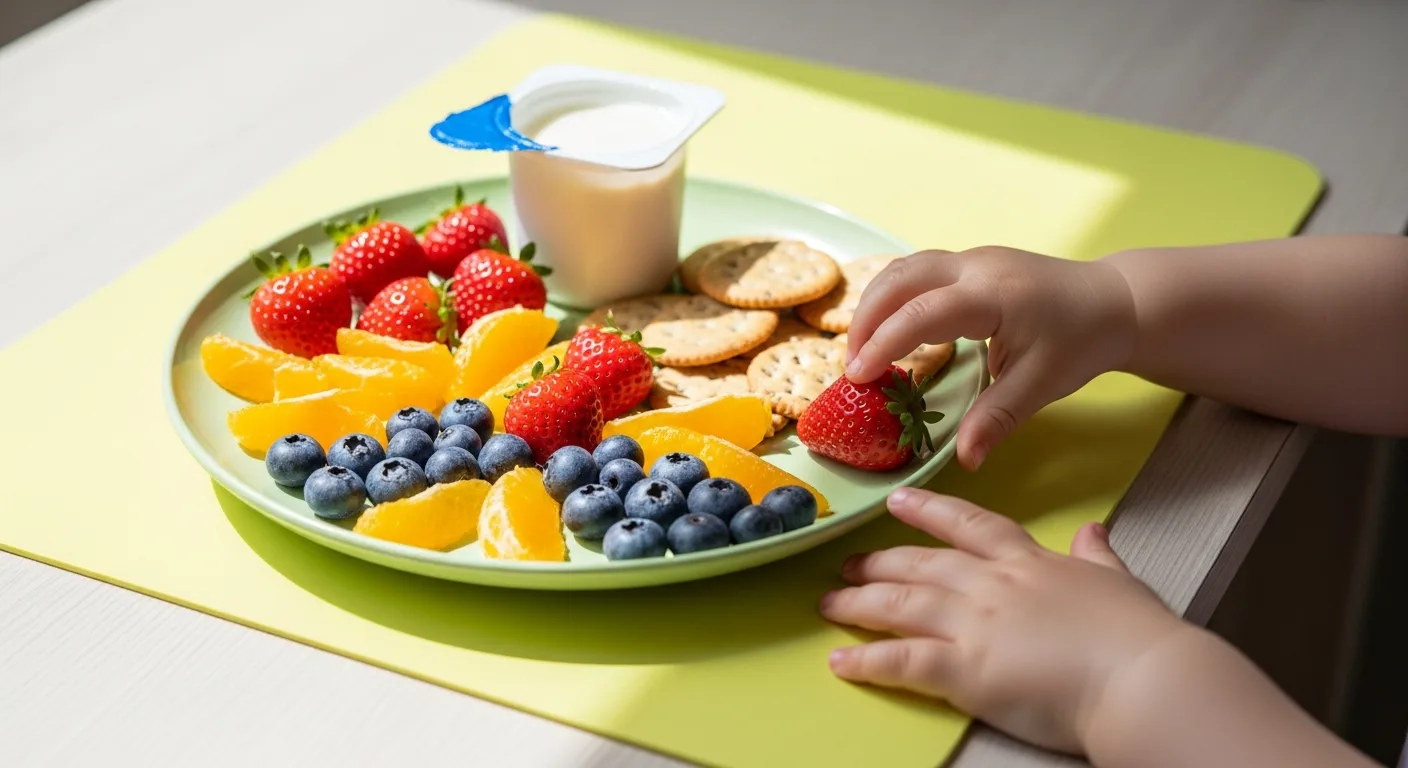
Why Snacks Matter for Toddlers
A toddler's stomach holds only about the volume of their fist. This means three meals a day — even nutritious ones — is often not enough to sustain adequate energy and nutrient intake. Two planned snacks per day, one mid-morning and one mid-afternoon, provide the additional fuel toddlers need without over-disrupting appetite at mealtimes.
The key is timing. Snacks offered too close to a meal will reduce appetite. Snacks offered one and a half to two hours before the next meal hit the sweet spot — giving genuine energy without spoiling the meal. For more snack ideas and guidance on timing, our Healthy Snacks for Little Ones and Healthy Finger Foods for Toddlers guides are both worth reading.
15 Healthy Snack Ideas for Toddlers
Apple slices with almond butter
Thin apple slices served alongside a small pot of smooth almond butter for dipping.
Why it works: Apple provides fibre, vitamin C, and natural sweetness. Almond butter adds protein and healthy fat, making this a genuinely balanced snack.
Quick tip: Squeeze a little lemon juice over the apple to prevent browning. Keep the almond butter portion small — a teaspoon is enough.
Hummus with carrot and cucumber sticks
Smooth hummus served with soft batons of carrot and cucumber for dipping.
Why it works: Hummus delivers protein and iron from chickpeas. The veggie sticks provide vitamins A and C. This is one of the most nutritionally complete snacks available.
Quick tip: Pre-cut a batch of vegetable sticks and store in water in the fridge. They stay crisp for three to four days.
Mini cheese cubes and halved grapes
Small cubes of mild cheese alongside seedless grapes cut in half lengthways.
Why it works: Cheese provides protein and calcium; grapes provide natural sugar and hydration. The combination is naturally satisfying and widely accepted.
Quick tip: Always halve grapes lengthways for toddlers — whole grapes are a choking hazard for children under four.
Banana and oat energy balls
Mashed banana mixed with rolled oats and a tiny amount of honey (for toddlers over one), rolled into small balls.
Why it works: Energy balls are filling, naturally sweet, and free of added sugar. The oats provide slow-release energy ideal for afternoon snack time.
Quick tip: Refrigerate for 30 minutes before serving to firm up the texture. They keep in the fridge for up to a week.
Frozen yogurt bark with berries
Greek yogurt spread onto a lined tray with scattered fresh berries, frozen until solid, then broken into small pieces.
Why it works: Frozen yogurt bark is cooling, protein-rich, and visually appealing. It feels like a treat while delivering real nutritional value.
Quick tip: Use full-fat Greek yogurt for a creamier result that breaks into cleaner pieces when frozen. Add a drizzle of honey or maple syrup if extra sweetness is needed.
Cucumber rounds with cream cheese
Thick slices of peeled cucumber topped with a small amount of smooth cream cheese.
Why it works: Crisp cucumber and creamy cheese is a satisfying contrast in texture. Cucumber is one of the most hydrating vegetables available.
Quick tip: Press the cream cheese onto the cucumber firmly so it sticks during handling. A piping bag makes this faster and neater for larger batches.
Soft dried mango slices
Unsweetened soft dried mango, torn into small pieces, served as a simple portable snack.
Why it works: Dried mango is a concentrated source of vitamin C, vitamin A, and natural energy. Look for varieties without added sugar.
Quick tip: Ensure the mango is soft-dried, not leathery. Hard dried mango is a choking risk and too chewy for young toddlers.
Rice cakes with mashed avocado
Plain rice cakes spread with lightly salted mashed avocado.
Why it works: Rice cakes are light and easy to hold. Avocado adds heart-healthy fat, potassium, and a mild, creamy flavour most toddlers enjoy.
Quick tip: Add a tiny pinch of lemon juice and a very small amount of salt to the avocado. Even a minimally seasoned avocado is significantly more palatable.
Nut-free trail mix
A small mixture of pumpkin seeds, sunflower seeds, raisins, dried cranberries, and puffed rice cereal.
Why it works: Nut-free trail mix is school-safe, portable, and provides a range of micronutrients. Seeds are a good source of zinc and magnesium.
Quick tip: Keep pieces very small and serve only to toddlers who can chew safely. Avoid whole raisins for children under two.
Steamed edamame pods
Steamed frozen edamame pods, lightly salted, served warm or at room temperature.
Why it works: Edamame is a complete plant protein — unusually for a legume — and toddlers enjoy the interactive process of popping beans from their pods.
Quick tip: This activity works best for toddlers over 18 months who understand not to eat the pod itself. Demonstrate the popping action before leaving them to try.
Cherry tomatoes with mini mozzarella
Halved cherry tomatoes alongside small mozzarella balls, served on a small plate.
Why it works: This simple combination delivers lycopene, vitamin C, protein, and calcium in a format that requires no preparation beyond halving the tomatoes.
Quick tip: Always halve cherry tomatoes lengthways for toddlers. A whole cherry tomato is a choking hazard.
Sliced kiwi with coconut yogurt
Peeled, sliced kiwi served alongside a small pot of coconut yogurt for dipping.
Why it works: Kiwi is one of the most vitamin C-rich fruits available. Coconut yogurt adds healthy fat and a mildly sweet flavour that pairs well.
Quick tip: Use ripe kiwi — unripe kiwi is tart and toddlers tend to reject it. A ripe kiwi gives slightly when pressed.
Wholemeal crackers with mild cheese
Thin wholemeal crackers topped with slices or spread of mild cheese.
Why it works: Wholemeal crackers provide fibre and complex carbohydrates. Cheese adds protein and calcium. This combination sustains toddlers well between meals.
Quick tip: Choose crackers that are not too hard or sharp-edged. Softer wholemeal varieties are better tolerated by toddlers.
Homemade smoothie pouch
Blend banana, full-fat yogurt, spinach, and a little frozen mango until smooth. Pour into a reusable food pouch.
Why it works: Homemade pouches give full control over ingredients while providing vegetables in a format even the most reluctant toddlers tend to accept.
Quick tip: The spinach turns the pouch green, which toddlers often find exciting rather than off-putting. Freeze some for later use.
Soft-roasted chickpeas
Tinned chickpeas roasted at a low temperature with a little olive oil until lightly crispy outside but still soft inside.
Why it works: Roasted chickpeas are high in plant protein and fibre and have a satisfying, snack-like quality that makes them more appealing than plain chickpeas.
Quick tip: The key is low and slow roasting — high heat produces chickpeas that are too hard for toddlers. Remove before they become fully crunchy.
Tips for Balanced Toddler Snacks
- 🍎
Pair carbohydrate with protein or fat
A piece of fruit alone will spike blood sugar and cause a crash shortly after. Pairing it with a protein or fat — yogurt, cheese, nut butter — stabilises energy levels and sustains toddlers for longer.
- ⏰
Time snacks appropriately
Serve snacks at a set time, 90 minutes to two hours before the next meal. This preserves appetite while keeping blood sugar steady.
- 📏
Keep portions small
Snacks should bridge meals, not replace them. A small amount of two or three different items is more nutritionally interesting and less appetite-disrupting than a large portion of one thing.
- 🥤
Offer water alongside every snack
Toddlers often confuse thirst with hunger. A cup of water at snack time ensures hydration and can reduce the amount of food needed.
For full-day meal planning including snacks, our 7 Day Toddler Meal Plan shows how to balance snacks alongside breakfast, lunch, and dinner in a structured weekly framework.
Need even more toddler meal ideas?
Use our Toddler Meal Generator to instantly get breakfast, snack, and dinner ideas for your toddler.
Try the Toddler Meal GeneratorLooking for quick toddler recipes?
Get our 30 Easy Toddler Recipes PDF designed for busy parents.
Get the 30 Easy Toddler Recipes PDFFinal Thoughts
The best healthy snacks for toddlers are simple, varied, and nutritionally intentional. You do not need to prepare elaborate snack boxes every day — a small plate of whatever is fresh, paired with a reliable protein or fat, covers the nutritional bases and keeps your toddler satisfied between meals. Rotate through this list, keep a few reliable staples on hand, and snack time becomes a genuinely easy part of your day.